
INTERPOL Arrests 11 ‘High-Level Members Of Terrorist Groups’ In Nigeria The International Criminal Police Organisation (INTERPOL) has announced the arrest of 11 suspected high-ranking members of various terrorist groups operating in Nigeria. The arrests were part of a coordinated regional security effort codenamed “Operation Catalyst”, which also led to the apprehension of 83 suspects across
INTERPOL Arrests 11 ‘High-Level Members Of Terrorist Groups’ In Nigeria
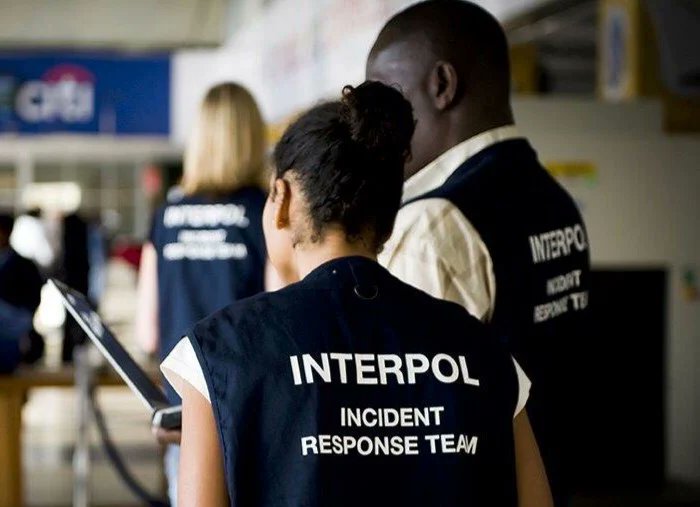 The International Criminal Police Organisation (INTERPOL) has announced the arrest of 11 suspected high-ranking members of various terrorist groups operating in Nigeria. The arrests were part of a coordinated regional security effort codenamed “Operation Catalyst”, which also led to the apprehension of 83 suspects across six African countries.
According to a statement released on Thursday by INTERPOL, the large-scale security operation was conducted in partnership with the African Union Mechanism for Police Cooperation (AFRIPOL) and local security agencies in participating countries. The initiative aimed to dismantle terrorist financing networks, disrupt arms trafficking channels, and strengthen regional intelligence sharing to combat terrorism in Africa.
The operation, which spanned several weeks, targeted individuals and groups linked to transnational terrorism and organised crime, including affiliates of Boko Haram, the Islamic State in West Africa Province (ISWAP), and other extremist cells suspected of operating across the Sahel and Lake Chad regions.
INTERPOL said intelligence gathered from previous counterterrorism efforts helped in identifying the suspects and tracking their movements across borders. The international body noted that the 11 suspects arrested in Nigeria were believed to have played “significant operational and financial roles” within their respective terrorist organisations.
“These arrests mark a major step forward in our collective fight against terrorism in Africa. Operation Catalyst demonstrates the power of international police cooperation and the importance of intelligence-driven investigations in dismantling the networks that sustain violent extremism,” INTERPOL’s Secretary General, Jürgen Stock, was quoted as saying.
He added that the operation underscored the organisation’s commitment to supporting African member states in tackling the twin threats of terrorism and organised crime, which continue to destabilise communities and economies across the continent.
Operation Catalyst: A Continental Collaboration
Operation Catalyst was jointly coordinated by INTERPOL’s Counter-Terrorism Directorate and AFRIPOL, with technical support from the European Union and the United Nations Office on Drugs and Crime (UNODC). The operation covered Nigeria, Niger, Chad, Cameroon, Mali, and Burkina Faso—countries that have been at the forefront of the battle against extremist groups.
According to the statement, over 320 police officers, counterterrorism analysts, and intelligence experts participated in the coordinated raids and surveillance activities. The operation also involved the deployment of INTERPOL’s I-24/7 global communication network, which allowed participating countries to share intelligence in real time, track suspects, and cross-check biometric data against international criminal databases.
During the operation, law enforcement agencies reportedly seized dozens of assault rifles, improvised explosive device (IED) components, forged travel documents, and communication gadgets used by terrorist networks. Investigators also uncovered evidence of illegal financial transactions and money-laundering schemes that have been used to fund insurgent activities in the Sahel region.
A senior Nigerian security source, who confirmed the arrests but asked not to be named, said the operation took place across several states in northern Nigeria, including Borno, Yobe, and Kaduna. “The suspects are now in custody and are being profiled. Some of them are foreign nationals who have been operating under false identities. INTERPOL’s support was instrumental in tracing them,” the source disclosed.
Regional Impact and Ongoing Investigations
Security analysts have described the operation as a breakthrough in regional counterterrorism efforts, noting that cooperation between African countries remains critical to addressing the cross-border nature of terrorism.
Dr. Amina Garba, a counterterrorism researcher at the University of Abuja, said the arrests could help disrupt the logistical networks of extremist groups. “Many terrorist organisations in Africa rely on cross-border supply chains for weapons, financing, and recruitment. A coordinated operation like this sends a strong message that they cannot operate with impunity,” she said.
Garba added that the use of advanced digital forensics and biometric data matching by INTERPOL was a “game changer” in identifying suspects who often use multiple aliases to evade capture.
INTERPOL also disclosed that the intelligence collected during Operation Catalyst will be shared with national and regional security agencies to aid ongoing investigations and future operations. “This intelligence will help map the evolving threat landscape and identify key facilitators behind terrorist financing and arms trafficking,” the statement read.
Nigeria’s Continued Fight Against Terrorism
Nigeria has battled insurgency for over a decade, particularly in the northeast, where Boko Haram and its splinter group, ISWAP, have carried out thousands of attacks on civilians, security forces, and humanitarian workers. Despite military offensives and international support, the groups continue to pose significant security challenges.
The federal government, through the Office of the National Security Adviser (ONSA), recently reiterated its commitment to enhancing intelligence cooperation with global security organisations like INTERPOL. A statement from ONSA last month highlighted plans to strengthen border security, improve inter-agency collaboration, and invest in new technologies to track extremist networks.
Meanwhile, the 11 suspects arrested in Nigeria are expected to be handed over to relevant authorities for prosecution, following joint investigations by Nigerian and international law enforcement agencies.
INTERPOL reaffirmed that it would continue to assist African nations in building capacity and sharing intelligence to ensure that terrorist networks are systematically dismantled. “Our success depends on trust, information sharing, and the determination of every member state to protect citizens from those who seek to spread violence and instability,” Secretary General Stock said.
As Operation Catalyst enters its next phase, more arrests and follow-up investigations are expected across Africa, with INTERPOL pledging continued support to ensure lasting peace and security on the continent.











Leave a Comment
Your email address will not be published. Required fields are marked with *