
FG Releases N2.3 Billion to Universities, Pledges Sustainable Education Reforms The Federal Government has disbursed N2.3 billion to Nigerian universities as part of efforts to strengthen higher education and promote sustainable reforms across the country’s academic system. The funds, released through the Tertiary Education Trust Fund (TETFund), are aimed at enhancing research capacity, improving infrastructure,
FG Releases N2.3 Billion to Universities, Pledges Sustainable Education Reforms
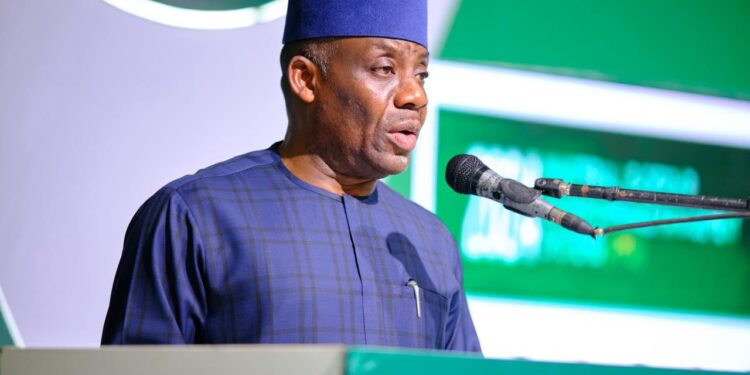 The Federal Government has disbursed N2.3 billion to Nigerian universities as part of efforts to strengthen higher education and promote sustainable reforms across the country’s academic system. The funds, released through the Tertiary Education Trust Fund (TETFund), are aimed at enhancing research capacity, improving infrastructure, and supporting innovative academic projects that align with global standards.
Reps Probe N22.58bn Abandoned Kajola Dam Project In Ile-Ife
Minister of Education, Prof. Tahir Mamman, who disclosed this during a press briefing in Abuja, said the release of the funds marked another phase in the government’s ongoing commitment to revamp the education sector and reposition it as a catalyst for national development.
According to him, the N2.3 billion allocation will be used to fund research and innovation projects, training of academic staff, and the upgrading of laboratory and ICT facilities in several public universities across the six geopolitical zones.
“Education remains the backbone of national progress, and we are committed to ensuring that Nigerian universities are not left behind in the global knowledge economy,” Mamman stated. “The funds released are part of a larger strategic framework to make our universities competitive, research-driven, and solution-oriented.”
Focus on Sustainable Reforms
The minister emphasized that the disbursement was not an isolated event but part of a long-term sustainable education reform agenda under President Bola Ahmed Tinubu’s Renewed Hope Initiative.
He explained that the government’s strategy focuses on three major pillars — funding, quality assurance, and research-driven innovation. Under this framework, the administration is introducing reforms to strengthen accountability in the management of university funds while ensuring transparency and measurable outcomes.
Mamman revealed that the Ministry of Education, in collaboration with TETFund, the National Universities Commission (NUC), and other stakeholders, is currently reviewing policies governing higher education to make them more responsive to modern realities.
“We want to move beyond funding alone. We are reforming the entire system — from curriculum redesign to governance structure, and from teacher training to digital transformation. Our goal is to ensure that every naira invested in education yields tangible, sustainable results,” he said.
Universities to Prioritize Research and Innovation
The TETFund Executive Secretary, Arc. Sonny Echono, also confirmed that part of the funds would go directly into supporting institutional-based research, the establishment of centres of excellence, and partnerships with international universities.
Echono noted that the fund would prioritize research in renewable energy, agriculture, health sciences, digital technology, and environmental sustainability, areas considered crucial for national development.
“We are encouraging universities to shift from theory-based teaching to problem-solving research. This N2.3 billion release is part of a continuous effort to build capacity, encourage innovation, and ensure that research outcomes directly impact Nigeria’s economy,” he said.
He added that the government was also working to strengthen linkages between universities and industries, ensuring that graduates are better equipped with skills relevant to the job market.
Stakeholders Commend Federal Government
Several education stakeholders and university administrators have commended the government for the latest release, describing it as a step in the right direction.
The Vice-Chancellor of the University of Ibadan, Prof. Kayode Adebowale, said the intervention would “breathe new life” into many academic programs that had suffered setbacks due to inadequate funding.
“This is a welcome development. Our laboratories and research projects have been constrained by limited funds. With this support, we can now expand our research capabilities and engage more meaningfully with industries and global partners,” Adebowale stated.
Similarly, the Academic Staff Union of Universities (ASUU), while acknowledging the effort, urged the Federal Government to ensure that such interventions become consistent and timely.
ASUU National President, Prof. Emmanuel Osodeke, said, “We appreciate this gesture, but Nigeria needs a sustained approach to educational funding, not one-off disbursements. The government should also address the root causes of poor university funding and infrastructure decay.”
Reforming Education for National Growth
Experts say the N2.3 billion disbursement is part of a broader fiscal strategy to restore confidence in the public education system and reduce the number of Nigerian students seeking higher education abroad.
With over 2 million students enrolled in Nigerian universities, the need for improved facilities, qualified lecturers, and advanced research has become urgent. The World Bank recently warned that underfunding of higher education could undermine Nigeria’s ambition to become a knowledge-driven economy by 2030.
In response, the government has pledged to increase education funding to 25% of the national budget by 2027, alongside reforms to attract private sector investment and international partnerships.
“We cannot build the Nigeria of our dreams without quality education,” Mamman reiterated. “Our reforms are not just about infrastructure; they are about building minds, promoting innovation, and equipping the next generation of leaders to drive sustainable development.”As universities across the country begin to access and utilize the new funds, education analysts are hopeful that Nigeria’s higher institutions will soon witness measurable improvement in global ranking, research output, and graduate employability — provided the momentum for sustainable reforms is maintained.
By Newsword Media | October 2025














Leave a Comment
Your email address will not be published. Required fields are marked with *