
Christian Genocide: “Under Jonathan, People Capitalized on These Kinds of Things to Take Over Power” — Wike Admits APC Rode to Power on Propaganda Against Jonathan In a striking revelation, Nigeria’s Minister of the Federal Capital Territory (FCT), Nyesom Wike, has admitted that the All Progressives Congress (APC) rode to power in 2015 through the
Christian Genocide: “Under Jonathan, People Capitalized on These Kinds of Things to Take Over Power” — Wike Admits APC Rode to Power on Propaganda Against Jonathan
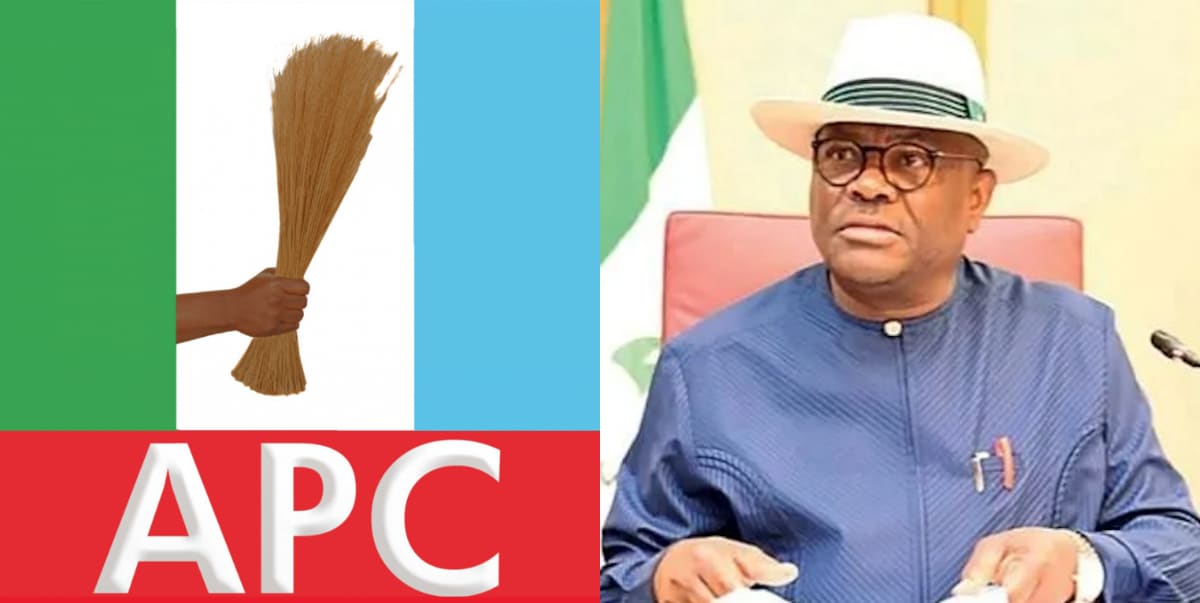 In a striking revelation, Nigeria’s Minister of the Federal Capital Territory (FCT), Nyesom Wike, has admitted that the All Progressives Congress (APC) rode to power in 2015 through the strategic use of propaganda and the manipulation of sensitive national issues — including religion and security — against former President Goodluck Jonathan.
OSBC Recruitment Saga: Between Politics, Pain, And The Hope for Justice
Wike made this disclosure during a live interview on Channels Television’s “Politics Today” on Monday, where he discussed the current political climate, the challenges of governance, and how past political tactics continue to shape Nigeria’s political discourse.
The minister, who served as a key member of the Peoples Democratic Party (PDP) under Jonathan’s administration before later aligning with the current APC-led government, said politicians at the time “capitalized on the security situation, religious tensions, and the Boko Haram insurgency” to discredit Jonathan and rally Nigerians around the opposition.
“Under Jonathan, people capitalized on these kinds of things to take over power,” Wike said. “At that time, every bomb blast was amplified. Every attack was politicized. People made it look like the President was incapable of protecting Nigerians.”
Propaganda and the Fall of Jonathan’s Administration
Wike’s statement touches on a widely discussed issue — how propaganda and misinformation contributed significantly to the fall of Jonathan’s administration. During Jonathan’s tenure between 2010 and 2015, Nigeria faced one of its toughest security crises, with Boko Haram insurgents launching deadly attacks across the Northeast, targeting schools, churches, and government facilities.
At the time, opposition figures and civil society groups frequently accused Jonathan of incompetence and neglect, particularly highlighting the Chibok schoolgirls’ abduction in 2014 as a symbol of government failure. The social media movement #BringBackOurGirls further amplified these sentiments, creating global pressure on the administration.
According to Wike, these narratives were weaponized to sway public opinion.
“People forget that there were concerted efforts by some politicians to use insecurity to blackmail the government,” he explained. “Now, when similar or worse situations occur, you don’t hear the same level of noise. It shows that propaganda played a huge role then.”
“Christian Genocide” and the Misuse of Religion
During the interview, Wike also addressed recent discussions about alleged Christian persecution and genocide in parts of Northern Nigeria. He urged Nigerians to be cautious about divisive rhetoric, noting that religion has often been exploited for political gain.
“Under Jonathan, there were stories everywhere about Christian genocide and targeting of certain groups,” Wike said. “Those stories were sometimes exaggerated to create anger and sympathy. We must be careful not to let people use religion again to manipulate our emotions.”
Wike’s remarks appear to be a response to ongoing debates surrounding religious killings and attacks on Christian communities, which some advocacy groups and clerics have described as “Christian genocide.” The minister, however, cautioned against using such terms loosely, insisting that “security failures should not be framed in religious terms to avoid further dividing the country.”
APC’s Political Strategy and Its Consequences
Political analysts have long argued that the APC effectively deployed propaganda machinery ahead of the 2015 elections — painting Jonathan’s PDP as corrupt, weak on security, and indifferent to national suffering. That strategy, combined with economic discontent and widespread calls for change, helped the then opposition sweep to victory with Muhammadu Buhari as president.
Wike’s confession effectively confirms what many political observers have described as a turning point in Nigeria’s democracy, where image-making and perception management overtook policy debates as the main determinant of electoral success.
“The APC was smart. They understood the psychology of Nigerians and used it well,” Wike said. “They presented themselves as saviors and made Jonathan look like a failure. But look at where we are today — the same issues are still here, if not worse.”
Wike’s Political Transformation
Since his days as a loyal PDP governor of Rivers State, Wike has evolved into one of Nigeria’s most influential and unpredictable politicians. Although he played a major role in the PDP’s internal structure, he later formed an alliance with the ruling APC after the 2023 general elections, a move that continues to stir controversy.
His latest comments are being interpreted by political watchers as an attempt to draw lessons from the past while subtly criticizing the current state of political opportunism.
“We must stop deceiving Nigerians,” Wike emphasized. “Whether APC or PDP, the truth is that politicians must be honest about their intentions. Using religion and security to score cheap political points has brought us nowhere.”
Public Reactions
Wike’s comments have generated widespread reactions on social media and across political circles. Some Nigerians commended him for his honesty, while others accused him of hypocrisy, claiming he only speaks freely now that he enjoys political immunity.
A social media user on X (formerly Twitter) wrote:
“Wike has just confirmed what many of us already knew — the 2015 election was won with propaganda, not performance.”
Another commentator countered:
“It’s ironic that Wike is now talking about propaganda when he himself has been a master of it. Nigerian politics is full of contradictions.”
Wike’s admission that the APC exploited propaganda and religious narratives to seize power from Jonathan underscores a critical flaw in Nigeria’s democratic journey — the weaponization of information. His reflections serve as a reminder that truth, unity, and accountability remain the foundations of national progress.
As Nigeria continues to grapple with insecurity and political distrust, Wike’s words echo a deeper call for a more responsible political class — one that prioritizes national interest over personal ambition or party advantage.








Leave a Comment
Your email address will not be published. Required fields are marked with *