
Appeal Court Affirms VIO Lacks Power To Seize Vehicles, Impose Fines In a significant ruling that clarifies the limits of regulatory powers exercised by traffic enforcement agencies across Nigeria, the Court of Appeal has affirmed that Vehicle Inspection Officers (VIOs) do not have the legal authority to impound vehicles or impose fines on motorists. The
Appeal Court Affirms VIO Lacks Power To Seize Vehicles, Impose Fines
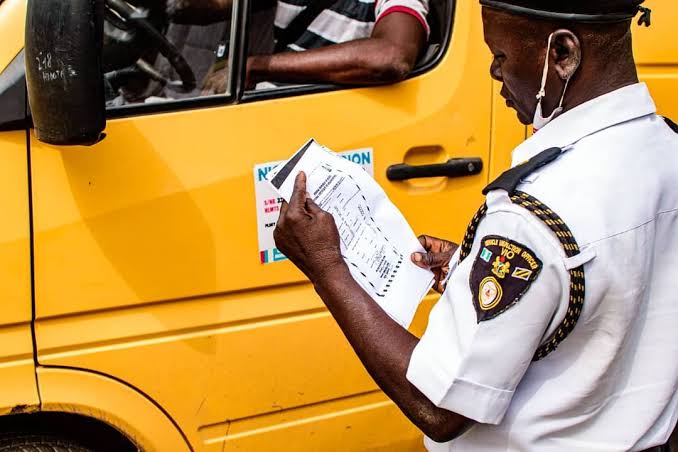 In a significant ruling that clarifies the limits of regulatory powers exercised by traffic enforcement agencies across Nigeria, the Court of Appeal has affirmed that Vehicle Inspection Officers (VIOs) do not have the legal authority to impound vehicles or impose fines on motorists. The judgment has sparked widespread discussion among legal experts, transport unions, and road users, many of whom view it as a corrective step toward curbing overreach by certain enforcement bodies.
Victor Osimhen To Replace Vinicius Jr At Real Madrid – Sunday Oliseh
The decision came after a long-running legal dispute between a motorist and the Directorate of Road Traffic Services (DRTS), commonly known as VIO, in the Federal Capital Territory. The motorist had challenged the agency’s power to stop his vehicle, confiscate it, and demand the payment of fines as a condition for release. After losing at a lower court, he advanced his appeal to the Court of Appeal, which ultimately ruled in his favour.
Delivering the lead judgment, the appellate court held that VIOs are primarily responsible for vehicle inspection, certification, and ensuring compliance with safety standards—not enforcement that involves seizing vehicles or imposing monetary penalties. According to the court, such punitive authority rests strictly with the police and other agencies empowered by specific federal laws, not with state-level directorates acting without clear statutory backing.
The court referenced provisions of the Federal Road Safety Commission (FRSC) Act, the Nigerian Police Act, and various traffic regulations which outline the hierarchy of agencies empowered to enforce road safety laws. While acknowledging that VIOs play an important role in maintaining roadworthiness and vehicle documentation compliance, the court stressed that these functions do not automatically translate into the power to arrest, detain, or penalise motorists.
“The duties of Vehicle Inspection Officers are not to be conflated with law enforcement powers clearly assigned to other statutory bodies,” the judgment stated. “No agency can assume powers not expressly granted to it by law.”
The implication of the ruling is far-reaching, particularly in major cities where VIO officials have long been accused of harassment, extortion, and aggressive enforcement practices. In Abuja, Lagos, and several state capitals, VIO operations often include routine roadblocks, vehicle seizures, and the issuance of on-the-spot fines—practices that the court has now declared unlawful.
Legal practitioners have hailed the decision as a victory for the rule of law. Constitutional lawyer, Barr. Chidi Akunne, described the ruling as “a long overdue pronouncement” that restores order to Nigeria’s traffic law landscape. According to him, the court’s interpretation underscores the constitutional requirement that public agencies must act strictly within the boundaries of powers conferred upon them.
“This judgment sends a strong message to regulatory agencies that overstep their boundaries,” Akunne said. “It is not enough to claim that you are acting in the public interest; you must also act within the law.”
Transport unions have also reacted positively. The National Commercial Transport Workers Association (NCTWA) said its members have suffered years of intimidation and unlawful vehicle confiscations by VIO operatives. The union urged state governments to immediately retrain VIO officials and align their operations with the court’s directives.
For many motorists, the ruling brings relief. Several residents of Abuja interviewed expressed satisfaction, saying they hope the decision will reduce incidents of arbitrary enforcement and extortion on major roads. A motorist, Sarah Adamu, said, “Sometimes they stop you even when everything is in order. If you argue, they threaten to seize your car. This judgment is a big win for road users.”
However, some stakeholders warn that the ruling could complicate road safety operations if not managed carefully. A senior official within the Federal Road Safety Corps, who preferred anonymity, noted that while the court’s ruling is clear, state governments must quickly clarify the operational guidelines for VIOs to avoid creating enforcement gaps that could compromise road safety.
The official added that synergy between the FRSC, police, and state traffic officials remains essential. “Road safety is a shared responsibility. The powers may differ, but cooperation is still needed to keep the roads safe,” he said.
Meanwhile, the Appeal Court has directed that VIOs focus strictly on inspections, roadworthiness tests, documentation verification, and related non-penal functions. Any seizure of vehicles or imposition of fines must, according to the court, be carried out only by agencies legally empowered to enforce such penalties.
Following the ruling, civil society groups are calling for widespread public sensitisation to educate motorists about their rights and the lawful powers of traffic agencies. They also urged state governments to update their traffic enforcement frameworks to comply with the court’s judgment.
As discussions continue, the judgment is expected to set a precedent that may prompt similar legal challenges in other states where VIO operations have been a source of tension. Many analysts believe the ruling could reshape the relationship between motorists and road traffic agencies, ensuring clearer boundaries and reducing abuses associated with arbitrary enforcementhttps://en.wikipedia.org/wiki/Nigerians.
The decision marks an important step in strengthening accountability within Nigeria’s public institutions and reinforcing the principle that no agency is above the law.














Leave a Comment
Your email address will not be published. Required fields are marked with *