
Governor Fubara, Rivers Assembly Clash Once More Just two months after emergency rule was lifted in Rivers State and democratic institutions were restored, fresh tensions have erupted between Governor Siminalayi Fubara and the State House of Assembly led by Speaker Rt. Hon. Martins Amaewhule. What appeared to be a temporary calm following months of political
Governor Fubara, Rivers Assembly Clash Once More
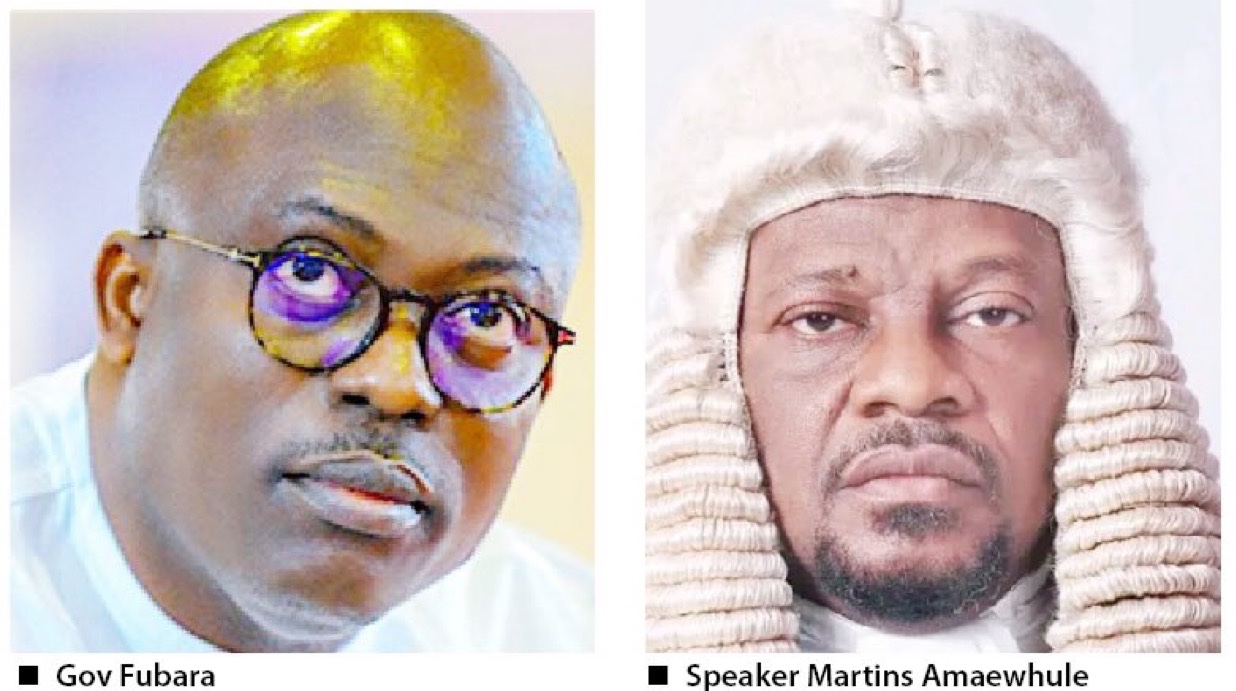 Just two months after emergency rule was lifted in Rivers State and democratic institutions were restored, fresh tensions have erupted between Governor Siminalayi Fubara and the State House of Assembly led by Speaker Rt. Hon. Martins Amaewhule. What appeared to be a temporary calm following months of political hostility has once again given way to open confrontation, raising fears of another prolonged institutional crisis in the oil-rich state.
The renewed clash began earlier this week when the Amaewhule-led Assembly accused Governor Fubara of deliberately undermining legislative authority by refusing to implement certain agreements reached during the Abuja peace deal brokered at the height of the political crisis. Lawmakers loyal to the Speaker claim that the governor has failed to recognise legislative decisions, refused to honour previously passed resolutions, and withheld cooperation on matters relating to state finances, public service appointments, and oversight functions.
 In a dramatic sitting held at the Assembly quarters, the lawmakers alleged that the governor was “pursuing a deliberate pattern of constitutional violations,” insisting that the executive has become increasingly dismissive of statutory checks and balances. The Assembly further accused Fubara of ignoring invitations to appear before various committees, particularly those probing state expenditures over the last year.
Governor Fubara, however, quickly pushed back. In a statement issued by Government House, Fubara described the accusations as “a coordinated attempt to drag Rivers State back into instability,” arguing that he has acted within the ambit of the law and has shown more restraint than required in the interest of peace. The governor insisted that the Assembly was attempting to provoke another breakdown in governance, accusing some lawmakers of acting under the influence of external political interests.
According to sources within the administration, the latest disagreement began when the Assembly moved to revisit several bills that were nullified during the emergency intervention period. Some of these bills, including those related to the local government administration structure, financial autonomy provisions, and adjustment of ministries, had been at the heart of last year’s political turmoil. The governor reportedly warned that reintroducing the bills would “reopen old wounds” and destabilise the fragile peace that had just been restored.
But the Amaewhule camp insists that the legislature is only performing its constitutional duties. While addressing journalists, the Speaker stated that “no individual, no matter how highly placed, can suspend the functions of a duly elected House of Assembly.” He maintained that the Assembly would not surrender its autonomy nor allow the executive to dictate legislative operations.
Political analysts say this renewed confrontation was not completely unexpected. The peace deal negotiated by national leaders of the ruling party had been described as “fragile” and “largely political rather than structural,” meaning it left several unresolved tensions beneath the surface. Although the agreement temporarily diffused the crisis, both camps continued to operate with deep mistrust.
One major issue fueling the current confrontation is the control of the political structure in Rivers State, particularly ahead of upcoming party primaries. Supporters of the governor argue that he is being sidelined in key political decisions, while lawmakers aligned with the former administration feel that Fubara is attempting to dismantle an existing structure that brought him to office. The renewed hostility, they say, is ultimately a struggle for control rather than a mere legislative dispute.
Civil society organizations in the state have expressed worry over the escalating tension, warning that a repeat of last year’s crisis could undermine public confidence and slow down economic activities. Rivers State, being a major hub of Nigeria’s oil and gas operations, is particularly vulnerable to instability. Several groups have urged both sides to return to dialogue and avoid actions that could threaten the state’s fragile recovery.
Residents of Port Harcourt and surrounding areas also fear that the situation could deteriorate into another cycle of court battles, legislative suspensions, and political brinkmanship. Many recall how the earlier crisis led to the sealing of the Assembly complex, public protests, clashes of supporters, and the near-collapse of local government administration. The hope, according to many citizens, was that the lifting of the emergency rule had finally created a path toward normal political stability.
However, with the latest confrontation, it appears the peace was temporary. There are now concerns that the state may be heading toward another round of federal intervention if the tensions escalate. Some political commentators believe only firm action from the national leadership of the ruling party can prevent another institutional breakdown. Others argue that deeper constitutional reforms are needed to address the root causes of recurring executive–legislative conflicts in the state.
For now, the situation remains fluid. The Assembly has vowed to proceed with its legislative agenda “without intimidation,” while the governor has maintained that he will not succumb to actions he perceives as efforts to destabilise his administration. Observers say the next few days will be critical in determining whether the disagreement escalates or de-escalates.
As Rivers State watches the unfolding events with caution, one question is on everyone’s lips: Will the renewed clash derail the fragile peace that was painstakingly restored, or will both sides retreat before the crisis deepens again?















Leave a Comment
Your email address will not be published. Required fields are marked with *