
How Islam and Christianity Spread in Yorubaland: A Historical Review of Dates, Facts, and Realities By Henryrich — NewsWorld The history of religion in Yorubaland is one of peaceful coexistence, cultural accommodation, and gradual transformation. While many narratives circulate about the timelines of Islam and Christianity in Southwestern Nigeria, a closer look at credible historical
How Islam and Christianity Spread in Yorubaland: A Historical Review of Dates, Facts, and Realities
By Henryrich — NewsWorld
The history of religion in Yorubaland is one of peaceful coexistence, cultural accommodation, and gradual transformation. While many narratives circulate about the timelines of Islam and Christianity in Southwestern Nigeria, a closer look at credible historical sources helps clarify what is accurate and what requires correction.
Adeleke Imposes 24-Hour Curfew On Igbajo After Overnight Unrest
Arrival of Islam in Yorubaland: Earlier Than 1440
Many accounts mention 1440—the reign of Alaafin Oluaso of the Oyo Empire—as a key period when Islam began to take root in the region. While it is true that Islam was already present by the 15th century, most historians agree that the religion arrived earlier, mainly through trade networks.
Well-documented facts:
- Islam reached Yorubaland between the 11th and 14th centuries through trans-Saharan trade routes linking North Africa, Mali, and the Hausa states with Oyo and Iwo.
- The earliest Muslim communities were found in Oyo-Ile (Old Oyo), Iwo, Ijebu, and parts of present-day Oyo and Ogun States.
- By the early 1500s, Islam had become visible in Oyo courts, with Muslim clerics serving as advisers and diplomats.
Historical references:
- Toyin Falola & Ann Genova (2006) – Historical Dictionary of Nigeria
- J.F. Ade Ajayi (1965) – Christian Mission in Nigeria
- H.A. Olupona (1991) – Kingship, Religion and Ritual in a Nigerian Community
These sources consistently support an arrival date earlier than 1440, though that period marks when Islam became more noticeably entrenched in the Oyo Empire during Alaafin Oluaso’s reign.
Arrival of Christianity in Yorubaland: 24 September 1842 — Correct and Well-Documented
The statement that Christianity arrived on 24 September 1842 is historically accurate.
Verified record:
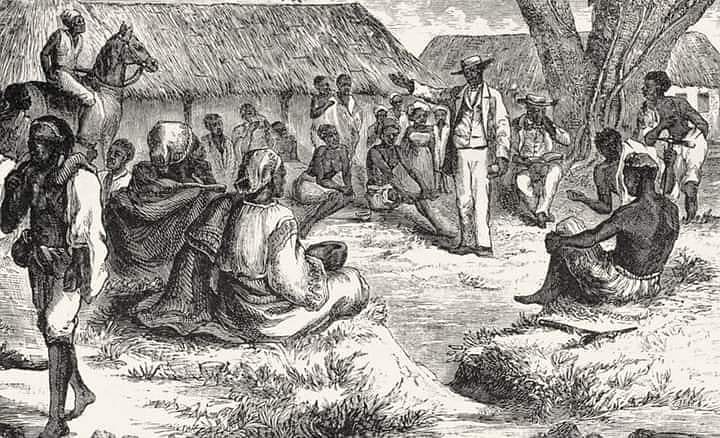
- Christianity officially entered Yorubaland on 24 September 1842, when Reverend Thomas Birch Freeman of the Methodist Mission arrived in Badagry, accompanied by preacher Henry Townsend, who later helped establish missions in Abeokuta.
Important early dates:
- 1842: Freeman holds the first Christian service in Badagry.
- 1843: Missionaries move into Abeokuta; Christian schools begin to appear.
- 1859: Henry Townsend establishes Iwe Irohin, Nigeria’s first newspaper.
- 1880s–1900s: Expansion into Ondo, Ekiti, and Ilesa through CMS, Methodist, and Baptist missions.
References:
- J.F. Ade Ajayi – Christian Missions in Nigeria, 1841–1891
- E.A. Ayandele – The Missionary Impact on Modern Nigeria
- Church Missionary Society (CMS) Archives, London
How Christianity Closed a 400-Year Gap in Under 70 Years
The article’s claim that Christianity “closed the 400-year gap in less than 70 years” is largely accurate when measured by social influence and educational impact, not necessarily population size.
Key reasons Christianity spread rapidly:
- Free Western Education:
Christian schools became the foundation of literacy and modern professions.- By 1910, most schools in Western Nigeria were mission-owned.
- Scholarships to England and Sierra Leone:
Many Yoruba scholars, teachers, and early nationalists were trained abroad. - Skills acquisition and early print culture:
Mission schools produced the first generation of Yoruba doctors, lawyers, teachers, and journalists. - Non-violent coexistence with Islam:
Unlike in some regions, Yoruba Muslims and Christians lived in mixed families, reducing resistance.
This combination allowed Christianity to dominate parts of Ekiti and Ondo by the early 20th century.
Religious Tolerance in Western Nigeria: A Cultural Legacy
The assertion that Western Nigeria is the most religiously tolerant region in Nigeria is supported by multiple studies. Yoruba traditional religion played a stabilizing role by accommodating both Islam and Christianity without rejection or conflict.
Reasons for Yoruba religious tolerance:
- Multiple-religion households are common (a father may be Muslim, mother Christian; extended families practice different faiths).
- Traditional Yoruba worldview is inclusive, not exclusive.
- Kingship systems maintain peace by recognizing all religious groups.
- Peaceful coexistence tradition documented as early as the 19th century by missionaries and colonial officers.
References:
- Jacob Olupona – City of 201 Gods: Ilé-Ifẹ̀ and the Study of Yoruba Culture
- Wande Abimbola – Ifá: An Exposition of Ifá Literary Corpus
- Toyin Falola – Yoruba Culture: A Philosophical Account
Conclusion
While Islam may have been present earlier than 1440, the general timeline that Islam predates Christianity in Yorubaland by several centuries is historically correct. The speed with which Christianity rose to prominence—powered by Western education and missionary structures—is also accurate.
What remains indisputable is that Yorubaland stands out in Nigeria for its tradition of peaceful religious coexistence, a model shaped by centuries of cultural tolerance and the accommodating nature of Yoruba traditional religion.
Well-researched article for NewsWorld, written in a newsroom style and credited to Henryrich.
















Leave a Comment
Your email address will not be published. Required fields are marked with *