
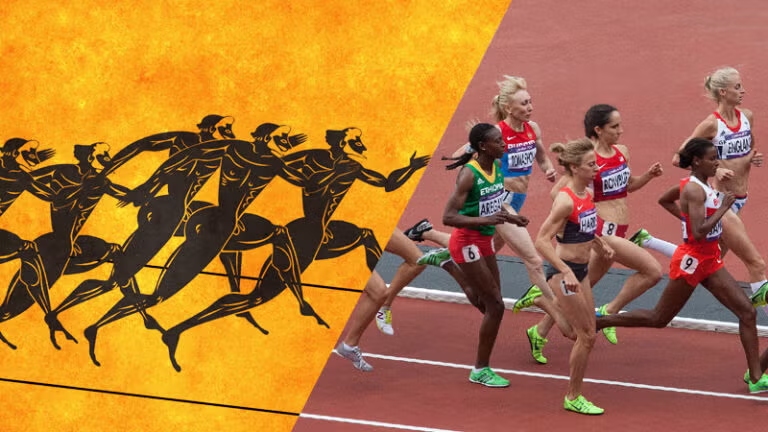
The Olympic Games: From Ancient Greece to the Modern World, Before The Birth Of Jesus Christ The Olympic Games Before Jesus: Started in 776 BC in Olympia, Greece, as a religious and athletic festival in honor of Zeus. When people gather every four years to watch the Olympic Games, they are not just enjoying
The Olympic Games: From Ancient Greece to the Modern World, Before The Birth Of Jesus Christ
The Olympic Games Before Jesus: Started in 776 BC in Olympia, Greece, as a religious and athletic festival in honor of Zeus.
When people gather every four years to watch the Olympic Games, they are not just enjoying a global sporting event; they are taking part in a tradition that began nearly three millennia ago. The Olympics, which first took place in 776 BC in Olympia, Greece, have endured wars, political upheavals, and cultural transformations to become the world’s most recognized sporting festival. From being a sacred religious ritual in honor of Zeus to becoming a multibillion-dollar international spectacle, the Olympics remain one of humanity’s greatest celebrations of unity and athleticism.
The Ancient Origins (776 BC – 394 AD)
The ancient Olympic Games were born in the city of Olympia, located in the Peloponnese region of Greece. According to Greek tradition, the first recorded games were held in 776 BC, though archaeological evidence suggests the games might have started earlier.
The Olympics were more than a sporting contest; they were deeply religious. The games honored Zeus, the king of the Greek gods. Athletes competed under sacred oaths, and during the festival, all wars were paused under a peace treaty known as the Olympic Truce (Ekecheiria). This allowed safe passage for athletes and spectators across rival Greek city-states.
Only freeborn Greek men could compete, and events included:
- Stadion race (a sprint of about 200 meters, the first and only event in early games)
- Wrestling and Boxing
- Chariot racing
- Pentathlon (discus, javelin, long jump, wrestling, and running)
- Pankration (a brutal mix of wrestling and boxing)
Victors were not given money but received olive wreaths, public honors, and eternal fame in poems and statues. To the Greeks, winning at Olympia was the highest glory a man could achieve.
The ancient Olympics continued for over 1,000 years, until the Roman Emperor Theodosius I banned them in 394 AD, declaring them pagan rituals incompatible with Christianity.
The Market In Ile-Ife (OJA-IGBOMEKUN) 10,000 Years Before The Birth Of Jesus
Dormant Centuries and Revival (394–1896)
After their abolition, the Olympic Games lay dormant for more than 1,500 years. However, their legacy lived on in literature, art, and memory. In the 19th century, as nationalism and interest in classical antiquity grew in Europe, the idea of reviving the Olympics gained traction.
The man most responsible for this revival was Pierre de Coubertin, a French educator who believed sports could foster international friendship and peace. Inspired by ancient Greece, he founded the International Olympic Committee (IOC) in 1894, and two years later, the first modern Olympic Games were held in Athens, Greece (1896).
The 1896 Athens Games featured 13 countries, 280 athletes (all men), and 43 events. Despite modest beginnings, it marked the rebirth of a tradition that would become the largest sporting event on Earth.
The Modern Olympic Movement
Since its revival, the Olympics has grown into a global institution.
Key Milestones:
- 1924: The Winter Olympics were introduced in Chamonix, France, featuring sports like skiing, skating, and ice hockey.
- 1928: Women were officially allowed to compete in track and field events.
- 1960: The Paralympic Games began in Rome, creating a platform for athletes with disabilities.
- 2021: The Tokyo Olympics hosted 11,420 athletes from 206 countries, despite challenges from the COVID-19 pandemic.
Today, the games alternate every two years between the Summer and Winter Olympics, drawing billions of viewers worldwide.
Facts and Figures
- Ancient Games: Began in 776 BC and lasted for over 1,000 years.
- Modern Revival: Began in 1896 in Athens with 13 countries.
- Summer Olympics 2024: Scheduled for Paris, France, with over 10,000 athletes expected.
- Economic Scale: The 2021 Tokyo Games cost about $13 billion while generating billions in sponsorships and broadcasting rights.
- Viewership: The 2016 Rio Olympics attracted an estimated 3.6 billion viewers worldwide.
Cultural and Political Impact
While the ancient Olympics were limited to Greek men, the modern Olympics symbolize inclusion, diversity, and international cooperation. The Olympic motto, “Citius, Altius, Fortius” (Faster, Higher, Stronger), represents human excellence beyond borders.
Yet, the Olympics have also mirrored global politics. The games have faced boycotts (like the U.S. boycott of Moscow 1980 and the Soviet boycott of Los Angeles 1984), controversies over doping, and debates over the cost of hosting. Still, despite these challenges, the Olympic flame continues to shine as a symbol of peace and resilience.
Comparing Ancient and Modern Games
| Aspect | Ancient Olympics | Modern Olympics |
|---|---|---|
| Origin | 776 BC, Olympia, Greece | 1896, Athens, Greece |
| Participants | Freeborn Greek men only | Over 200 countries, men & women |
| Events | Running, wrestling, chariot racing, pankration | 300+ events (from athletics to surfing, e-sports soon) |
| Purpose | Religious festival for Zeus | Global sporting unity and peace |
| Prize | Olive wreath & honor | Medals, fame, endorsements |
Why the Olympics Still Matter
The Olympic Games endure because they represent something universal: the human spirit striving for excellence, unity, and peace. Just as the ancient Greeks paused wars to compete in Olympia, modern nations come together to celebrate athletic skill and cultural exchange.
For athletes, winning an Olympic medal remains the pinnacle of achievement, often changing lives and inspiring generations. For host nations, the Olympics showcase culture, infrastructure, and national pride. For the world, the games are a reminder that despite divisions, humanity can still gather under one flame.
From 776 BC in Olympia to the global arenas of 2024, the Olympic Games have traveled an extraordinary journey. They began as a religious festival in honor of Zeus, paused for centuries, and were reborn as a worldwide celebration of sport and unity. In both their ancient and modern forms, the Olympics prove that while times may change, the pursuit of excellence, honor, and shared humanity never fades.
The next time the Olympic torch is lit, it is not just the beginning of another competition — it is the continuation of a tradition that has endured for nearly 2,800 years, connecting us with the ancient past while inspiring hope for the future.
















Leave a Comment
Your email address will not be published. Required fields are marked with *