
Bill to Shorten Election Litigation Timelines Advances in House A bill seeking to reduce the length of time for election-related court cases is progressing in the House of Representatives, with the aim of ensuring all legal disputes are resolved before the swearing-in of elected officials. The Chairperson of the House Committee on the Independent National
Bill to Shorten Election Litigation Timelines Advances in House
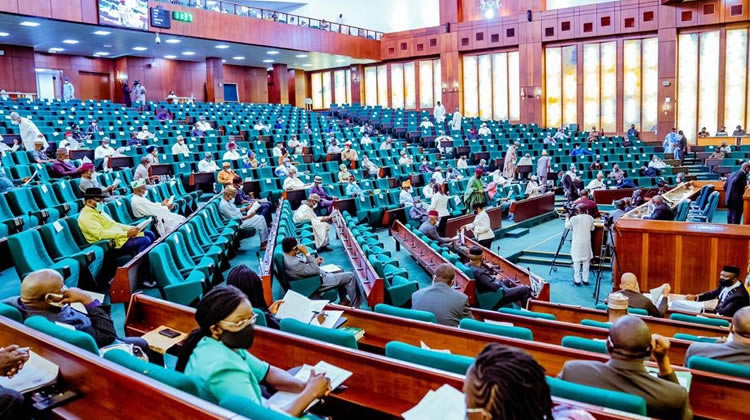
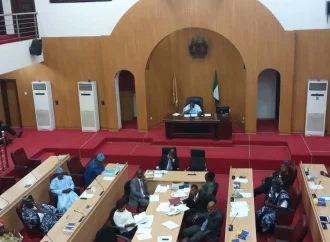
A bill seeking to reduce the length of time for election-related court cases is progressing in the House of Representatives, with the aim of ensuring all legal disputes are resolved before the swearing-in of elected officials. The Chairperson of the House Committee on the Independent National Electoral Commission (INEC), Adebayo Balogun, disclosed this during an appearance on Channels Television’s Politics Today on Tuesday.
According to Balogun, the bill has already passed its second reading and proposes a significant amendment to the electoral process. One key aspect is to transfer the power to set timelines for election litigation from the Constitution to the Electoral Act. This, he argued, would make the process more flexible, enhance INEC’s efficiency, and reduce legal uncertainty.
Ngige Reflects On Political Journey, Achievements, And Rift with Obi
Proposed Timelines
The bill proposes to shorten the litigation process to 185 days in total. Under the current arrangement, the law allows 180 days for election petition tribunals to deliver judgement, followed by 90 days for the Court of Appeal, bringing the total to 270 days. In governorship elections, which may involve the Supreme Court, an additional 60 days is allowed for appeals, pushing the total to 330 days — nearly a full year.
Balogun’s proposal would change this structure as follows:
- 90 days for the tribunal to deliver judgement.
- 50 days for appeals.
- 21 days for filing petitions.
- 14 days for filing appeals.
By condensing the process, the total time would be 185 days — nearly half of what is currently allowed for some election disputes.
“The goal,” Balogun explained, “is to ensure all cases are concluded before the swearing-in of elected officials. This eliminates situations where officeholders are removed mid-term after long-drawn legal battles.”
Context for Reform
The move aligns with INEC’s April call for urgent electoral reforms to prepare for the 2027 general elections. The electoral commission recommended amending both the Constitution and the Electoral Act to improve efficiency and public trust.
Balogun said the reforms under consideration by the National Assembly are designed to:
- Expand political inclusion — by making participation easier for all eligible citizens.
- Strengthen internal party democracy — ensuring candidates emerge through transparent processes.
- Boost public confidence — by making elections faster, fairer, and less prone to prolonged legal wrangling.
Addressing Frivolous Cases
One of the recurring problems in Nigeria’s election litigation is the filing of frivolous or poorly substantiated cases. Balogun stressed that the proposed timeline changes would also act as a filter against unnecessary petitions.
He called for additional legislation to set “tighter timelines” and stricter conditions for filing cases, noting that the current legal environment sometimes encourages losing candidates to go to court without substantial evidence, thereby delaying governance and draining public resources.
NIN Integration and PVC Phase-Out Plans
Balogun also addressed the ongoing debate on whether to integrate the National Identification Number (NIN) into the voter register, potentially replacing or reducing reliance on the Permanent Voter Card (PVC).
He confirmed that while the idea is under serious consideration, it is unlikely to be implemented before the 2027 elections due to time constraints and the scale of coordination required with the National Identity Management Commission (NIMC).
“The intention is to harmonise our voter database with the national identity database, but the timeline before the next general elections is simply too short to execute such a major integration,” Balogun explained.
Implications for 2027 Elections
If the bill becomes law, it would mean a drastic shift in how election disputes are handled in Nigeria. Shorter timelines would require courts to operate at a faster pace, political parties to prepare more robust legal teams before elections, and petitioners to present all evidence upfront without delays.
It would also reduce the period of political uncertainty that often follows contentious elections, allowing elected leaders to focus on governance from the start of their term.
However, critics may argue that shortening the process could compromise the quality of judicial review, especially in complex cases involving multiple witnesses and volumes of evidence. Balogun acknowledged this concern but maintained that efficiency and timely resolution must take priority to safeguard democracy.
With the bill now through its second reading, it will proceed to the committee stage, where lawmakers will scrutinise the details, consult stakeholders, and possibly hold public hearings. From there, it would return to the House for third reading before being sent to the Senate.
If approved by both chambers, it will require presidential assent to become law. Given the constitutional implications of transferring certain powers from the Constitution to the Electoral Act, a constitutional amendment may also be necessary.
As Nigeria heads toward the 2027 elections, this legislative push signals a clear intent by lawmakers to overhaul the electoral dispute process. For Balogun and his colleagues, the message is straightforward: the era of year-long election court battles must end, and the people’s mandate must be settled quickly and decisively.










Leave a Comment
Your email address will not be published. Required fields are marked with *