
Osun State Moves to Depose Apetu of Ipetumodu After U.S. Court Jails Monarch Over $4.2m COVID-19 Fraud The Osun State government under Governor Ademola Adeleke is preparing to take a decisive step against the embattled traditional ruler of Ipetumodu, Oba Joseph Oloyede, following his conviction and sentencing in the United States. The monarch, popularly
Osun State Moves to Depose Apetu of Ipetumodu After U.S. Court Jails Monarch Over $4.2m COVID-19 Fraud
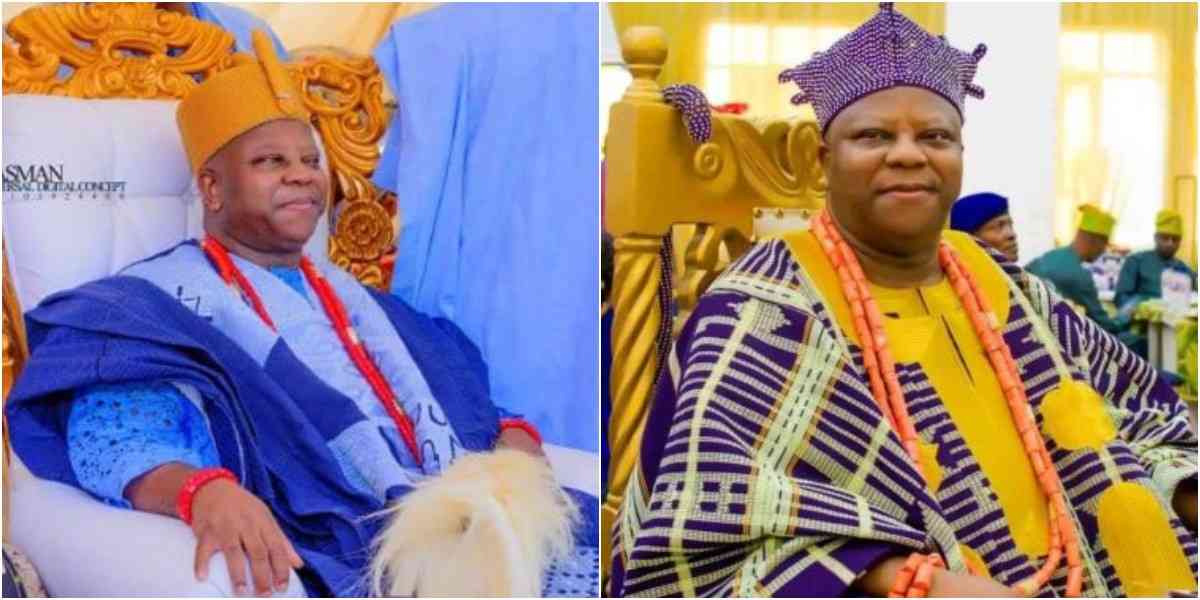
The Osun State government under Governor Ademola Adeleke is preparing to take a decisive step against the embattled traditional ruler of Ipetumodu, Oba Joseph Oloyede, following his conviction and sentencing in the United States. The monarch, popularly known as the Apetu of Ipetumodu, was on Tuesday handed a 56-month jail term by U.S. District Judge Christopher A. Boyko after being found guilty of fraudulently exploiting pandemic relief programmes set up to cushion the economic effects of COVID-19.
Weeks ago, the Osun State government had stated that it would not make any pronouncement on the ruler’s fate until the conclusion of his trial abroad. With the judgment now delivered, political insiders suggest that the Adeleke-led administration is set to initiate deposition proceedings, a move that could bring an end to Oba Oloyede’s reign on the throne of Ipetumodu.
The case has attracted wide attention not just in Nigeria but internationally, given the rare circumstance of a sitting monarch being convicted of financial crimes in a foreign jurisdiction.
Osun NULGE Denies Blocking LG Funds, Insists On Defending Rule Of Law
Oloyede’s Conviction and Sentencing
The U.S. Attorney’s Office for the Northern District of Ohio confirmed on Tuesday that the 62-year-old monarch, who holds dual Nigerian and American citizenship, was convicted of conspiracy to commit wire fraud and tax fraud. Court records revealed that from April 2020 to February 2022, Oba Oloyede, in collaboration with his associate Edward Oluwasanmi, orchestrated a scheme to siphon more than $4.2 million from U.S. government COVID-19 emergency loan programmes.
These funds, made available under the Coronavirus Aid, Relief, and Economic Security (CARES) Act, were meant to support struggling small businesses. However, prosecutors established that Oloyede and his accomplice fabricated applications for Paycheck Protection Program (PPP) and Economic Injury Disaster Loan (EIDL) funds, inflating payrolls and misrepresenting company details to secure large sums of money.
Judge Boyko sentenced Oloyede to 56 months (approximately four years and eight months) in prison, followed by three years of supervised release. The court further ordered him to pay $4,408,543.38 in restitution to the government. Additionally, he forfeited his Medina, Ohio residence—which had been purchased with illicit proceeds—along with nearly $100,000 seized by investigators.
How the Fraud Worked
Investigators disclosed that Oloyede operated five businesses and one nonprofit organization, while his co-conspirator controlled three additional business entities. These establishments served as platforms through which the fraudulent loan requests were filed.
The court heard that Oloyede not only sought funds for his own businesses but also filed fake applications on behalf of some of his tax-preparation clients. In exchange, he pocketed between 15% and 20% of the loans as “fees” for facilitating the process. Prosecutors noted that he failed to declare these illegal earnings to the Internal Revenue Service (IRS), compounding his tax fraud charges.
The fraudulent activity was far-reaching. Oloyede was found to have filed a staggering 38 fake applications, leading to the disbursement of over $4.2 million in federal stimulus funds. Of this, approximately $1.7 million went to his own entities, while Oluwasanmi received about $1.2 million for his businesses.
According to the U.S. Attorney’s Office, Oloyede diverted some of the stolen funds into real estate, including acquiring land, building a residence, and purchasing a luxury vehicle.
Reaction in Osun State
The sentencing of a sitting monarch abroad has raised difficult legal and cultural questions in Nigeria. In Osun State, where respect for traditional rulers remains deeply ingrained, the development has shocked many indigenes of Ipetumodu and beyond.
The Adeleke administration, through its Ministry of Local Government and Chieftaincy Affairs, had earlier signaled caution by stating that it would only decide the monarch’s fate after the trial. With the conviction now sealed, state officials are reportedly consulting with traditional institutions, legal experts, and community leaders to ensure that the eventual decision respects both due process and local customs.
According to sources familiar with the process, the governor is under pressure to move swiftly to preserve the integrity of traditional leadership in the state. Critics argue that allowing a convicted felon to remain a custodian of culture would undermine the sanctity of the stool.
However, some voices in Ipetumodu have urged restraint, noting that Oloyede’s legal battles occurred outside Nigeria and insisting that the community should be given room to deliberate on the matter internally before the government steps in.
Implications for Traditional Institutions
This case represents a significant test for Nigeria’s traditional leadership system. While monarchs are often regarded as custodians of culture and morality, their actions—especially when tied to international criminal activity—have far-reaching implications for the respect accorded to such institutions.
Observers believe that if Governor Adeleke’s government follows through with a deposition, it will send a strong message that traditional rulers are not above the law, particularly when their actions bring disrepute to their communities and the state.
At the same time, this development raises broader concerns about the checks and balances on traditional rulers, many of whom wield considerable influence without formal oversight mechanisms.
What Happens Next?
As things stand, Oba Oloyede will serve his sentence in a U.S. federal prison, after which he will be placed under supervised release for three years. His conviction also includes heavy financial penalties, leaving him stripped of key assets he acquired during the fraudulent scheme.
For Osun State, the more pressing issue is the future of the Apetu stool. If deposed, the kingmakers of Ipetumodu will have to begin the traditional process of selecting a successor, a procedure that may stir political and communal debates within the town.
Governor Adeleke’s handling of this delicate situation will be closely watched, as it could set a precedent for how Nigerian state governments respond when their traditional rulers become entangled in international legal scandals.
For now, the once-revered monarch sits behind bars thousands of miles away, his throne hanging in the balance.














Leave a Comment
Your email address will not be published. Required fields are marked with *