
The Market In Ile-Ife (OJA-IGBOMEKUN) 10,000 Years Before The Birth Of Jesus Long before the dawn of written history, long before the rise of empires and kingdoms, the land that would one day be known as Ile-Ife—regarded by the Yoruba as the cradle of humanity—was already home to human communities. Around 10,000 BC, roughly
The Market In Ile-Ife (OJA-IGBOMEKUN) 10,000 Years Before The Birth Of Jesus
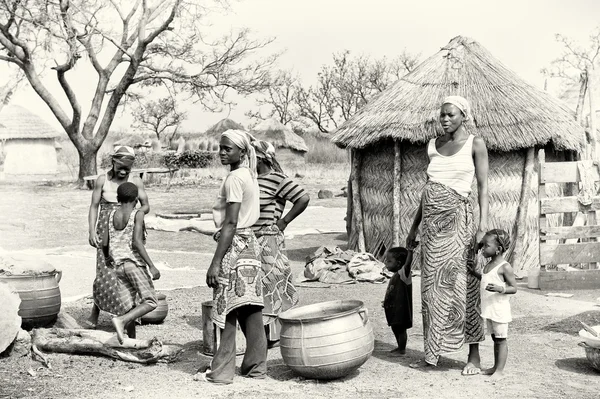
Long before the dawn of written history, long before the rise of empires and kingdoms, the land that would one day be known as Ile-Ife—regarded by the Yoruba as the cradle of humanity—was already home to human communities. Around 10,000 BC, roughly 12,000 years ago, the ancestors of modern Yoruba people were living as hunters, gatherers, and early farmers in the forests and savannas of West Africa. Though their world looked very different from the bustling city of Ife that emerged thousands of years later, it is not difficult to imagine the earliest markets of exchange where goods, ideas, and relationships were traded.
Life in Ancient Ile-Ife
OJA-IGBOMEKUN OR OJA EJIGBOMEKUN, NOW KNOWN AS AJE OJA-IFE, THE FIRST ANCIENT MARKET, ESTABLISHED BY THE DEITY OF LIGHT (ORANFE ONILE INA)
At that time, the climate of West Africa was changing. The African Humid Period had brought rains, rivers, and forests to regions that were once dry. People settled near rivers, streams, and fertile plains. Archaeological studies in Nigeria, particularly in places like Iwo Eleru (Ondo State), show that human beings lived in this region as far back as 13,000 years ago, making it one of the oldest known settlements in West Africa.
The people of prehistoric Ile-Ife would have lived in small communities of extended families, moving seasonally to hunt animals, gather wild fruits, and cultivate early forms of crops. By 10,000 BC, evidence shows that Africans were among the first to domesticate yams, oil palms, and other root crops—crops that would later define West African cuisine and economy.
The New Yam Festival: Africa’s Ancient Harvest Celebration Before The Birth Of Jesus Christ
The Birth of Trade and Markets
Though there were no “markets” as we know them today, trade was a natural part of survival. People exchanged goods not with coins, but through barter—giving what they had in abundance for what they lacked.
A woman who harvested more yams than her household needed could exchange them for palm kernels or dried fish from another family. A skilled hunter who killed an antelope could trade meat for clay pots made by another group. In this way, small gatherings of people in open spaces—near rivers, under large trees, or at crossroads—became the earliest form of markets.
These exchanges were not only economic but also social events. They allowed families to meet, form alliances, arrange marriages, and share stories.
What Would You Find in an Ile-Ife Market of 10,000 BC?
If one could walk into such a market thousands of years ago, the scene would be humble yet vibrant:
- Food Items: Tubers of wild yam, kola nuts, palm fruits, wild berries, and honey gathered from forests.
- Animal Products: Dried fish, smoked bushmeat, animal hides, and bones used for tools.
- Crafts and Tools: Stone axes, arrowheads, grinding stones, and clay pots fired in open flames.
- Cultural Items: Beads made from shells or stones, used for decoration and ritual.
Women would likely dominate the market space, as in later Yoruba tradition, while men brought heavy goods like meat or large stones. Children played nearby, and elders supervised to ensure fairness.
Spiritual Dimensions of Trade
Trade in ancient Ile-Ife was not just about survival; it carried a spiritual meaning. The Yoruba later believed that Ife was the place where Olodumare (the Supreme God) sent Oduduwa to create the world. While this myth was written down centuries later, its roots may stretch deep into prehistory.
Exchanges at the market were therefore seen not only as practical but as part of the balance of life. Offerings might have been made before major trades—libations of palm wine to ancestors or the earth. Even in these early days, the seeds of the Yoruba belief that “Aje” (the spirit of wealth and markets) governs prosperity may have been present.
Long-Distance Trade
By 10,000 BC, evidence from across Africa shows that even distant groups were exchanging goods. For example:
- Stone tools from faraway quarries have been found in unrelated communities.
- Beads made of ostrich eggshells were traded thousands of kilometers.
- Early salt and iron deposits were already being exchanged.
In Ile-Ife, such long-distance trade may have begun modestly, with stone tools, special shells, or rare foods carried from one settlement to another. This laid the foundation for the trans-Saharan trade routes that would flourish thousands of years later.
Legacy of the Ancient Market
Fast forward to recorded history, Ile-Ife became a powerful Yoruba kingdom around 500–1000 AD, famous for its art, bronze works, and organized markets. Yet, this greatness was built on the deep-rooted traditions of trade that began thousands of years earlier.
The market gatherings of 10,000 BC gave birth to the structured markets of later Yoruba cities like Oja Ife OJA-IGBOMEKUN (Ife Market), which still exists today. What began as a simple barter of yams, fish, and stone tools evolved into bustling centers where cowries, bronze, and cloth were exchanged.
The market in Ile-Ife 10,000 years before the birth of Jesus Christ was not the bustling city center we know today but rather a gathering of humanity’s earliest communities, bound together by survival, exchange, and spirituality.
It was here that the seeds of Yoruba commerce, culture, and spirituality were sown. By imagining that prehistoric market, we understand that the spirit of trade, cooperation, and community is as old as humanity itself. Ile-Ife, revered as the “navel of the world,” carries in its soil the echoes of those first traders who met under the shade of trees to share food, goods, and life itself.














Leave a Comment
Your email address will not be published. Required fields are marked with *