
Education Minister Moves to Avert Fresh Strikes in Tertiary Institutions The Minister of Education, Dr. Tunji Alausa, has assured Nigerians that the Federal Government is working decisively to prevent another wave of industrial strikes in the country’s tertiary education system. Speaking in an interview with The Nation on Sunday, Alausa emphasized that the administration was
Education Minister Moves to Avert Fresh Strikes in Tertiary Institutions
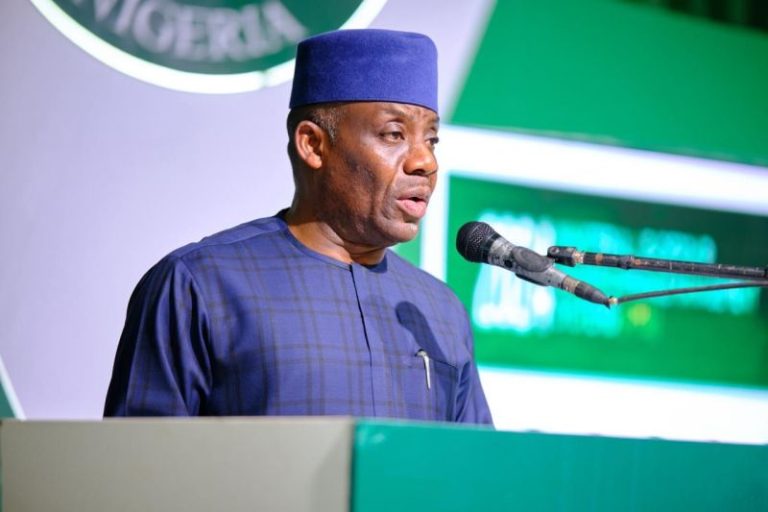
The Minister of Education, Dr. Tunji Alausa, has assured Nigerians that the Federal Government is working decisively to prevent another wave of industrial strikes in the country’s tertiary education system. Speaking in an interview with The Nation on Sunday, Alausa emphasized that the administration was engaging in “holistic negotiations” with all academic and non-academic unions to resolve long-standing disputes. He stressed that it would be unnecessary for unions to proceed with strikes while active negotiations were ongoing.
The minister’s reassurance comes amid mounting tension following strike notices and ultimatums issued by various unions in the sector. On Sunday, the Academic Staff Union of Polytechnics (ASUP) confirmed that its 21-day ultimatum, issued after its NEC meeting in Abuja on August 14, expired the same night. ASUP President, Shammah Kpanja, revealed that the union had already held several meetings with government representatives and scheduled five additional sessions. He noted that the final outcome of the talks would determine whether the union proceeds with industrial action.
Similarly, the Senior Staff Association of Nigerian Polytechnics (SSANIP) declared a 21-day strike notice during its 77th General Executive Council meeting in Kano, effective from August 27. Meanwhile, the Academic Staff Union of Universities (ASUU) staged a nationwide protest on August 26 to press home its demands. ASUU President, Professor Christopher Piwuna, told journalists on Tuesday that branch leaders had convened to deliberate on the union’s next steps.
Natasha Akpoti-Uduaghan Set To Return To Senate After Suspension Ends
Alausa’s Assurance of Holistic Engagement
Minister Alausa maintained that the Federal Government is committed to ensuring uninterrupted academic sessions in schools. He revealed that President Bola Tinubu had given him a clear mandate to engage unions truthfully and resolve issues once and for all.
“I have met with them and assured them that the government is working to meet their commitment. They have given us proposals and we are working to put the Federal Government’s responses back,” Alausa explained.
According to him, one of the key steps taken was the expansion of the Yayale Ahmed committee to accommodate all unions across the tertiary education sector, including ASUU, ASUP, and the Colleges of Education Academic Staff Union (COEASU). By merging the discussions, he said, the government hopes to eliminate the disjointed and parallel negotiations of the past.
“Things have been done in a disjointed manner before with parallel negotiations, but they are all in the academic sector. They all asked for the same thing—NEEDS assessment, condition of service, and wage balance. We have to be sure that we are talking to everybody together,” he said.
Government’s Position on Union Demands
The minister acknowledged that the unions’ demands largely revolved around improved funding, better conditions of service, and implementation of existing agreements. While admitting that government resources are stretched, he assured that negotiations would be conducted with transparency and mutual respect.
“We know they need more money but there is so much money that government has to give. We also have other competing needs but we will do everything with all honesty, all truthfulness and with mutual respect to everybody. These things take time, and we are trying to work as fast as possible but it has to be something that government can afford,” Alausa stated.
He further added that President Tinubu’s administration would not sign “bogus agreements” just to avert strikes. Instead, the government intends to address the root causes of disputes in a sustainable way.
Key Union Demands
The unions, however, insist that many of their grievances have lingered for years without resolution.
For ASUU, demands include:
- Completion of renegotiation of the 2009 FGN/ASUU Agreement based on the 2021 Nimi Briggs Committee draft.
- Release of withheld salaries following the 2022 strike.
- Payment of outstanding third-party deductions such as cooperative contributions.
- Improved funding for revitalization of public universities.
- Addressing the proliferation of universities by federal and state governments.
ASUP’s demands include:
- Release of arrears from the 25/35% salary review.
- Implementation of peculiar academic allowances.
- Granting polytechnics dual mandate status.
- Funding through a second round of NEEDS Assessment intervention.
- Ending the dichotomy between HND and university degree holders in public service.
- Addressing promotion arrears and militarization of campuses.
SSANIP is demanding:
- Release of new schemes and conditions of service.
- Renegotiation of its 2010 agreement with the Federal Government.
- Payment of arrears, including wage awards and salary reviews.
- Full implementation of the new minimum wage.
Dr. Alausa appealed to unions to exercise patience while the negotiations continue, assuring them that significant progress had already been made on “low-hanging issues.” He emphasized that his ministry is committed to constant communication with stakeholders to avoid breakdowns in trust.
“This is a government that believes in communication, and we are communicating with them. There is no reason for any strike to happen because the government is working and I am meeting with the unions. Since I became a minister, I have met with academic unions more than any group,” he said.
He expressed determination to resolve disputes in a way that future administrations would not inherit the same cycle of crises. “We have to resolve it once and for all and that is what we are determined to do. We cannot rush these things,” he added.
The education sector remains on edge as union leaders weigh the government’s promises against the reality of their unmet demands. While the minister’s assurances are likely to calm immediate fears, union executives will be closely monitoring the outcome of ongoing talks before making final decisions.
For now, students, parents, and lecturers alike await clarity on whether the holistic approach promised by the government will break the vicious cycle of strikes that has plagued Nigerian tertiary institutions for decades.













Leave a Comment
Your email address will not be published. Required fields are marked with *