
Federal Government Reports 80% Implementation of 2024 Budget, Focus on Grassroots Projects The Federal Government has disclosed that about 80 percent of the 2024 national budget has been implemented, with special emphasis on grassroots development and infrastructure projects still ongoing. This was revealed on Wednesday by the Minister of Finance, Wale Edun, after a
Federal Government Reports 80% Implementation of 2024 Budget, Focus on Grassroots Projects
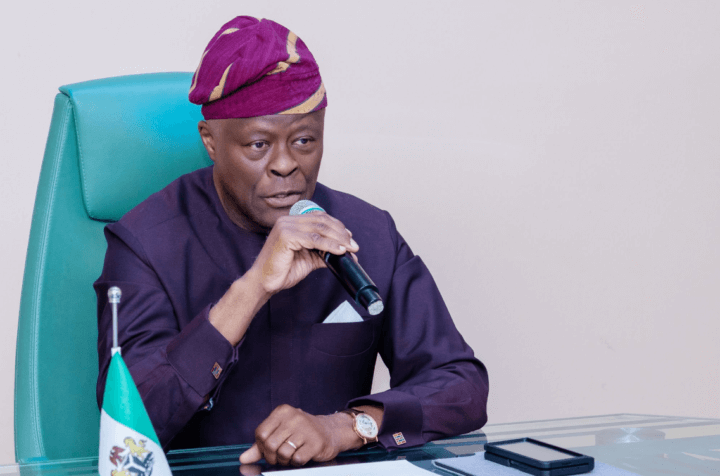 The Federal Government has disclosed that about 80 percent of the 2024 national budget has been implemented, with special emphasis on grassroots development and infrastructure projects still ongoing. This was revealed on Wednesday by the Minister of Finance, Wale Edun, after a closed-door session with the House of Representatives Committee on Appropriations.
The session, held at the National Assembly complex in Abuja, brought together Edun and the Minister of Budget and National Planning, Senator Atiku Bagudu, who appeared before lawmakers to review the implementation of the 2024–2025 Appropriation Act.
Oversight on Budget Implementation
The meeting was convened following mounting concerns among Nigerians about the pace and visibility of budget execution. Addressing journalists after the session, the Committee Chairman, Abubakar Bichi (APC–Kano), said the lawmakers had a duty to ensure accountability in the implementation of public finances.
“We engaged the Ministers of Finance and Budget; both acknowledged our concerns and assured us of their commitment. They promised that before the year ends, Nigerians will begin to see more visible results. We will continue to monitor closely,” Bichi stated.
According to him, the National Assembly was not only exercising its oversight mandate but also responding to public expectations for transparency and tangible outcomes in government spending.
Alleged Fake Lawyer Arraigned For ₦18.5m Fraud, Forgery
Finance Minister Confirms 80% Execution
Speaking after the meeting, Finance Minister Wale Edun confirmed that the 2024 budget had reached about 80 per cent implementation. He credited the progress to the National Assembly’s earlier decision to extend the lifespan of the budget until December 2025, allowing ministries, departments, and agencies (MDAs) more time to complete their projects.
“Implementation is at about 80 per cent. Since the National Assembly extended the 2024 budget till December, it is still running. We also reviewed the 2025 budget, with special focus on grassroots projects and infrastructure like roads and irrigation that directly impact citizens,” Edun explained.
He stressed that the administration was determined to ensure that budgetary provisions were “faithfully and fully” implemented. At the same time, he clarified that there were no immediate plans for a supplementary budget.
Focus on Grassroots and Infrastructure
The ministers emphasized that government spending priorities were directed at projects with direct benefits for ordinary Nigerians. These include rural roads, irrigation schemes, schools, healthcare facilities, and other forms of social infrastructure.
Budget Minister Atiku Bagudu said the National Assembly had consistently supported the Tinubu administration’s reform agenda, particularly in areas such as taxation and fiscal discipline.
“The National Assembly has supported all major reform initiatives, including tax reforms which are already yielding results. Today’s engagement helped identify areas for improvement,” Bagudu said.
He added that the administration was committed to aligning reforms with developmental needs while ensuring that rural communities benefited from government programmes.
Reforms and Accountability
Both Edun and Bagudu highlighted the importance of accountability in achieving sustainable development. The ministers pointed out that tax reforms, subsidy removal, and other fiscal adjustments were already reshaping Nigeria’s economic outlook.
According to Edun, the government’s primary goal was not merely to achieve numerical performance in budget implementation but to ensure that citizens could “see and feel the results” before the end of the year.
“Our objective is to make sure Nigerians feel the benefits of government spending. That is why we are focusing on grassroots and infrastructure projects that touch lives directly,” Edun noted.
Lawmakers’ Role in Monitoring
The House Committee on Appropriations pledged to continue monitoring implementation to ensure the executive delivers on its commitments. Chairman Bichi assured Nigerians that Parliament would not hesitate to call ministers back for further explanations if performance fell short of expectations.
Analysts say such oversight is crucial, particularly as Nigeria navigates economic reforms and rising public concerns about inflation, unemployment, and cost of living. By focusing on grassroots projects, the government hopes to counterbalance the short-term pains of reforms with visible developmental gains.
Nigerians Await Results
While government officials project optimism, citizens remain eager to see concrete improvements in their communities. Roads, electricity supply, irrigation facilities, and schools are among the projects Nigerians expect to see completed under the 2024 budget.
Observers note that timely and transparent implementation will be critical in restoring public trust in the budget process, which has often been plagued by delays, abandoned projects, and corruption.
The Federal Government’s disclosure of 80 per cent budget implementation represents progress compared to previous years, but much will depend on whether the projects translate into tangible benefits on the ground.
Looking Ahead
With only a few months left before the end of the 2024 fiscal year, both the executive and legislature face pressure to ensure that commitments are not only fulfilled on paper but felt by Nigerians across all regions. The review session underscored the delicate balance between fiscal discipline, reform implementation, and the urgent need for development at the grassroots level.
For the Tinubu administration, visible delivery of infrastructure and social projects could help ease public discontent over ongoing reforms, while for lawmakers, strict oversight may bolster credibility ahead of future elections.
As the countdown to December continues, Nigerians will be watching closely to see if the promised results materialise—whether in the form of new rural roads, functioning irrigation systems, or improved public services. The government’s ability to meet these expectations will be a key test of its fiscal management and reform agenda.







Leave a Comment
Your email address will not be published. Required fields are marked with *