
Rivers Assembly Resumes Plenary After Six-Month Emergency Rule Ends The Rivers State House of Assembly has resumed plenary sessions following the expiration of the six-month state of emergency imposed by President Bola Tinubu. The lawmakers reconvened on Thursday, September 18, marking a significant step toward restoring legislative activity in the oil-rich state. President Tinubu had
Rivers Assembly Resumes Plenary After Six-Month Emergency Rule Ends
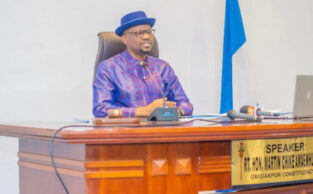
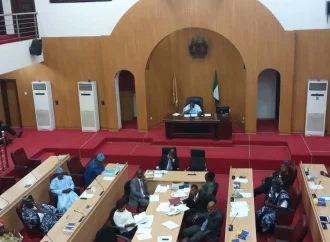
The Rivers State House of Assembly has resumed plenary sessions following the expiration of the six-month state of emergency imposed by President Bola Tinubu. The lawmakers reconvened on Thursday, September 18, marking a significant step toward restoring legislative activity in the oil-rich state.
President Tinubu had on March 18 declared emergency rule in Rivers, citing political instability fueled by the rift between Governor Siminalayi Fubara and the Minister of the Federal Capital Territory, Nyesom Wike. With the emergency lifted on September 17, the governor, his deputy Ngozi Odu, and members of the Assembly were directed to resume official duties the following day.
Fubara’s Whereabouts Unclear As Rivers State Awaits Leadership Resumption
Amaewhule Presides Over First Sitting
The resumed plenary session was presided over by the Speaker of the House, Martins Amaewhule. Proceedings were held at the conference hall located within the legislative quarters in Port Harcourt, which has functioned as the lawmakers’ temporary chamber.
The Assembly has been unable to use its official complex on Moscow Road since it was set ablaze during the height of the political crisis. The damaged structure was later demolished by the state government, and reconstruction efforts initiated by the outgone sole administrator, Rear Admiral Ibok-Ete Ibas (retd.), remain incomplete.
Governance Returns After Turbulence
The resumption of plenary marks the first official legislative activity in Rivers State since the emergency rule was declared. The suspension of normal governance during the six-month period had left residents uncertain about the state’s political future. The return of the Assembly, alongside Governor Fubara’s reinstatement, signals a renewed effort to stabilize the state’s institutions.
Political observers say the reconvening of lawmakers is a critical step toward addressing pending bills, oversight duties, and other legislative responsibilities that were stalled during the crisis. The move is also expected to test whether deep divisions within the Assembly can be reconciled.
Lingering Factionalism
Despite the resumption of plenary, Rivers State’s political landscape remains far from settled. The Assembly has long been factionalized, with rival blocs aligning themselves either with Governor Fubara or his political adversary, Nyesom Wike.
These divisions, analysts argue, may continue to challenge effective governance unless both sides commit to reconciliation. With public expectations high, the legislators are under pressure to prioritize state development over partisan interests.
A State Watching Closely
For residents of Rivers State, the reopening of the Assembly offers a glimmer of hope that normalcy may finally return after months of political turbulence. The legislative arm, long dormant under emergency rule, is once again in a position to debate laws and provide oversight on government policies.
The coming weeks will be critical as both the executive and legislative arms attempt to rebuild trust with the people. Many are watching closely to see whether Rivers can avoid a relapse into instability and instead focus on governance and development.
As plenary sessions resume, the task before the lawmakers is clear: restore legislative order, bridge factional divides, and ensure that the scars of the past six months do not derail the state’s future.












Leave a Comment
Your email address will not be published. Required fields are marked with *