

Scavengers Spreading Waste From Road Medians Worsen Environmental Problems Olufunmilayo Ojo PhD Indiscriminate dumping of refuse across Osun State, as in many parts of Nigeria, continues to pose serious environmental and public health risks. On many major roads across Osun State, from Osogbo to Ilesa, Ede to Ikirun, piles of refuse are increasingly becoming open-air
Scavengers Spreading Waste From Road Medians Worsen Environmental Problems
Olufunmilayo Ojo PhD
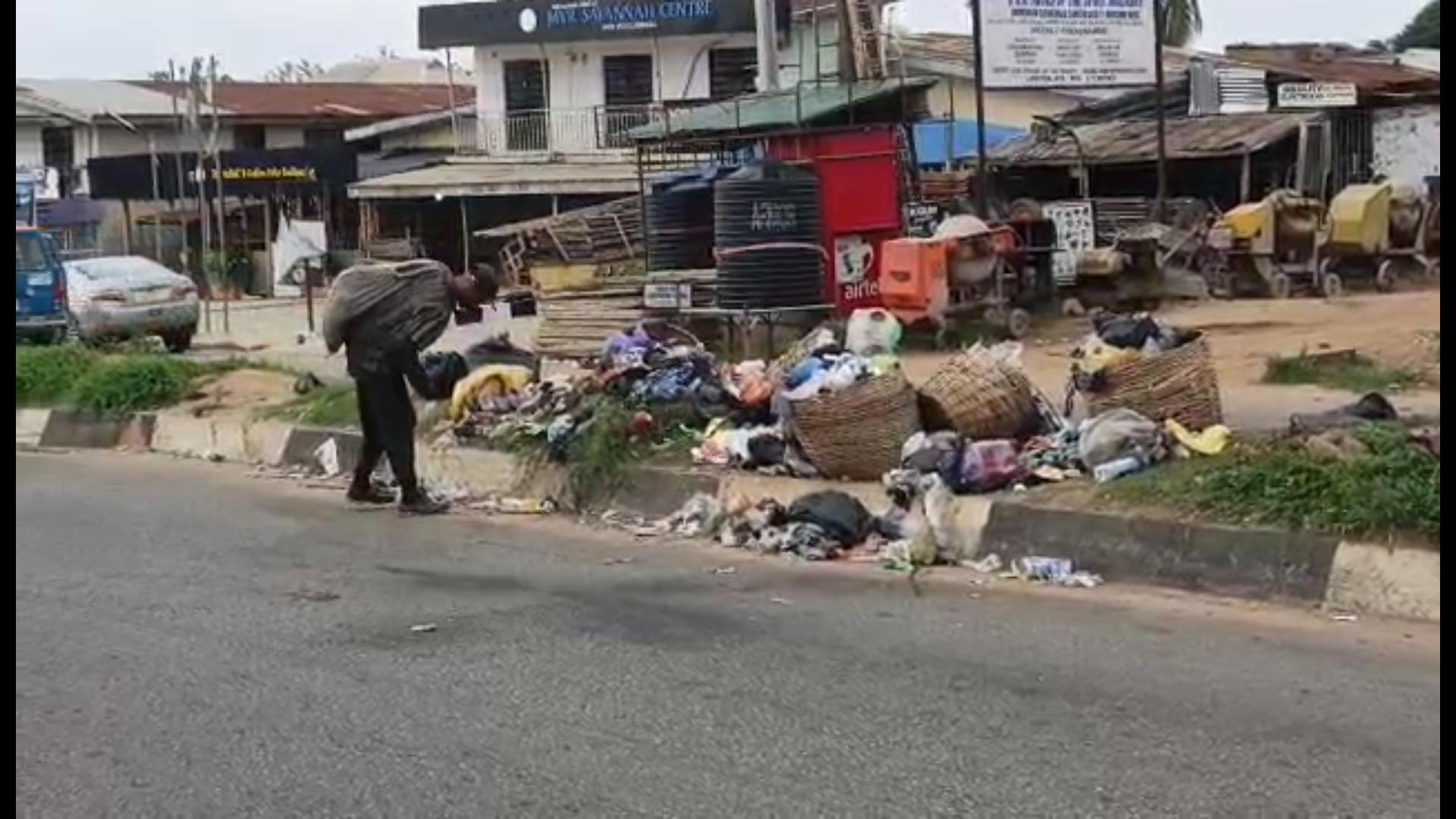
Indiscriminate dumping of refuse across Osun State, as in many parts of Nigeria, continues to pose serious environmental and public health risks.
On many major roads across Osun State, from Osogbo to Ilesa, Ede to Ikirun, piles of refuse are increasingly becoming open-air workshops.
Informal waste pickers, commonly called scavengers, rip open bags, dismantle appliances, and spread mixed waste across carriageways in search of recyclable metals, cables, plastics, and electronics.
Tinubu Calls For Commonwealth Support As Nigeria Bids To Host 2030 Centenary Games
While this activity provides livelihoods for hundreds of low-income earners, its spillover effects are choking drainages, degrading air quality, endangering public health, and undermining the state’s formal waste management efforts.
Experts warn that improper waste management leads to air pollution, water contamination, soil degradation, flooding, and the spread of infectious diseases. Blocked drainages caused by waste dumping also heighten the risk of urban flooding, while unsightly refuse heaps diminish the state’s environmental outlook.
In many developing nations, scavengers play an informal but significant role in waste management. By dismantling bagged waste to recover recyclable materials such as plastics, metals, and cartons, they help divert waste from landfills and contribute to recycling efforts.
For many, scavenging provides not only a livelihood but also a means of supporting recycling industries, which in turn create jobs and reduce demand for raw materials.
Interview with some scavengers in Osogbo, Olorunda and Ede areas of Osun state, revealed that poverty and economic necessity remain the major drivers of their trade. For them, scavenging is a way to survive and earn a modest income from the sale of reusable materials.
A tour of major roads across Osogbo and its environs, including Alekuwodo, Ogo-Oluwa, Okefia, Igbona, Power Line, Ota-Efun, Kobongbogboe, Dada Estate, Dele Yesir, Omobolanle, and Owode-Ede, showed a disturbing trend of refuse being dumped on road medians and sidewalks.
While scavengers often pick through these waste bags, their activities sometimes worsen the situation as refuse is scattered, leaving the environment unsightly and exposing residents to pollution.
Most scavengers operate at dawn or late evening, timing their work to coincide with when residents and shops place waste at kerbsides for municipal collection.
They comb through refuse for high-value fractions such as aluminium cans, iron rods, copper wires stripped from cables, plastic PET bottles, and components from broken electronics (e-waste). These are sorted into sacks and sold to middlemen and recycling yards, often outside the immediate communities.
In principle, recovering valuable materials extends product life and reduces landfill loads. But the method matters. On Osun’s highways, recovery frequently involves, tearing open refuse bags and leaving organics, diapers, and contaminated plastics scattered; smashing electronics to harvest boards and metals, releasing dust and residual chemicals; open burning of cable sheaths to extract copper, producing thick, toxic smoke and abandoning fines and residues that then wash into gutters during rainfall.
The North Carolina Department of Environmental Quality (NC DEQ) notes that illegal dumping carries both short- and long-term health consequences. Short-term issues include asthma, congenital illnesses, stress, headaches, nausea, and respiratory infections, while long-term risks range from cancer to kidney, liver, cardiovascular, and neurological diseases.
Speaking with an Environmental worker in Osogbo, Mr. Abiona Felix Olumide, described the activities of scavengers who scattered refuse on the major roads as worrisome as all efforts to curb their actions are yet to yield results.
He said, “most of the scavenger work in the wee hours of the morning or late night after residents have dropped their refuse on the meridian for government sanitation workers from Osun Waste Management Agency, (OWMA), who move round major roads with Skip Bin trucks to park the refuse.
“There is no way we could engage with the scavengers to make them understand the dangers their actionsportend for residents of the state, especially health hazards”
Olumide explained that the government is intensifying efforts to curb illegal dumping of refuse and improve sanitation across the state.
An Environmental expert, Henry Olufemi called on the government to formalise the role of scavengers in waste management.
Olufemi suggesteds measures to include registration, training, and provision of safety equipment, which could enhance public health, reduce environmental hazards, and integrate scavengers into formal recycling systems.
Osun can have both cleaner roads and a thriving recycling economy. The choice is not between livelihoods and public health, but between chaos and coordination.
By moving dismantling off the highways, tightening enforcement where it matters, and integrating informal workers into a safer system, the state can protect its people, its waterways, and its economy, one cleared gutter and one smoke-free sky at a time.
Olufunmilayo Adebomi Ojo is a Doctor of Philosophy in Mass Communication
A practicing Journalist,
Member of ASPCN, NIPR, NUJ and NAWOJ















Leave a Comment
Your email address will not be published. Required fields are marked with *