
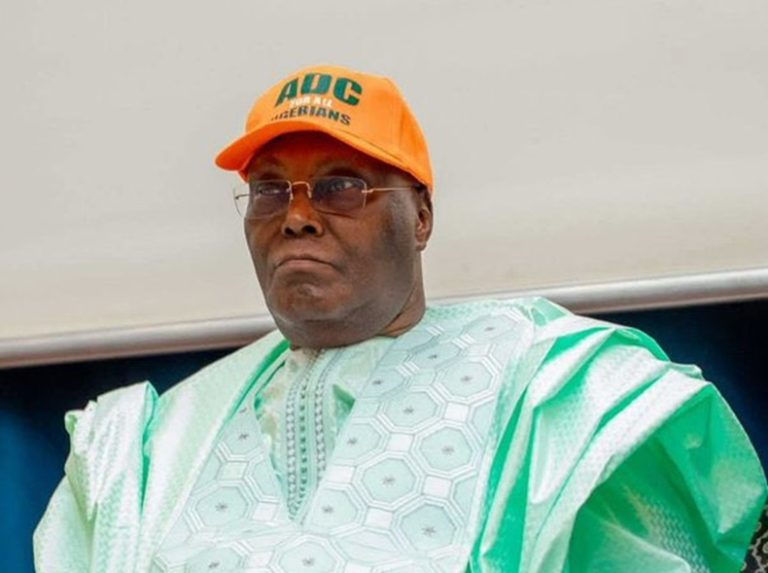
I Could Have Fixed PDP Crisis If I Was The Chairman Or Secretary – Atiku Former Vice President of Nigeria, Atiku Abubakar, has shed light on the reasons behind his inability to resolve the lingering crisis in the Peoples Democratic Party (PDP). In a recent interview with the BBC Hausa service, Atiku revealed that the
I Could Have Fixed PDP Crisis If I Was The Chairman Or Secretary – Atiku
Former Vice President of Nigeria, Atiku Abubakar, has shed light on the reasons behind his inability to resolve the lingering crisis in the Peoples Democratic Party (PDP). In a recent interview with the BBC Hausa service, Atiku revealed that the crisis in the party was deliberately worsened by the ruling All Progressives Congress (APC), which allegedly used some senior members of the PDP to frustrate efforts toward building a formidable opposition.
Atiku, who has contested the presidency several times, dismissed speculations that his political ambition is driven by desperation. According to him, his commitment remains centered on rescuing Nigeria from the current socio-economic and political turmoil. He further explained that the magnitude of sabotage within the PDP left him helpless, especially because he was neither the party chairman nor secretary, positions that could have empowered him to enforce stronger decisions.
Speaker Abbas Felicitates Nigerians At 65th Independence Anniversary
PDP Crisis and APC’s Alleged Role
Speaking on the PDP imbroglio, Atiku lamented how internal disputes within the party escalated over the years. He stressed that his influence was limited since the individuals who occupied key leadership positions were more concerned with personal interests rather than the collective good of the party.
“At a point, we could see that the PDP crises were growing, and the hope of resolving them was speedily vanishing,” Atiku noted. He alleged that certain senior members of the PDP were being manipulated by the APC-led government to weaken the opposition, thereby preventing the PDP from becoming a viable alternative to the ruling party.
The former vice president emphasized that the frustration led to the formation of the African Democratic Congress (ADC), where he is currently a member. He said the party is actively working to build its structures across states and local governments in preparation for the 2027 general elections.
Atiku’s Vision for ADC Ahead of 2027
Atiku explained that the ADC had already put in place a functioning national leadership and was focused on strengthening its state and grassroots presence. The goal, according to him, is to ensure the party emerges as a strong political force that can contest against the APC in 2027.
“Our goal is to establish the structures of the party at the state levels,” he explained. “We have already established the national leadership and they are working to ensure the state and local government structures are strengthened ahead of 2027.”
His comments reflect a shift in political strategy, indicating that he may not solely rely on the PDP for his future ambitions. Instead, he appears to be exploring alternative political platforms to achieve his mission of rescuing Nigeria.
On Nigeria at 65: A Mixed Review
As Nigeria marked its 65th Independence anniversary, Atiku shared his reflections on the country’s progress. While acknowledging that Nigeria had made some notable achievements, he said the nation was still far from realizing the vision of its founding fathers.
He challenged the Federal Government to take decisive action to fix the country’s worsening conditions. According to him, many Nigerians have lost hope in President Bola Tinubu’s administration due to its inability to provide meaningful solutions to economic hardship, political instability, and social discontent.
“The country has witnessed some changes, but it is still far from the dream of our founding fathers,” Atiku said. He called on the government to rise to the occasion and implement policies that will lift the nation out of its current struggles.
Criticism of Tinubu’s Fuel Subsidy Removal
One of Atiku’s strongest criticisms was directed at President Tinubu’s decision to remove the fuel subsidy abruptly in 2023. He argued that the unplanned removal has been the root cause of the escalating poverty and suffering experienced by millions of Nigerians.
Atiku recalled that during his tenure as vice president, he and his team had proposed a phased removal of fuel subsidy in four stages, coupled with engagements with key stakeholders, including labor unions. This approach, he explained, was designed to cushion the effects on citizens while ensuring the sustainability of the policy.
“But President Tinubu’s decision to remove subsidy fully without plans to cushion the effect brought us this unprecedented pain, suffering and ultimately, poverty in this country,” he remarked. He emphasized that no nation removes fuel subsidy entirely at once without causing severe economic backlash.
Atiku linked the present economic downturn to the policy, stating that it had triggered inflation, reduced purchasing power, and worsened living conditions for ordinary Nigerians.
Call for Responsible Leadership
Atiku’s remarks underline his consistent advocacy for responsible leadership and long-term policy planning. He insisted that what Nigeria needs is a government that prioritizes the welfare of its people over political interests.
The former vice president also highlighted that his political journey is not fueled by personal ambition but by a genuine desire to rescue Nigeria from what he described as the “unprecedented hardship” being faced under the Tinubu administration.
As the nation moves closer to the 2027 elections, Atiku’s statements indicate that he remains an active player in Nigeria’s political landscape. His criticism of the ruling party and acknowledgment of PDP’s internal challenges suggest that he is preparing for another attempt at national leadership, this time with the ADC as a possible platform.
Atiku Abubakar’s revelations provide a deeper understanding of Nigeria’s opposition politics and the challenges facing the PDP. His claims of APC interference in destabilizing the PDP shed light on the wider struggles within the nation’s democracy. Atiku’s commitment to the ADC and his criticism of Tinubu’s policies suggest that he is already positioning himself for the 2027 elections.
While many Nigerians remain skeptical about politicians’ promises, Atiku insists that his political drive is motivated by a desire to rescue the nation. Whether or not he succeeds in building a formidable opposition ahead of 2027 remains to be seen, but his statements have once again stirred conversations about leadership, governance, and the future of Nigeria.













Leave a Comment
Your email address will not be published. Required fields are marked with *