
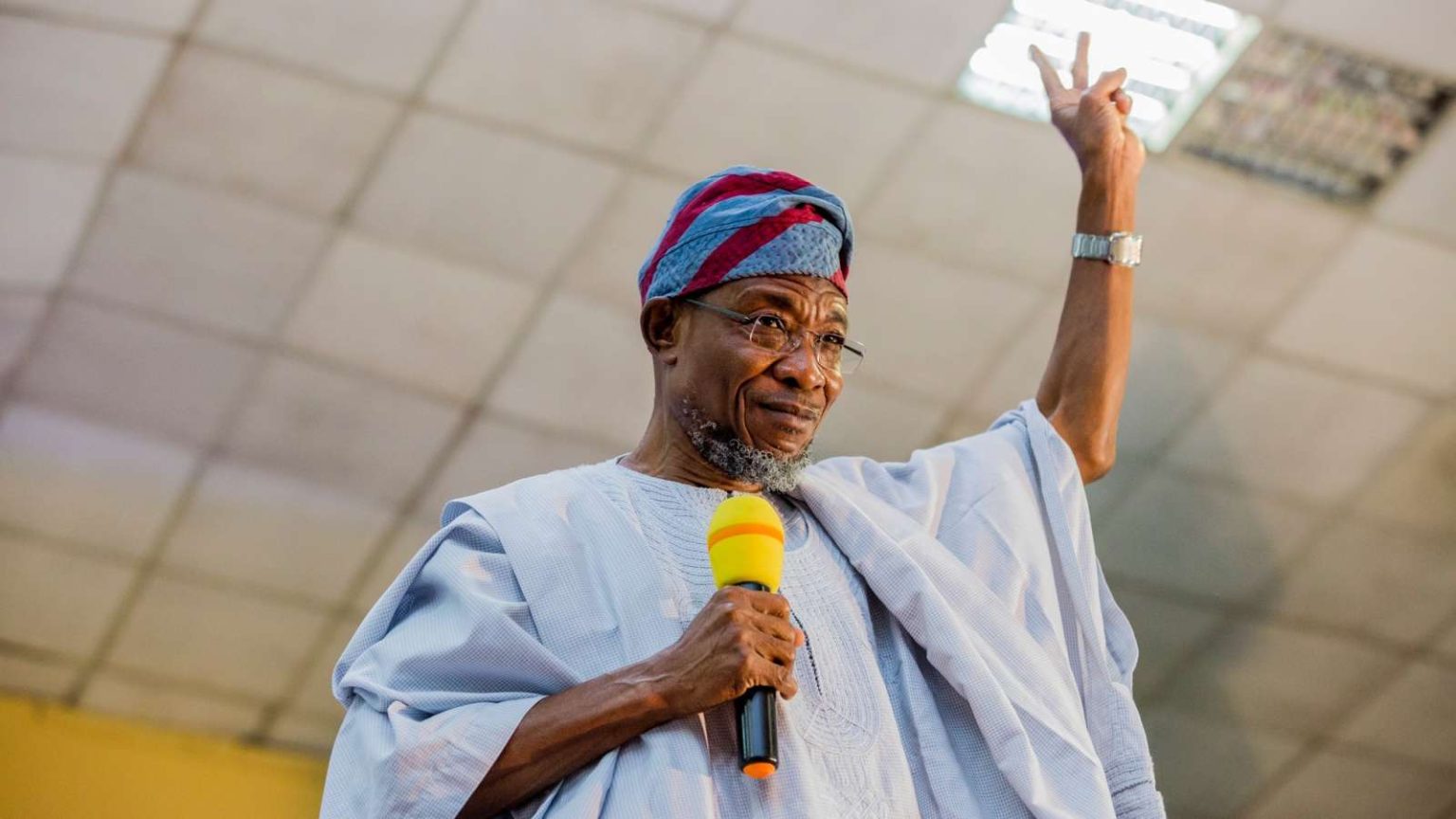
I’m A Beneficiary Of Election Shenanigans, INEC Must Stop BIVAS Abracadabra – Aregbesola The National Secretary of the African Democratic Congress (ADC), Rauf Aregbesola, has called for greater transparency and accountability in the operations of the Independent National Electoral Commission (INEC), stressing that Nigeria must reform the way it appoints and empowers the leadership of
I’m A Beneficiary Of Election Shenanigans, INEC Must Stop BIVAS Abracadabra – Aregbesola
 The National Secretary of the African Democratic Congress (ADC), Rauf Aregbesola, has called for greater transparency and accountability in the operations of the Independent National Electoral Commission (INEC), stressing that Nigeria must reform the way it appoints and empowers the leadership of the electoral body. Aregbesola made this call on Monday in Abuja during a panel discussion themed “Innovation in Electoral Technology 2015–2025.”
The former Governor of Osun State and Minister of Interior argued that the current structure of INEC gives too much power to a single individual — the INEC Chairman — which, in his view, undermines institutional independence and raises concerns about credibility and fairness in Nigeria’s electoral process. According to Aregbesola, the integrity of the country’s democracy depends not only on technological innovation but also on the transparency and impartiality of the individuals who manage the electoral system.
Aregbesola stated that while technology has improved election conduct over the years, Nigeria must go beyond technological reforms to address the structural and institutional weaknesses within INEC. “As things stand, there is too much power in the hands of one person who determines the fate of elections in this country,” he said. “If we do not change the process of who manages what in the electoral body, and continue to allow a single person to dictate the tune, we are joking with our democracy.”
He noted that the process of appointing the INEC Chairman should be reviewed to make it more transparent, participatory, and less dependent on the executive arm of government, adding that such reforms would help reduce public suspicion of bias and manipulation in the conduct of elections.
Aregbesola referenced historical examples to underscore his point, citing the infamous remark attributed to Joseph Stalin, the former Soviet leader, who allegedly said that “voters do not matter as much as the man who counts the votes.” He remarked, “Stalin said cynically that voters do not matter as much as the man who announces the result of the election. Unfortunately, that statement still holds true in many parts of Africa today, including Nigeria.”
In a candid admission, Aregbesola disclosed that he had once been a beneficiary of electoral irregularities, which he referred to as “election shenanigans.” However, he maintained that his personal experience had strengthened his conviction that Nigeria must reform its electoral institutions to ensure fairness and transparency. “I am a beneficiary of shenanigans in elections and the struggle for it,” he said. “But because I have been there, I know the damage it can do. That is why I am advocating for a change in the system.”
He explained that the key to credible elections lies in reducing the concentration of power in the hands of one individual within INEC and making the commission more accountable to the Nigerian people. According to him, the process of selecting the INEC Chairman and national commissioners should involve multiple stakeholders, including civil society, professional groups, and political parties, to ensure that appointments are based on merit, integrity, and neutrality.
Beyond institutional reforms, Aregbesola also emphasized the need for technological transparency in INEC’s operations, particularly in the deployment of the Bimodal Voter Accreditation System (BIVAS) and other digital tools used for election management. He expressed concern that INEC often fails to adequately demonstrate or explain the functionalities of its electoral technology to the public before elections, leading to confusion, mistrust, and controversy during and after voting.
“INEC must be transparent and clear about the technology it intends to use for elections,” Aregbesola said. “There is too much that is hidden from public view in the deployment and consistency of BIVAS. The law requires INEC to publicly demonstrate the technology it wants to use during elections, and this must be respected.”
He insisted that INEC should not only announce the technologies it plans to use but also physically demonstrate how they work to political parties, observers, and the general public well before election day. “Let us have an idea of what we want to do. Don’t tell us you are using BIVAS or any other system for one election, only to change everything on election day without prior notice. That is abracadabra,” he warned.
Aregbesola added that public demonstration of electoral technology is not merely a matter of convenience but a legal obligation under Nigeria’s Electoral Act, which mandates INEC to carry out open and transparent presentations of its operational systems. “The existing law of INEC compels it to demonstrate to Nigerians how it’s going to conduct the election,” he explained. “That will go a long way to compel it to a standard procedure that has been shown to the people, instead of springing surprises on election day.”
The ADC national secretary stressed that openness and consistency in electoral technology would help reduce post-election disputes and strengthen citizens’ confidence in the process. He said that Nigeria’s elections have too often been marred by controversy because of sudden technical failures, unexplained glitches, and inconsistent use of electronic systems, which fuel suspicions of foul play.
He also called for a collective national commitment to improving electoral integrity, noting that credible elections are essential for political stability, good governance, and public trust. “Our democracy cannot thrive on secrecy and manipulation,” Aregbesola said. “We must build a system that is open, predictable, and fair to all participants.”
Aregbesola concluded by reaffirming that both politicians and electoral officials have a shared responsibility to protect the sanctity of the ballot and ensure that votes truly count. He maintained that the credibility of Nigeria’s democracy would not depend solely on the sophistication of its technology but on the honesty and transparency of those entrusted with managing elections.
“Technology can enhance transparency, but it cannot replace integrity,” he declared. “If we want Nigerians to believe in elections, we must make INEC’s operations open and accountable. Only then can we build a democracy that truly reflects the will of the people.”
Aregbesola’s remarks have since sparked renewed debate over the independence of INEC, the appointment of its leadership, and the trustworthiness of electoral technology, all of which remain central to Nigeria’s democratic evolution as the nation prepares for future elections.














Leave a Comment
Your email address will not be published. Required fields are marked with *