
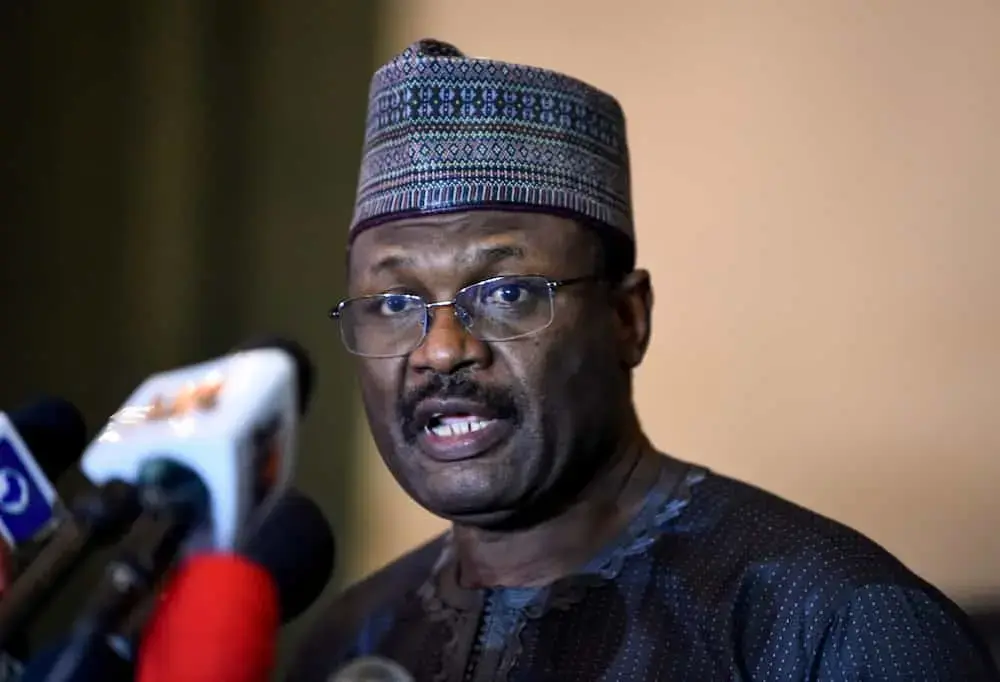
Why I Stepped Down As INEC Chairman-Mahmood The outgoing Chairman of the Independent National Electoral Commission (INEC), Professor Mahmood Yakubu, has officially stepped down after ten years in office. The decision, according to Yakubu, was made to pave the way for the appointment of a new helmsman who will steer the nation’s electoral
Why I Stepped Down As INEC Chairman-Mahmood
The outgoing Chairman of the Independent National Electoral Commission (INEC), Professor Mahmood Yakubu, has officially stepped down after ten years in office. The decision, according to Yakubu, was made to pave the way for the appointment of a new helmsman who will steer the nation’s electoral body through upcoming elections and the broader democratic process.
The handover ceremony, held at the INEC headquarters in Abuja on Tuesday, was conducted during a consultative meeting with Resident Electoral Commissioners (RECs). During the event, Yakubu handed over the reins of leadership to a national commissioner, May Agbamuche-Mbu, who now assumes the role of Acting Chairman pending the appointment of a substantive chairman by the appropriate acting chairmanahmood Yakubu’s Exit: A Strategic Transition at INEC
Addressing the gathering, Yakubu explained that his decision to step aside was guided by the need for continuity and stability within the commission, especially as Nigeria prepares for fresh electoral engagements. Quoting Section 36, Subsections 1 and 2 of the 1999 Constitution, as amended, he noted that it was both a personal and institutional decision to ensure that INEC remains focused and well-prepared for the future.
Senate Moves To Sanction Nigerians Convicted Abroad, Proposes 10-Year Passport Ban
“In the interim, I am handing over to one of the most senior national commissioners by date of appointment,” he announced. “Following consultation with other national commissioners, Ms. May Agbamuche-Mbu will serve in acting capacity pending the appointment of a substantive chairman of the commission.”
He further expressed optimism that the transition would allow the appointing authorities sufficient time to select a capable successor who can “settle down to the task of conducting elections and electoral activities in Africa’s most demographically and logistically complex environment.”
Yakubu’s resignation comes at a critical juncture for INEC, as preparations intensify for several key elections — including the Anambra governorship election in November, the FCT Area Council elections, and the Ekiti and Osun gubernatorial polls slated for 2026. He also disclosed that preliminary groundwork had already begun for the 2027 general elections, underscoring the commission’s commitment to long-term planning.
Reforms, Innovations, and Challenges Under Yakubu’s Tenure
Reflecting on his ten-year tenure, Professor Yakubu highlighted several reforms that reshaped the operations of the electoral body. Among his notable achievements were the consolidation of the biometric register of voters and the digitisation of multiple manual processes, which included candidate nominations, accreditation of observers and journalists, and submission of party agents.
He also introduced significant technological innovations such as result management systems, virtual training platforms for election staff, and the Election Monitoring and Support Centre (EMSC), which improved the transparency and efficiency of the electoral process.
Under his leadership, INEC took bold steps to enhance electoral integrity through the use of technology in collation and transmission of results. Despite these advancements, Yakubu admitted that Nigeria’s electoral system still faces significant challenges that require continuous improvement.
“While we have made notable progress, the task of strengthening our electoral system is far from over,” he said, emphasizing the need for ongoing reforms, voter education, and improved logistics for election materials.
He pointed out that logistical management—including the procurement, production, and transportation of massive election materials by road, air, and sea—remains one of INEC’s most formidable challenges.
Yakubu also drew attention to the pending Electoral Act Amendment Bill currently before the National Assembly. He noted that once passed, the new law would prompt another round of review of INEC’s operational guidelines and election manuals, ensuring that the institution remains compliant with evolving legal and democratic standards.
Agbamuche-Mbu Promises Continuity and Integrity
In her acceptance remarks, the Acting Chairman, May Agbamuche-Mbu, praised Yakubu for his exceptional leadership, describing his tenure as a period of transformative reform and resilience. She commended his “hard work and dedication in serving our country meritoriously,” adding that history would judge him favourably for his contributions to Nigeria’s democratic evolution.
Agbamuche-Mbu pledged to uphold the commission’s integrity and build upon the solid foundation laid by her predecessor. “I pledge to uphold the integrity of the commission and work with utmost professionalism, dedication, and unity with all national commissioners, the RECs, directors, and staff of INEC nationwide,” she affirmed.
She assured Nigerians that INEC under her stewardship would continue to engage stakeholders—including political parties, civil society organisations, security agencies, and the media—to ensure credible and transparent elections.
Yakubu, in his farewell remarks, expressed deep gratitude to the INEC team, political parties, the National Assembly, security agencies, civil society, and the Nigerian public. He said their support and constructive criticisms were instrumental in keeping the commission accountable and innovative.
“Together, we managed the enormous responsibilities of the commission, sometimes on the verge of breaking down,” he recalled. “Above all, I thank Nigerians for their comments as well as criticisms which encouraged rather than discouraged us to persevere.”
As the curtain closes on Professor Mahmood Yakubu’s decade-long stewardship, the transition signals both the end of an era and the beginning of a new chapter for Nigeria’s electoral commission. With May Agbamuche-Mbu now at the helm in an acting capacity, all eyes will be on INEC’s next steps as it continues the crucial work of safeguarding the nation’s democracy.










Leave a Comment
Your email address will not be published. Required fields are marked with *