
FG Re-awards Ibadan-Ife-Ilesha Road to New Contractor In what can only be described as another episode of Nigeria’s long-standing infrastructure drama, the Federal Government has once again re-awarded the Ibadan–Ife–Ilesha Expressway project to a new contractor, years after the previous one vanished into thin air—along with a generous chunk of taxpayers’ money. The decision, announced
FG Re-awards Ibadan-Ife-Ilesha Road to New Contractor
 In what can only be described as another episode of Nigeria’s long-standing infrastructure drama, the Federal Government has once again re-awarded the Ibadan–Ife–Ilesha Expressway project to a new contractor, years after the previous one vanished into thin air—along with a generous chunk of taxpayers’ money.
The decision, announced on Thursday by the Minister of Works, Senator David Umahi, has left Nigerians both amused and exasperated, as this marks the third time the same road project is being handed to a “fresh, competent” contractor. The minister, speaking during a press briefing in Abuja, claimed that the re-award was “necessary to ensure speedy completion,” though critics argue that the word “speedy” has no business being in the same sentence as Nigerian road projects.
According to Umahi, the new contractor—whose name the ministry conveniently refused to disclose for now—will begin work “immediately.” He promised that this time, the government would “closely monitor” the project to ensure it doesn’t end up like the last two contracts, which were swallowed by the potholes they were supposed to fix.
“We are committed to delivering a durable road that will stand the test of time,” the minister said confidently, though many motorists would rather see a road that can stand the test of next month’s rainfall.
Years of Excuses and Half-Completed Sections
The Ibadan–Ife–Ilesha Road has long been a metaphor for Nigeria’s endless cycle of promises, delays, and diversions. Originally awarded during the previous administration, construction began with the usual fanfare—bulldozers, politicians in reflective jackets, and photo ops that suggested progress was just around the corner.
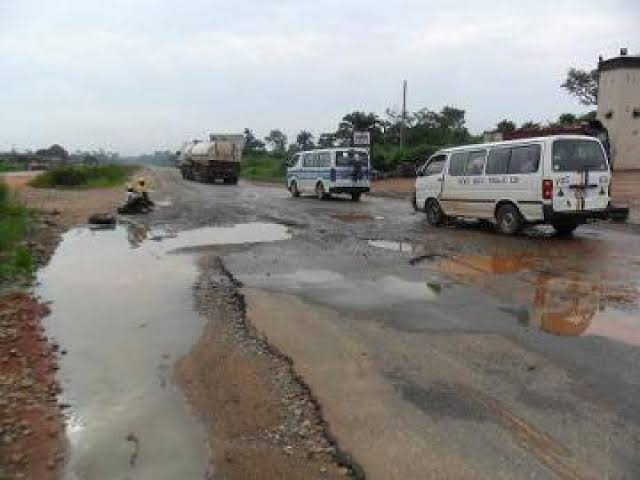
But soon, the contractors disappeared, leaving behind a trail of half-graded surfaces, abandoned equipment, and frustrated road users. For residents and travelers who use the route daily, the journey from Ibadan to Ilesha feels less like a road trip and more like a survival mission.
Commuters describe the road as a “test of faith,” with deep craters, flooded sections, and random detours through villages that make Google Maps lose its patience. Drivers have developed a strange kind of sixth sense, instinctively swerving to avoid invisible potholes even when the road is newly patched.
Endless Promises, Minimal Progress
In 2023, the Ministry of Works re-awarded the project to another firm, claiming the new contractor had “modern equipment and better capacity.” However, two years later, that same “capacity” was allegedly overwhelmed by “rising cost of materials” and “unforeseen challenges,” resulting in another abandoned site.
Now, in 2025, a fresh round of promises is being served to the public, garnished with words like “transparency,” “accountability,” and “value for money.” Nigerians have heard this recipe before—usually before the next budget approval or election cycle.
Public Reaction: Eye Rolls and Skepticism
Reactions from Nigerians have been predictably skeptical. On social media, users mocked the announcement, with one post reading, “Ibadan–Ife–Ilesha Road has had more contractors than marriages in Nollywood.”
A trader in Gbongan, Mrs. Funke Ojo, said the constant re-awarding was just another excuse for officials to recycle funds. “We don’t care about which contractor. We just want to drive without losing our car alignment or our patience,” she said.
Commercial drivers have also expressed frustration, saying the state of the road is not only damaging vehicles but also raising transport fares. “If you see how we dodge potholes, you’d think we’re dancing Shoki,” said one driver, laughing bitterly.
Lawmakers Join the Bandwagon
Predictably, members of the National Assembly have joined the chorus, calling for “urgent oversight” and “proper investigation.” But as history has shown, these calls often fade once cameras are turned off. A senator from Osun State reportedly promised to “personally monitor” the road project, though he admitted he hasn’t used the route in years.
Meanwhile, civil engineers have warned that continuous re-award without proper review of previous failures is a recipe for more wasted funds. “The real problem is not the contractor—it’s the system that rewards inefficiency,” said a construction expert who asked not to be named.
The Road Ahead—Literally and Figuratively
For now, the new contractor is expected to mobilize to site “within two weeks,” though the term “mobilize” in Nigerian government language can mean anything from parking a bulldozer by the roadside to setting up a signboard that reads “Project in Progress.”
Sugar Has Killed More People Than Bullets
As residents brace for yet another round of promises, many believe the Ibadan–Ife–Ilesha Road has become a symbol of Nigeria’s developmental déjà vu—a road forever under construction, leading nowhere fast.
Until visible results appear, most Nigerians have resigned themselves to the reality that the road, much like the government’s sincerity on the matter, remains perpetually under repair.
In the words of one weary commuter:
“Every government says they will fix this road. Maybe one day they will. But by then, we might all be flying.”











Leave a Comment
Your email address will not be published. Required fields are marked with *