
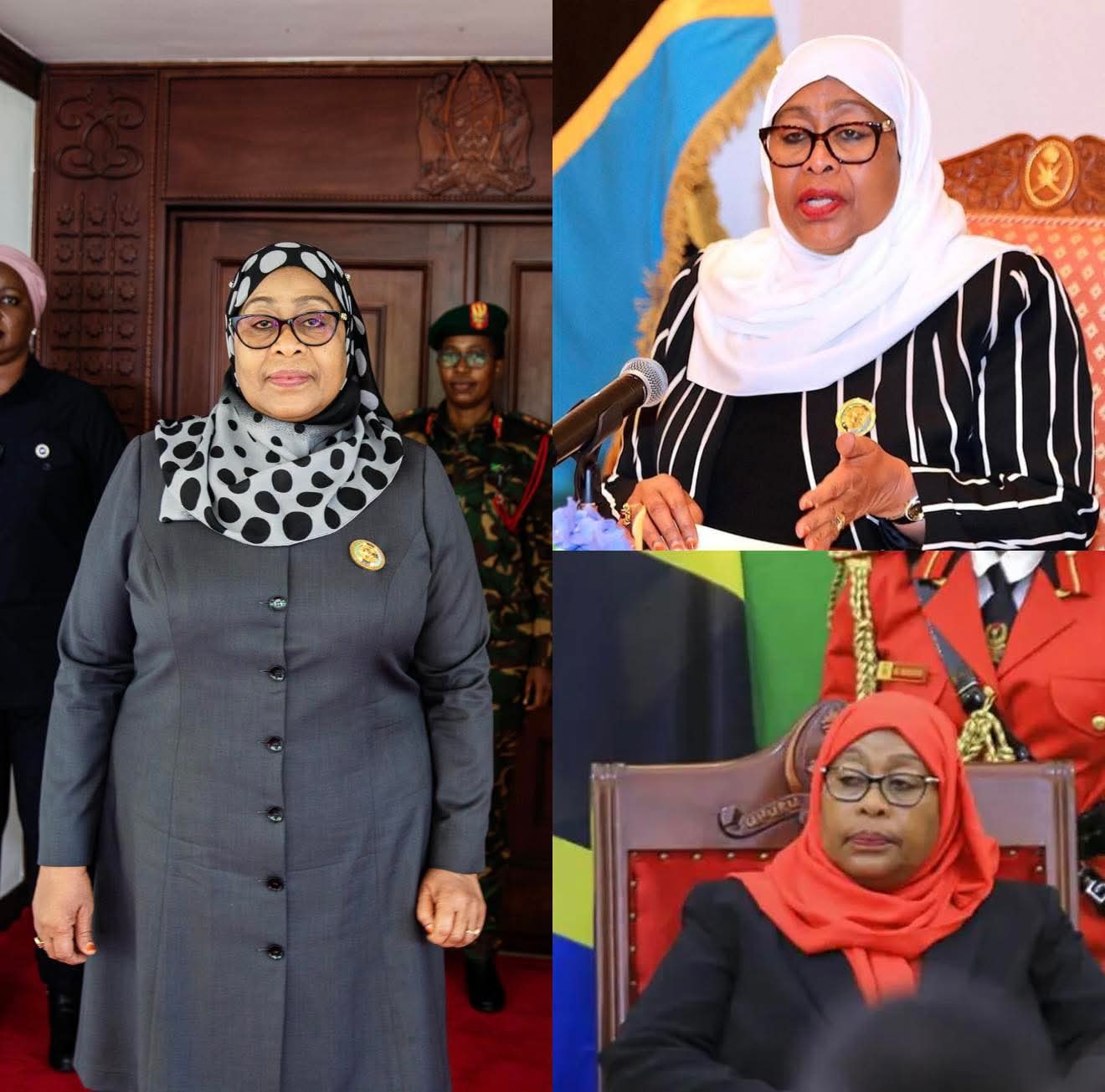
Tanzania’s First Female President Samia Suluhu Seeks Re-election Amid Crackdown on Opposition Tanzania is set to hold a presidential election on October 29, but what should be a landmark democratic exercise is now marred by controversy, repression, and fear. President Samia Suluhu Hassan, the country’s first female head of state, is seeking re-election amid
Tanzania’s First Female President Samia Suluhu Seeks Re-election Amid Crackdown on Opposition
Tanzania is set to hold a presidential election on October 29, but what should be a landmark democratic exercise is now marred by controversy, repression, and fear. President Samia Suluhu Hassan, the country’s first female head of state, is seeking re-election amid widespread allegations of political persecution, with all major opposition figures either jailed, disqualified, or missing under suspicious circumstances.
The tense atmosphere in Tanzania marks a troubling chapter in the nation’s political history. Once regarded as one of East Africa’s most stable democracies, Tanzania now faces mounting criticism from both domestic and international observers over what they describe as a systematic clampdown on dissent and opposition voices ahead of the polls.
A One-Woman Race?
President Samia Suluhu, who assumed office in 2021 following the sudden death of her predecessor, John Magufuli, initially won praise for her moderate tone and promises of political openness. However, her administration’s actions in the lead-up to the 2025 election have sparked accusations that she is determined to eliminate all opposition and consolidate power.
Key opposition leaders — including ACT-Wazalendo’s Zitto Kabwe, CHADEMA’s Freeman Mbowe, and former presidential hopeful Tundu Lissu — have been arrested or barred from contesting. Others, such as activist Maria Sarungi Tsehai, have reportedly gone into hiding after receiving threats. In a disturbing twist, several of these opposition figures have allegedly been abducted by unknown men, with their whereabouts remaining unknown for weeks.
Human rights groups, including Amnesty International and Human Rights Watch, have called for urgent investigations into these disappearances, describing them as “state-sponsored abductions aimed at silencing political competition.”
“The pattern of arrests, disqualifications, and enforced disappearances paints a grim picture of Tanzania’s political environment,” said Deprose Muchena, Amnesty’s Regional Director for East and Southern Africa. “The government’s actions are effectively turning the election into a one-woman race.”
Opposition Silenced, Parties Crippled
In recent weeks, Tanzania’s National Electoral Commission (NEC) has disqualified multiple opposition candidates on what critics describe as flimsy or politically motivated grounds. Some were removed for “irregular documentation,” while others were accused of violating electoral laws.
CHADEMA, Tanzania’s main opposition party, claims that over 70 of its parliamentary and local government candidates have been disqualified without due process. The party’s offices in several regions have been raided by police, and campaign materials confiscated.
Party leader Freeman Mbowe, who was previously jailed in 2021 on terrorism charges widely condemned as politically motivated, has once again been detained — this time on allegations of “inciting public unrest.” His legal team reports limited access to him and claims he has been subjected to harsh treatment while in custody.
Tundu Lissu, who survived an assassination attempt in 2017 and has since lived mostly in exile, was also prevented from returning to Tanzania after being declared “a threat to public security.” His campaign manager, reportedly abducted in Dar es Salaam earlier this month, remains missing.
Government Denies Wrongdoing
The Tanzanian government has rejected accusations of political repression, insisting that all legal processes are being followed. Government spokesperson Gerson Msigwa told state media that “the President has nothing to do with the legal challenges faced by opposition candidates” and that “the law must apply equally to all.”
Msigwa accused Western governments and human rights organizations of “meddling in Tanzania’s internal affairs” and attempting to “delegitimize a fair and transparent electoral process.”
However, critics argue that the independence of Tanzania’s electoral and judicial institutions has been deeply compromised. “The NEC acts as an arm of the ruling party, not as a neutral referee,” said Fatma Karume, a constitutional lawyer and former president of the Tanganyika Law Society. “Democracy in Tanzania has been hijacked under the guise of legality.”
Fear and Intimidation on the Streets
Reports from civil society organizations describe a pervasive climate of fear. Political rallies by opposition groups have been banned under the pretext of maintaining public order. Journalists covering election-related stories have faced intimidation, arbitrary detention, and even physical assault.
According to the Tanzania Media Council, at least 11 journalists have been arrested or harassed since August for reporting on opposition activities or criticizing the government’s handling of the election process. Independent media outlets face censorship, and some have had their licenses suspended.
Residents in Dar es Salaam, Dodoma, and Arusha report an increased security presence, with police and military personnel patrolling the streets. The deployment, authorities claim, is to ensure “peaceful elections,” but many citizens interpret it as a show of force meant to discourage protests.
International Reactions and Regional Implications
The international community has expressed growing concern over the deteriorating political climate. The United States, the European Union, and the African Union have all called for “free, fair, and inclusive elections.” The United Nations has urged Tanzanian authorities to guarantee the safety of opposition candidates and to investigate the alleged abductions.
Regional analysts warn that Tanzania’s crisis could have ripple effects across East Africa. “If Tanzania — once a model of stability — slides into authoritarianism, it sends a dangerous message to other countries in the region,” said political analyst Rashid Adebayo of the University of Nairobi.
A Pivotal Moment for Tanzania
As the October 29 election draws closer, the stakes could not be higher. For President Samia Suluhu, the vote may cement her position as a dominant political force. But for many Tanzanians, it may signal the end of an era of pluralism and the beginning of deeper repression.
With opposition silenced, civil society under siege, and fear spreading across the nation, questions linger over whether Tanzania’s democracy can survive its current leadership — or whether the upcoming election will merely confirm what many already fear: that true political competition in Tanzania has become a thing of the past.










Leave a Comment
Your email address will not be published. Required fields are marked with *