
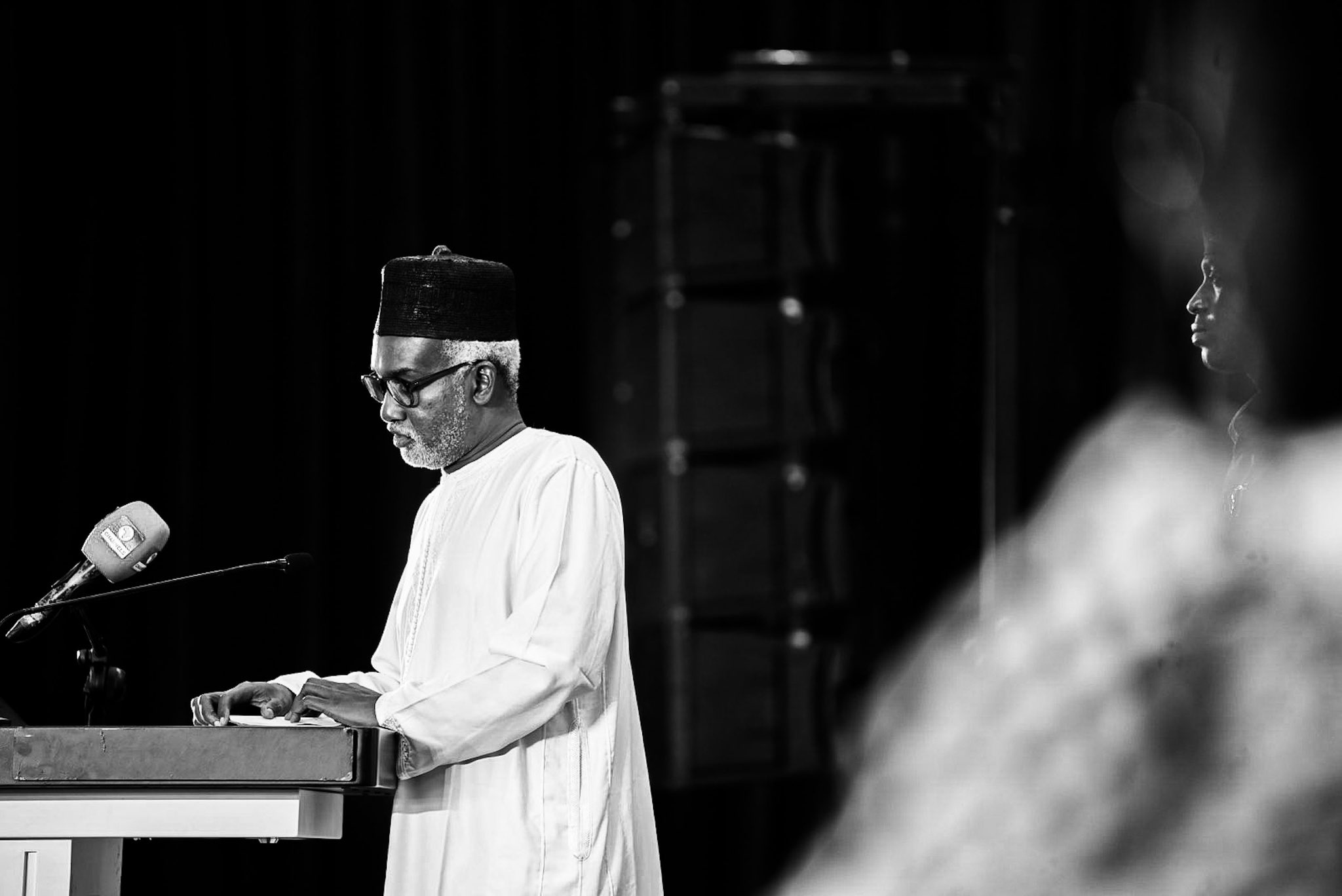
Tuggar: Why It’s Impossible for Nigeria to Support Religious Persecution Nigeria’s Minister of Foreign Affairs, Yusuf Tuggar, has firmly dismissed recent allegations that the Nigerian government engages in or supports religious persecution, describing such claims as “impossible” and contrary to the nation’s constitutional and moral foundations. Akpabio Instructed Airport Officials To Seize My Passport Again,
Tuggar: Why It’s Impossible for Nigeria to Support Religious Persecution
 Nigeria’s Minister of Foreign Affairs, Yusuf Tuggar, has firmly dismissed recent allegations that the Nigerian government engages in or supports religious persecution, describing such claims as “impossible” and contrary to the nation’s constitutional and moral foundations.
Tuggar made the statement on Tuesday in Berlin, Germany, during a meeting with Johann Wadephul, Germany’s Foreign Affairs Minister. The meeting came amid renewed international scrutiny over alleged religious intolerance and violence in Nigeria, following the recent decision by former United States President Donald Trump to designate Nigeria as a “country of particular concern” over supposed attacks on Christians.
Addressing journalists after the high-level diplomatic meeting, Tuggar stated unequivocally that Nigeria, as a secular state with a multi-religious and multi-ethnic population, is constitutionally incapable of endorsing or promoting religious persecution in any form. He emphasized that the Nigerian constitution provides for freedom of religion and association, and no government—whether federal, state, or local—can act contrary to these provisions.
“This (the constitution) is what shows that it is impossible for there to be a religious persecution that can be supported in any way, shape, or form by the government of Nigeria at any level — be it federal, regional, or local. It is impossible,” Tuggar said.
Nigeria’s Constitutional Commitment to Religious Freedom
Tuggar reiterated that Nigeria’s 1999 Constitution, as amended, explicitly guarantees freedom of thought, conscience, and religion. This provision, he said, forms the bedrock of Nigeria’s social and political identity.
“The Nigerian government is bound by law and moral duty to protect the rights of all its citizens, regardless of faith or belief,” he added. “No institution of government is empowered to discriminate against any person or group on the basis of religion.”
He also noted that Nigeria’s religious diversity is one of its greatest strengths, not a weakness. With Christianity and Islam being the two dominant faiths, alongside several indigenous beliefs, Tuggar said successive governments have maintained a delicate balance to ensure peaceful coexistence and mutual respect among different religious communities.
Rejecting External Misconceptions
The foreign affairs minister expressed disappointment that some international observers and foreign governments continue to misinterpret Nigeria’s complex security challenges through the narrow lens of religion.
According to him, much of the violence or unrest that occurs in certain parts of Nigeria is driven by factors such as poverty, terrorism, and ethnic tensions—not government-backed religious persecution.
“It is important for the international community to understand that the Nigerian government does not, and will never, support violence or discrimination against any faith group,” Tuggar said. “The acts of violent extremists or criminal elements do not reflect the policies or values of the Nigerian state.”
He also emphasized that the administration of President Bola Ahmed Tinubu has continued to work tirelessly to address insecurity and foster national unity through inclusive governance and dialogue among religious and ethnic leaders.
Strengthening International Cooperation
During his meeting with the German foreign affairs minister, Tuggar called for stronger collaboration between Nigeria and Germany in promoting global religious tolerance, human rights, and counterterrorism efforts.
He noted that Germany remains one of Nigeria’s most reliable partners in Europe, especially in areas such as renewable energy, education, and security. Both nations, he said, share a mutual interest in building peaceful societies that respect diversity and uphold democratic values.
Wadephul, in his response, commended Nigeria for its continued commitment to peace and stability in West Africa, particularly through its leadership role in the Economic Community of West African States (ECOWAS). He pledged Germany’s continued support in strengthening democratic institutions and advancing interfaith dialogue.
Setting the Record Straight
Tuggar also used the opportunity to address what he described as “persistent misinformation” regarding the state of religious freedom in Nigeria. He said while isolated cases of religiously motivated violence do occur, they are not reflective of government policy or the broader character of Nigerian society.
“The government of Nigeria investigates and prosecutes all cases of violence, regardless of who is involved,” he said. “We do not see religion; we see Nigerians. Our goal is justice, peace, and equal protection under the law.”
He further urged foreign leaders and organizations to engage directly with Nigerian authorities and civil society before making public designations or policy decisions based on incomplete or inaccurate information.
Upholding National Unity
Tuggar’s remarks underscore the federal government’s consistent position that Nigeria remains a secular, democratic, and inclusive nation. The minister reaffirmed that President Tinubu’s administration is determined to promote unity, security, and prosperity among all citizens, irrespective of religion or region.
“Nigeria’s strength lies in its diversity,” Tuggar concluded. “Our people—Muslims, Christians, and those of other faiths—live side by side, work together, and share common dreams. The idea that the Nigerian government supports persecution of any religion is not only false but also an insult to the spirit of our nation.”
With Tuggar’s latest statement, the Nigerian government has once again made its position clear: religious persecution has no place in Nigeria’s laws, policies, or values. The country, he affirmed, remains committed to peace, justice, and the protection of every citizen’s right to worship freely.













Leave a Comment
Your email address will not be published. Required fields are marked with *