
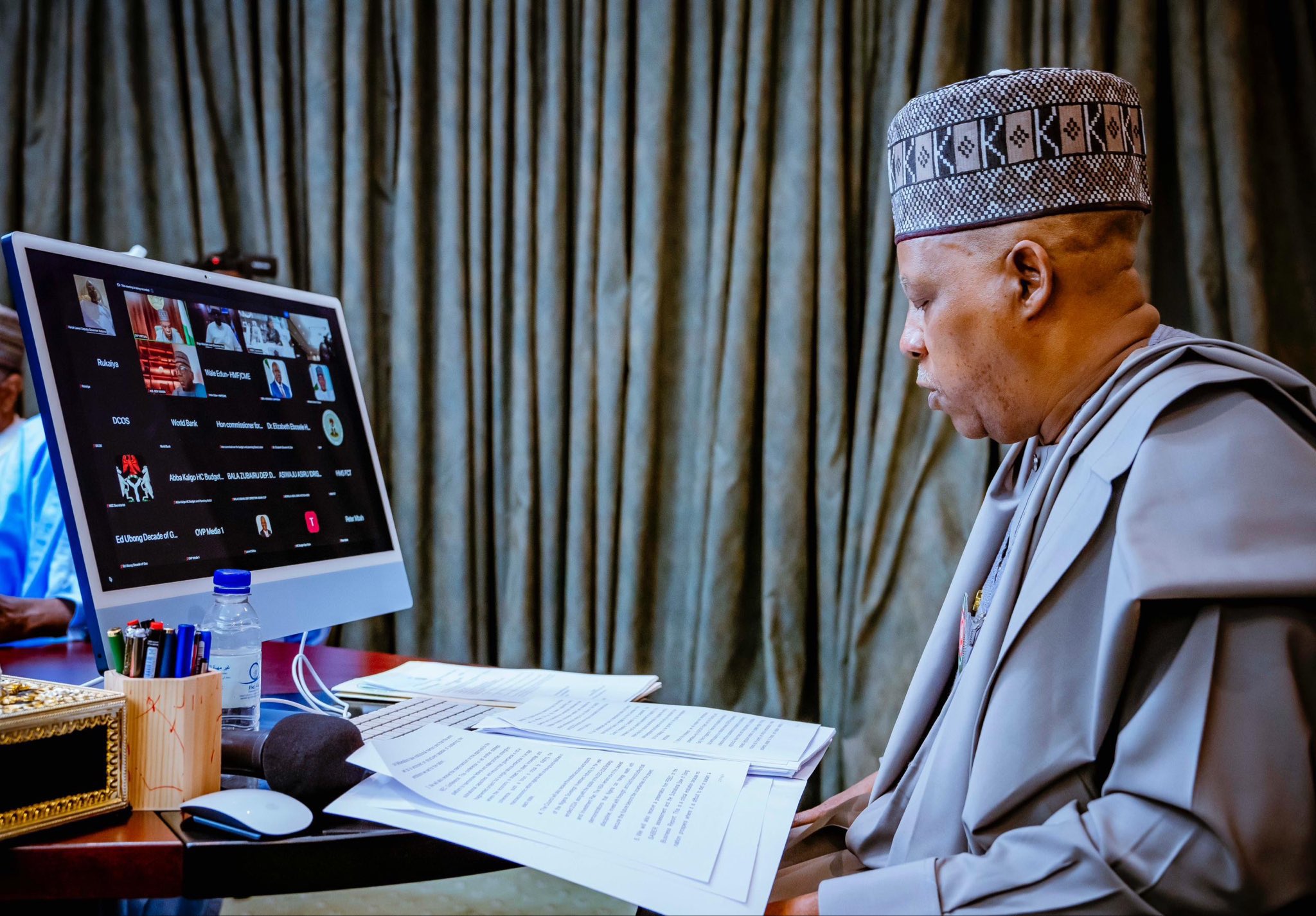
NEC Approves ₦100 Billion for Rehabilitation of Police and Security Training Institutions, Awaits Final Presidential Approval The National Economic Council (NEC) has approved the sum of ₦100 billion for the comprehensive rehabilitation and modernisation of training institutions belonging to the Nigeria Police Force (NPF) and other security agencies across the country. The approval, however, is
NEC Approves ₦100 Billion for Rehabilitation of Police and Security Training Institutions, Awaits Final Presidential Approval
 The National Economic Council (NEC) has approved the sum of ₦100 billion for the comprehensive rehabilitation and modernisation of training institutions belonging to the Nigeria Police Force (NPF) and other security agencies across the country. The approval, however, is subject to the final endorsement of President Bola Ahmed Tinubu, who initiated the call for reform of the nation’s security training infrastructure.
‘We Have No Factions, No Godfathers’ — Accord Woos Ademola Adeleke
The move comes after months of evaluation carried out by an ad hoc committee constituted by NEC to assess the condition of security training schools nationwide. The committee’s report revealed widespread decay, obsolete equipment, and inadequate instructional facilities across multiple institutions responsible for preparing Nigeria’s security personnel.
The decision was taken during NEC’s 154th virtual meeting held on Wednesday and presided over by Vice President Kashim Shettima. In addition to the ₦100 billion rehabilitation fund, NEC also approved ₦2.6 billion for consultancy services that will support the planning, redesign, and execution phases of the nationwide overhaul.
The initiative stems from a directive issued by President Tinubu during the 152nd meeting of NEC in October, where he demanded a full-scale review and restructuring of security training institutions. The President had stressed that modern policing and security operations require world-class training, infrastructure, and technology — areas in which many Nigerian institutions currently fall short.
Presenting the findings of the committee, its Chairman and Governor of Enugu State, Dr. Peter Mbah, gave a comprehensive overview of the conditions discovered during the nationwide assessment. He described the state of many training facilities as “deplorable,” noting that numerous schools lacked basic amenities, functional classrooms, modern training tools, and sufficient accommodation for trainees.
Dr. Mbah highlighted that several institutions were operating with inadequate resources, leading to suboptimal training outcomes and operational inefficiencies. He stressed that quality training is at the heart of effective security delivery, adding that the decay in these facilities has hampered the capacity and readiness of Nigeria’s police and other security agencies.
“The state of some of these facilities does not reflect the kind of modern training environment required to prepare personnel for today’s complex security challenges,” Mbah said in his presentation. “This intervention is both urgent and necessary if we must rebuild public trust in our security institutions.”
He explained that the proposed rehabilitation will cover a wide range of upgrades, including structural repairs, installation of modern training equipment, ICT infrastructure enhancement, development of simulation centres, and redesign of curricula to meet contemporary security needs.
According to the committee, the project will be implemented in phases to ensure efficiency, accountability, and measurable progress. The ₦2.6 billion consultancy allocation will enable technical experts to conduct detailed architectural designs, project monitoring, and institutional restructuring to align the facilities with global standards.
NEC members unanimously endorsed the recommendations, noting that improved training capacity will strengthen national security. The Council further emphasized that modern training institutions are essential to producing disciplined, well-equipped, and professional security officers capable of addressing terrorism, kidnapping, cybercrime, banditry, and other emerging threats.
During the meeting, several governors expressed support for the initiative, stressing that better security outcomes depend largely on the competence and preparedness of personnel. They added that investing in training institutions is more sustainable than short-term interventions focused solely on equipment procurement.
The proposed overhaul is expected to benefit not only the Nigeria Police Force, but also training schools under the Nigeria Security and Civil Defence Corps, Federal Fire Service, Correctional Service, Immigration Service, and other paramilitary institutions within the Ministry of Interior.
Government insiders say President Tinubu is likely to give swift approval, as the project aligns with his broader security reforms and the administration’s focus on rebuilding national institutions. Since taking office, the President has repeatedly emphasized that Nigeria’s security challenges require long-term investment in human capital, institutional capacity, and training innovation.
Analysts view the NEC’s decision as a major step forward in addressing the root causes of weaknesses within Nigeria’s security framework. Many experts have argued that inadequate training contributes significantly to operational failures, abuses, and inefficiencies across security agencies.
With final approval expected soon, the ₦100 billion intervention could become one of the largest investments in security training infrastructure in Nigeria’s recent history. If effectively implemented, it is projected to enhance professionalism, improve operational conduct, and boost public confidence in law enforcement nationwide.
As the nation anticipates the President’s decision, stakeholders across the security sector have welcomed the development, expressing hope that the overdue reform will transform Nigeria’s security training landscape and support the country’s ongoing battle against insecurity.
















Leave a Comment
Your email address will not be published. Required fields are marked with *