
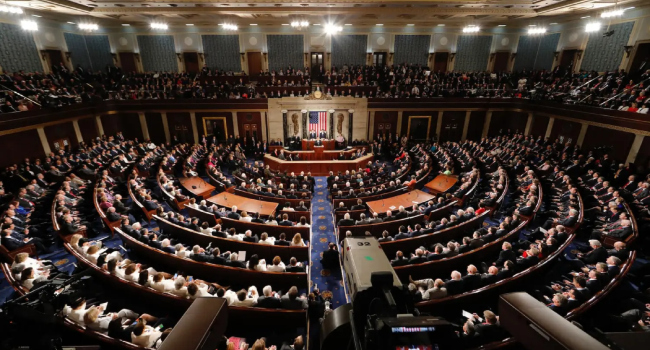
US Congress Urged To Pressure Nigerian Govt To Declare Sharia Law Unconstitutional, Disband Hisbah Commissions A coalition of international human rights groups has called on the US, United States Congress to intervene in what it describes as “systemic religious discrimination and constitutional violations” linked to the implementation of Sharia law and the activities of Hisbah
US Congress Urged To Pressure Nigerian Govt To Declare Sharia Law Unconstitutional, Disband Hisbah Commissions
 A coalition of international human rights groups has called on the US, United States Congress to intervene in what it describes as “systemic religious discrimination and constitutional violations” linked to the implementation of Sharia law and the activities of Hisbah Commissions in parts of Northern Nigeria.
In a petition submitted to key committees in the U.S. Senate and House of Representatives, the groups urged American lawmakers to pressure the Nigerian government to declare Sharia-based criminal law unconstitutional and dismantle the Hisbah structures operating in various northern states. The petition argues that these systems “undermine Nigeria’s secular constitution” and “endanger the fundamental rights of millions.”
Background of the Debate
Nigeria, a multi-religious nation with over 200 million people, operates a constitutionally secular system of government. However, since 1999, 12 northern states have adopted Sharia law for criminal justice, running parallel to Nigeria’s federal legal system. Alongside these legal codes, Hisbah Commissions—Islamic religious enforcement bodies—have been established to monitor public morality and ensure compliance with Sharia principles.
While state governments have defended these institutions as expressions of cultural and religious autonomy, critics say the dual legal structure has created inequality, particularly for religious minorities, women, and young people living in Sharia-enforcing states.
Why the Groups Are Turning to the U.S. Congress
The petitioners, led by the Global Alliance for Religious Freedom (GARF), argue that the Nigerian government has failed to address long-standing concerns raised by civil society, prompting the need for international pressure. The groups cite multiple cases of what they consider unconstitutional actions carried out under Sharia enforcement, including:
- Arrests for dress code violations
- Confiscation of alcohol from lawful business owners
- Restrictions on social events such as concerts and mixed-gender gatherings
- Discrimination against non-Muslim residents of Sharia states
They say these practices violate several sections of Nigeria’s 1999 Constitution, including Section 10, which prohibits any state from adopting a religion, and Sections 38 and 42, which protect freedom of religion and freedom from discrimination.
According to GARF’s spokesperson, Emily Hardwick, internal advocacy within Nigeria has been “met with silence or resistance,” making external pressure necessary.
“The U.S. has a long history of supporting religious freedom worldwide. Nigeria is a key partner, but partnership must also come with accountability,” she said.
What the Groups Want From the U.S.
The petition calls for several actions from the U.S. government, including:
- A Congressional resolution urging Nigeria to declare Sharia criminal codes unconstitutional.
- A review of U.S. foreign assistance to determine if Nigerian state institutions comply with international human rights standards.
- A requirement for the Nigerian government to disband Hisbah Commissions as a condition for certain forms of bilateral security cooperation.
- Support for Nigerian civil society groups advocating for legal reforms.
The groups also want Washington to send a clear message that parallel religious policing structures are incompatible with democratic governance.
Reactions From Northern Nigerian Leaders
Leaders from northern states have rejected the calls, insisting that Sharia law does not violate Nigeria’s constitution. Several governors argued that Sharia applies only to Muslims and is implemented with the consent of the local population.
A senior official in one of the states, who asked not to be named, described the petition as “a deliberate attempt to undermine cultural values and provoke religious tension.”
He said:
“Sharia is a legitimate expression of Islamic jurisprudence and has helped reduce crime and moral decay in our states. External pressure cannot dictate how we manage our legal and social systems.”
Hisbah Boards in Kano, Bauchi, Sokoto, and other states have also defended their roles, saying they are legally established by state laws passed through democratic processes.
Mixed Reactions Within Nigeria
The petition to the U.S. Congress has sparked a heated debate among Nigerians. Human rights advocates welcomed the move, saying international intervention may be the only way to address what they see as discriminatory practices.
A constitutional lawyer, Barrister Funmi Adeyemi, said the issue goes beyond religion:
“The constitution is clear: no state can adopt a religion. When religious laws are enforced through state agencies, it raises serious legal contradictions.”
However, others argue that the petition represents foreign interference in domestic matters. Some Islamic organizations have accused the petitioners of trying to “Americanize” Nigeria’s legal system and suppress Islamic identity.
Possible Implications for Nigeria–U.S. Relations
This new appeal comes at a sensitive time, as the U.S. continues to strengthen security cooperation with Nigeria in areas such as counterterrorism and intelligence sharing. Analysts say the issue could test diplomatic ties if Congress decides to take formal action.
Prof. Abdullahi Adamu, an expert in international relations, said:
“Religious freedom is a major feature of U.S. foreign policy. If Congress becomes involved, Nigeria might face increased scrutiny, and this could affect military or development assistance.”
What Happens Next
The U.S. Congress is expected to review the petition in the coming weeks. While resolutions of this kind are often symbolic, they can influence foreign policy decisions and shape international perceptions.
For now, the debate over Sharia law and Hisbah enforcement remains one of Nigeria’s most sensitive and polarizing issues—one that touches on constitutional rights, religious identity, and the balance between state autonomy and federal authority.
How Nigeria responds to growing international pressure may set the tone for future discussions on governance, human rights, and religious freedom in the country.








Leave a Comment
Your email address will not be published. Required fields are marked with *