
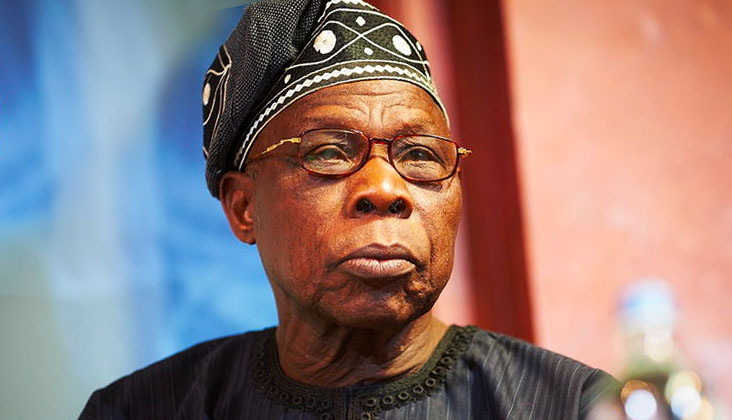
Obasanjo Criticizes N70,000 Minimum Wage, Accuses Labour Leaders of Betraying Workers Former President Calls Wage Increase “Grossly Inadequate” Former President Olusegun Obasanjo has openly criticized the recently approved N70,000 minimum wage, arguing that it is insufficient to meet workers’ basic needs, including transportation, food, and housing. Obasanjo made these remarks in his newly released book,
Obasanjo Criticizes N70,000 Minimum Wage, Accuses Labour Leaders of Betraying Workers
Former President Calls Wage Increase “Grossly Inadequate”
Former President Olusegun Obasanjo has openly criticized the recently approved N70,000 minimum wage, arguing that it is insufficient to meet workers’ basic needs, including transportation, food, and housing. Obasanjo made these remarks in his newly released book, “Nigeria: Past and Future,” where he also accused labour leaders of betraying Nigerian workers for personal gain.
President Bola Tinubu signed the new minimum wage into law on July 29, 2024, after months of negotiations with organized labour and the private sector. However, Obasanjo believes the amount is still far too low for the average worker to survive in today’s harsh economic climate.
“The minimum wage does not even cover transportation costs for some workers, let alone food, housing, and family upkeep,” he wrote.
TUC Urges FG Not To Punish NYSC Member Over Viral Video Criticizing Tinubu’s Government
Obasanjo Slams Labour Leaders for Prioritizing Politics Over Workers’ Welfare
In Chapter 17 of his book, Obasanjo harshly criticized labour leaders, accusing them of neglecting workers’ interests while using their positions for personal political ambitions. He argued that many union leaders today are far less effective than the founding fathers of Nigerian labour movements.
“How did it happen that a trade union leader was negotiating with a political party to be adopted as a gubernatorial candidate while still in office?”
According to him, union leaders have increasingly prioritized selfish interests over collective bargaining, using their influence to gain political positions instead of genuinely fighting for better wages and working conditions.
“Rather than negotiate in the interest of the workers, they do sabre-rattling and are then called into a room, where money in large amounts is stuffed into their hands, and they keep quiet,” he claimed.
Allegations of Government Paying Off Labour Leaders
Obasanjo also criticized government officials who allegedly bribe labour leaders to halt protests and demands for better wages.
“How do we explain a senior official close to the President saying, ‘We have paid them to keep quiet and stop agitating’?”
He expressed concern that workers are being silenced and manipulated by corrupt officials and union leaders, leading to a decline in the effectiveness of labour movements in Nigeria.
“You do not get the best from a frustrated and depressed worker,” Obasanjo warned.
Proposes Law to Prevent Labour Leaders from Joining Politics Immediately
While acknowledging that everyone has the right to participate in politics, Obasanjo argued that labour leaders should not use unions as a platform for political ambitions while still in office.
To prevent this conflict of interest, he proposed that labour leaders be required to wait at least five years after leaving office before running for political positions.
“It is unethical for labour leaders to use their unions as stepping stones for political careers. There should be a law to prevent them from engaging in politics immediately after leaving office.”
Background: How Tinubu’s Administration Arrived at N70,000 Minimum Wage
The approval of the N70,000 minimum wage marked the end of a lengthy negotiation process between the federal government, labour unions, and the private sector.
Initially, organized labour had demanded a N250,000 monthly minimum wage, citing inflation, rising cost of living, and the removal of fuel subsidies as reasons for a higher salary increase. However, after months of deliberations, President Tinubu’s government reduced the demand to N70,000.
Before this increase, the national minimum wage was N33,000, signed into law by former President Muhammadu Buhari on April 18, 2019.
Reactions to Obasanjo’s Criticism
Obasanjo’s remarks have sparked mixed reactions among Nigerians. While some agree that N70,000 is insufficient, others believe that his criticism of labour leaders and government officials is a bold but necessary intervention.
Many workers have taken to social media to share their struggles with high inflation and economic hardship, arguing that even N100,000 per month may not be enough to sustain a decent standard of living in Nigeria today.
At the same time, labour unions are yet to officially respond to Obasanjo’s accusations of bribery and political ambition among union leaders.
What Next for Nigerian Workers?
With the cost of living skyrocketing and economic conditions worsening, many workers and analysts believe that a review of the minimum wage may still be necessary in the near future. Some labour activists are already calling for the government to implement further policies to support low-income earners, including subsidies for food and transportation.
Obasanjo’s criticisms, while controversial, have reignited debates over government accountability, labour union integrity, and the real value of the new minimum wage in Nigeria’s struggling economy.










Leave a Comment
Your email address will not be published. Required fields are marked with *