
Falana Alleges Diversion of $3.4bn IMF COVID-19 Loan, Calls for Urgent Probe In a bold statement that could ignite a fresh wave of scrutiny over Nigeria’s pandemic-era finances, Femi Falana (SAN), human rights lawyer and Chairman of the Alliance on Surviving COVID-19 and Beyond (ASCAB), has alleged that the $3.4 billion emergency loan secured by
Falana Alleges Diversion of $3.4bn IMF COVID-19 Loan, Calls for Urgent Probe

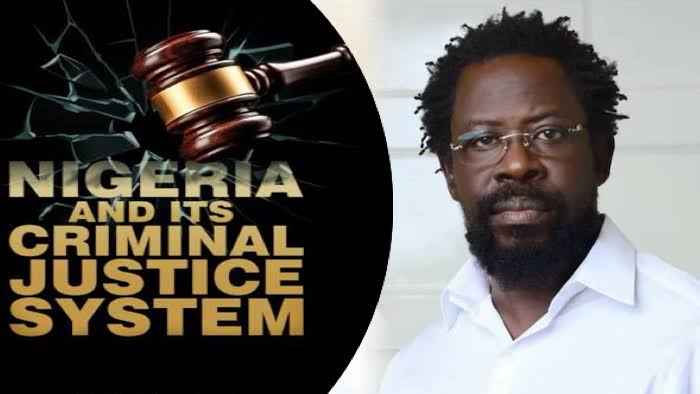
In a bold statement that could ignite a fresh wave of scrutiny over Nigeria’s pandemic-era finances, Femi Falana (SAN), human rights lawyer and Chairman of the Alliance on Surviving COVID-19 and Beyond (ASCAB), has alleged that the $3.4 billion emergency loan secured by Nigeria from the International Monetary Fund (IMF) during the COVID-19 pandemic was diverted and mismanaged.
In the statement issued on Sunday, Falana did not mince words, labeling the situation a “criminal diversion” of funds that were meant to provide relief to millions of Nigerians during one of the most trying periods in the nation’s recent history.
IMF Loan Meant for Relief, Not Revenue
The loan in question was obtained under the Rapid Financing Instrument (RFI) framework of the IMF in 2020 to help mitigate the health and economic shocks brought on by the pandemic. It was intended to boost Nigeria’s healthcare system, protect jobs, and stabilize the economy.
However, according to Falana, those objectives were undermined by systemic mismanagement and deliberate reallocation of the funds. “The emergency funds were meant to provide critical support to Nigeria’s healthcare system, protect jobs, and stabilize the economy. Instead, they were diverted, reclassified, and in large part remain unaccounted for,” Falana alleged.
Nigeria Repays IMF Loan, But Questions Remain
Although the IMF announced last week that Nigeria had completed repayment of the $3.4 billion loan, Falana insisted that repayment of principal does not absolve the government of accountability. He pointed to lingering charges, including net interest and administrative fees totaling SDR 125.99 million, approximately ₦275.28 billion.
“Even though Nigeria has repaid the principal, the issue of accountability remains unresolved,” Falana stated, adding that the repayment “does not wipe away the serious allegations raised in the Auditor-General’s report.”
Audit Reveals Shocking Misuse of Funds
Falana referenced the 2020 audit report released in January 2024 by the Office of the Auditor-General of the Federation, which he said exposed a disturbing pattern of mismanagement and opacity surrounding the IMF funds.
According to the report, a large portion of the loan was not applied towards emergency relief as originally intended. Instead, funds were reclassified as part of Nigeria’s external reserves, a move Falana described as a scheme to sidestep accountability and earn interest on funds “meant to save lives.”
Further complicating the matter, the report detailed how in August 2020, the Federal Ministry of Finance requested the monetisation of $700 million to fund the national budget. This was approved by the Central Bank of Nigeria (CBN) at an inflated exchange rate, resulting in the disbursement of ₦252 billion to the COVID-19 Public Sector Account, ₦13.3 billion to the Forex Equalisation Account, and ₦350 million to the Exchange Commission Account.
Falana questioned a 2% commission deducted from the transaction, insisting that the funds belonged to the Federal Government and should not have been subjected to such charges.
$2.7 Billion Unaccounted For
By the end of 2020, Falana said, an alarming $2.7 billion, equivalent to ₦1.02 trillion, was still unaccounted for. He described this as a gross betrayal of public trust, emphasizing that no amount of legal or bureaucratic maneuvering could justify the disappearance of such a significant sum.
“The report clearly states that the culprits should be handed over to the EFCC and ICPC for investigation and prosecution. But sadly, the National Assembly has refused to act on this damning report,” he lamented.
Anti-Corruption Investigation
Falana is now calling on both the Economic and Financial Crimes Commission (EFCC) and the Independent Corrupt Practices and Other Related Offences Commission (ICPC) to launch an immediate, full-scale investigation into the handling of the IMF loan.
He urged the anti-graft agencies to pursue the matter with urgency and seriousness, warning that failure to act would further erode public confidence in government institutions.
ASCAB, the organization Falana chairs, said it is committed to ensuring that those responsible are held to account. “This is not just about recovering stolen funds—it is about protecting our democratic institutions and ensuring justice for the millions who were denied the benefits of that emergency loan,” the statement concluded.
The allegations have sparked intense discussions across civil society, with many calling for increased transparency in how external loans are managed. Critics argue that if these claims are substantiated, it could amount to one of the most severe cases of pandemic-era financial misappropriation in Nigeria.
As calls grow louder for investigations, all eyes will now be on the EFCC, ICPC, and National Assembly to see whether this issue will be buried or addressed with the urgency and seriousness it deserves.












Leave a Comment
Your email address will not be published. Required fields are marked with *