
Fresh Crude Oil Spill Devastates Rivers Community, Sparks Environmental Uproar A devastating crude oil spill has struck the Oshika community in Ahoada West Local Government Area of Rivers State, inflicting widespread environmental damage and sparking renewed calls for accountability in Nigeria’s oil sector. The spill, which occurred on Monday, May 19, originated from a pipeline
Fresh Crude Oil Spill Devastates Rivers Community, Sparks Environmental Uproar
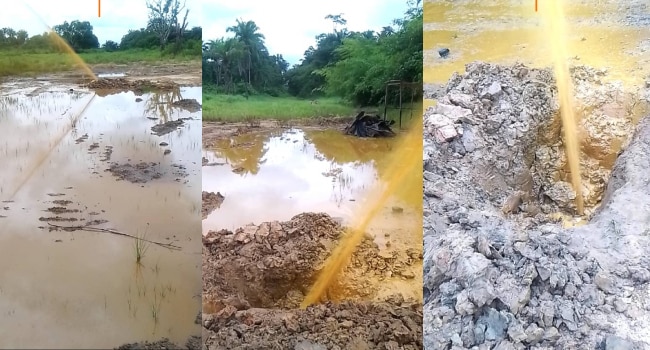
A devastating crude oil spill has struck the Oshika community in Ahoada West Local Government Area of Rivers State, inflicting widespread environmental damage and sparking renewed calls for accountability in Nigeria’s oil sector. The spill, which occurred on Monday, May 19, originated from a pipeline operated by Renaissance Africa Energy Company Limited—successor to the Shell Petroleum Development Company of Nigeria Limited (SPDC) in the region.
Farmlands and local water bodies, including the vital Wome River, have been severely polluted, placing the livelihoods and health of local residents at risk. The spill has prompted urgent calls for intervention by environmental activists, who are demanding swift government action and the application of legal provisions under the Petroleum Industry Act (PIA), 2021.
Fayose Files No-Case Submission In ₦6.9 Billion Fraud Trial As Court Reserves Ruling
Third-Party Interference Suspected
Fyneface Dumnamene, an environmentalist and Executive Director of the Youths and Environmental Advocacy Centre (YEAC), confirmed that the spill was detected early Monday by the organization’s youth volunteer network. These volunteers, operating under the One Million Youth Volunteers Network of Human Rights Defenders and Promoters in the Niger Delta and the Crude Oil Spill Alert System, were the first to report the incident.
In a statement, Dumnamene attributed the cause of the spill to third-party interference, a frequent problem in the oil-rich but under-regulated Niger Delta region.
“The spillage was noticed in the early hours of Monday, May 19, in the Oshika community, along a pipeline operated by Renaissance Africa Energy Company Ltd. The volunteers alleged that the spill was caused by third-party interference,” he stated.
Third-party interference typically involves sabotage or illegal bunkering activities, where individuals damage pipelines to siphon crude oil—a practice that continues to plague oil operations in the Niger Delta.
Environmentalists Call for Urgent Government Action
Reacting to the disaster, Dumnamene called on the National Oil Spill Detection and Response Agency (NOSDRA) to carry out an immediate Joint Investigation Visit (JIV) to the spill site and initiate the appropriate legal response under the Petroleum Industry Act.
“The Advocacy Centre calls on NOSDRA to carry out a timely joint investigation visit to the site and invoke relevant sections of the PIA to hold those responsible accountable,” he urged.
Dumnamene emphasized that any delay in intervention could lead to further environmental degradation, including contamination of water supplies, destruction of aquatic life, and long-term ecological harm to farmlands relied upon by local residents.
Immediate Containment Measures Urged
To prevent the crisis from escalating, Dumnamene underscored the urgent need to clamp the spill point and contain the spread of crude oil.
“Immediate clamping of the spill point is necessary to mitigate environmental damage and protect the flora and fauna in the area,” he stated.
This call is consistent with global best practices in oil spill response, which prioritize quick containment to limit the radius of environmental impact and minimize damage to ecosystems and human health.
Oshika Community Reels from Aftermath
Local residents have expressed outrage and frustration, accusing oil operators of negligence and the government of inaction. The Oshika community, like many others in the Niger Delta, relies heavily on agriculture and fishing for survival—both of which are now severely threatened.
“This spill has poisoned our water and destroyed our farms,” a local farmer lamented. “How are we supposed to survive when our only sources of livelihood are gone?”
Many in the community are also skeptical about whether any investigation or compensation will follow. Past spills in the region have often resulted in delayed responses, inadequate remediation, and prolonged legal battles.
A Systemic Issue in the Niger Delta
Environmental experts point out that this latest spill is part of a much broader pattern of environmental degradation in the Niger Delta, which has suffered from decades of unchecked oil exploitation. Despite numerous reforms and the introduction of the Petroleum Industry Act, enforcement remains weak and accountability rare.
“The problem is not just this spill,” Dumnamene warned. “It is a systemic failure of regulation, enforcement, and corporate responsibility. Until we start holding oil companies accountable and addressing sabotage from the root, these disasters will continue.”
A Call for Sustainable Reform
The incident in Oshika once again underscores the urgent need for a transparent, responsive regulatory framework and stronger community engagement in pipeline surveillance and environmental protection. It also puts a spotlight on the effectiveness of new players like Renaissance Africa Energy Company Limited, who have inherited not just the infrastructure but also the burden of maintaining safety and transparency.
For now, the people of Oshika wait anxiously—some for clean water, others for justice, and all for action. As NOSDRA and other stakeholders are urged to step in, the rest of the Niger Delta watches closely, hoping that this spill won’t just be another entry in a long list of environmental tragedies.
















Leave a Comment
Your email address will not be published. Required fields are marked with *