
“Dikko Targets Year-End Overhaul for Abuja Stadium Amid National Sports Infrastructure Push” In a bold move to revive Nigeria’s crumbling sports infrastructure, Chairman of the National Sports Commission (NSC), Shehu Dikko, announced plans to commence renovation of the Moshood Abiola National Stadium in Abuja by year’s end. Dikko made the disclosure during an interview
“Dikko Targets Year-End Overhaul for Abuja Stadium Amid National Sports Infrastructure Push”
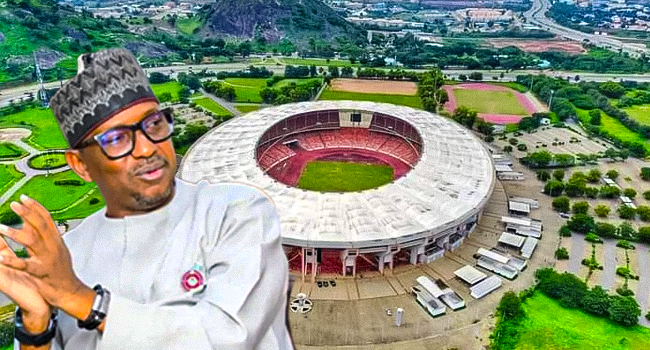
In a bold move to revive Nigeria’s crumbling sports infrastructure, Chairman of the National Sports Commission (NSC), Shehu Dikko, announced plans to commence renovation of the Moshood Abiola National Stadium in Abuja by year’s end. Dikko made the disclosure during an interview on Channels Television’s The Morning Brief, addressing public outcry following viral footage of the deteriorating state of the National Stadium in Surulere, Lagos.
Speaking candidly, Dikko emphasized that the current administration is making landmark strides to reverse decades of neglect in the sector. “We’ve brought in top stadium infrastructure companies from London. They were in Abuja last month. Hopefully, we’ll start fixing Abuja by the end of the year,” he stated.
Commissioned in 2003, the Moshood Abiola National Stadium hosted the All-African Games that same year but has since fallen into disrepair. The dilapidated state forced the Super Eagles to relocate to Uyo’s Godswill Akpabio Stadium for their home games.
“FCTA Grants 14-Day Grace Period For Ground Rent Defaulters After Tinubu’s Intervention”
‘Best Budget in 60 Years’ Fuels Renovation Ambitions
Dikko revealed a massive budgetary leap, describing the current NSC budget as the “best for sports in 60 years,” with allocations increased by over 300%. “There is funding to fix other stadiums across the country and to start developing mini sports centres in communities nationwide,” he added.
Addressing the decay highlighted by the viral Lagos Stadium clip—showing overgrown vegetation, collapsed stands, and unusable track and lighting systems—Dikko assured that action was underway not just to repair but to reinvent Nigeria’s sports infrastructure.
Among the strategic plans is a push for public-private partnerships to concession key facilities, allowing global standards to shape future refurbishments. The NSC also aims to develop full-fledged sports cities around major venues like Abuja, Lagos, Kaduna, and Ibadan, complete with commercial facilities to ensure economic sustainability beyond matchdays.
Shifting focus to the broader issues facing Nigerian sports, Dikko criticized the country’s lopsided emphasis on international events while ignoring grassroots development. Citing the English Premier League as a prime example, he urged for the creation of a self-sustaining local sports ecosystem.
“England hasn’t won a major tournament since 1966, yet they’ve built the best football league. Every weekend, millions watch football live — this is the kind of economy we must emulate,” Dikko asserted.
He also flagged inadequate sports broadcasting infrastructure as a major stumbling block, noting the exorbitant costs of producing matches domestically due to outdated systems. “We’re working with suppliers to fix that. Every zone must have the tools to broadcast sports effectively,” he said.
In a bid to engage Nigeria’s vast youth population, Dikko announced the formation of a national e-sports federation. “Over 70% of Nigerians are youths. E-sports can be a game changer, providing jobs and generating digital revenue,” he explained.
Dikko also celebrated the success of the Gateway Games 2025 in Ogun State, praising its impact on local economies. “This is the best festival we’ve had. It empowered small businesses and created wealth for many,” he noted, revealing plans for more youth championships and the launch of dedicated sports channels on local TV.
The NSC’s approach under Dikko’s leadership marks a sweeping shift from reactive maintenance to proactive, commercially driven sports development. With substantial funding, international partnerships, and a vision for a thriving domestic industry, the long-neglected infrastructure may finally see a renaissance.











Leave a Comment
Your email address will not be published. Required fields are marked with *