
Senate Considers Expanding Supreme Court to 30 Justices Amid Rising Caseloads Abuja, Nigeria – In a move aimed at tackling the growing backlog of legal cases and restoring efficiency at Nigeria’s highest court, the Senate is reviewing a proposed amendment that would increase the number of Supreme Court Justices from 21 to 30. The proposal
Senate Considers Expanding Supreme Court to 30 Justices Amid Rising Caseloads
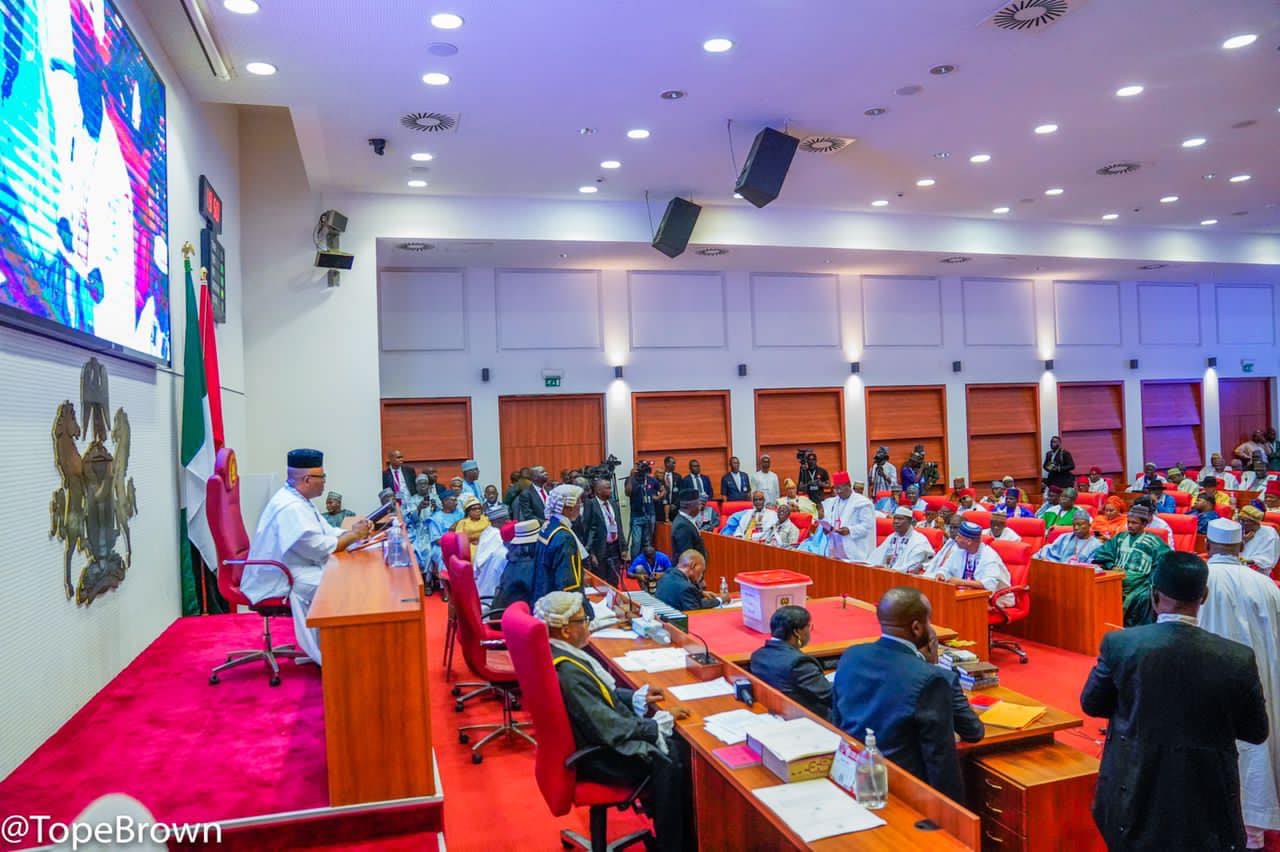
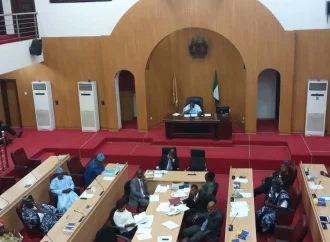
Abuja, Nigeria – In a move aimed at tackling the growing backlog of legal cases and restoring efficiency at Nigeria’s highest court, the Senate is reviewing a proposed amendment that would increase the number of Supreme Court Justices from 21 to 30. The proposal is being championed by Senator Osita Izunaso (Imo West), who revealed the initiative during a press conference marking his second year in the 10th National Assembly.
The senator emphasized that even with the Supreme Court currently operating at its constitutional maximum of 21 justices—achieved only last year for the first time in Nigerian history—the court remains overwhelmed.
SunTrust Bank Executives Face Money Laundering Charges Over $12 Million Dealings
Supreme Court Suffers Under Weight of Pending Cases
Speaking to the press, Izunaso highlighted the dire situation faced by the judiciary. “The volume of cases being filed at the Supreme Court daily is nothing short of alarming,” he said. “Some litigants are now being given hearing dates as far ahead as 2027 and 2028.”
This troubling trend, he argues, makes the need for judicial reform and expansion urgent. He believes the solution lies in both increasing the number of justices and restructuring the types of cases that can reach the apex court.
“Currently, the justices sit in panels of five, or seven for constitutional issues,” he explained. “If the number of justices increases to 30, the court could run five panels simultaneously, expediting the handling of cases.”
Izunaso’s proposal is not just about numbers; it also touches on a broader conversation about judicial reform in Nigeria.
Reforming the Apex Court’s Case Load
One of the most striking aspects of the senator’s proposal is his call for stricter filtering of cases permitted to reach the Supreme Court. He criticized the inclusion of what he labeled as “trivial matters”—including land disputes, tenancy disagreements, and family law issues—in the Supreme Court’s docket.
“Why should a land matter in my village end up in the Supreme Court?” Izunaso asked rhetorically. “These matters should be resolved at the Customary Court and, at most, end at the High Court. The Supreme Court should be reserved for issues of national significance, such as terrorism, constitutional disputes, and grand corruption.”
He cited personal experience, recalling a legal matter involving deceased parties that was inexplicably scheduled for hearing three years after it had been resolved by their descendants. “That’s a serious indictment of our legal system,” he remarked.
Some legal scholars have proposed the creation of regional Supreme Courts to help manage the growing caseload, but Senator Izunaso firmly opposes this idea. Instead, he advocates for preserving a single, unitary Supreme Court, insisting that judicial efficiency can be restored through proper filtration at the lower court levels.
“A national Supreme Court protects the sanctity and unity of our judiciary,” he said. “What we need is fewer unworthy cases reaching the top, not multiple apex courts.”
Praise for Tinubu’s Recognition of Democratic Icon
On a different note, Senator Izunaso also took time to commend President Bola Ahmed Tinubu for posthumously honoring Professor Humphrey Nwosu, former Chairman of the defunct National Electoral Commission, who oversaw the June 12, 1993 presidential election—widely recognized as Nigeria’s freest and fairest.
Nwosu was posthumously awarded the Commander of the Order of the Niger (CON) during the recent Democracy Day celebrations. Izunaso lauded the recognition as a “bold and commendable step” and urged the administration to go further by renaming the national headquarters of INEC after the late professor.
“I was one of the lawmakers who sponsored a motion in the Senate to recognize Professor Nwosu. Even when that motion failed, we didn’t back down,” Izunaso said. “Now, we feel vindicated.”
Legislative Outlook
The proposed bill to increase the number of justices is likely to spark significant debate within the National Assembly and among judicial stakeholders. If passed, it would mark one of the most substantial structural changes to Nigeria’s judicial system in recent history.
Legal observers say the bill’s success will depend on whether lawmakers and legal experts can align on how best to balance judicial expansion with meaningful reform of case management.
Regardless, the proposal has already ignited a necessary national dialogue on how to make Nigeria’s highest court more effective and more focused on matters of national importance.











Leave a Comment
Your email address will not be published. Required fields are marked with *