
Tinubu Defends New INEC Annex, Stresses Need for Institutional Dignity Abuja, Nigeria – President Bola Ahmed Tinubu has defended the decision to construct a new annex office for the Independent National Electoral Commission (INEC), stating it is a necessary investment in the country’s democratic framework. The President made the remarks on Tuesday during the official
Tinubu Defends New INEC Annex, Stresses Need for Institutional Dignity
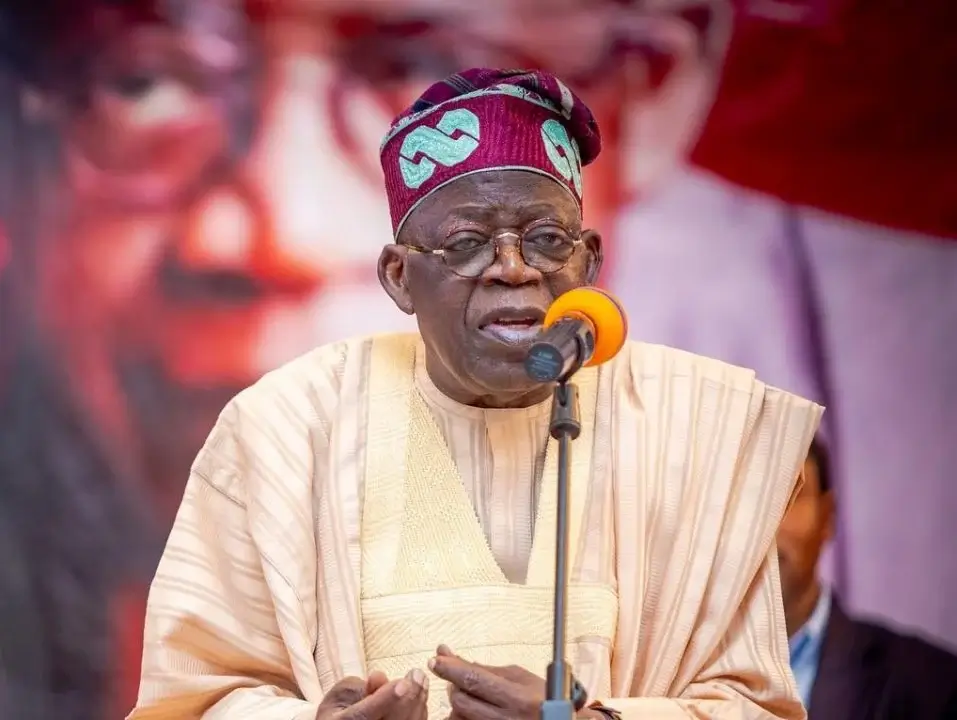
Abuja, Nigeria – President Bola Ahmed Tinubu has defended the decision to construct a new annex office for the Independent National Electoral Commission (INEC), stating it is a necessary investment in the country’s democratic framework. The President made the remarks on Tuesday during the official flag-off of the annex project in Abuja, asserting that the expansion represents more than just a structural upgrade—it’s a reaffirmation of government’s respect for democratic institutions.
The project, which is expected to alleviate severe congestion at INEC’s current headquarters, comes at a time when Nigeria’s electoral system is under growing pressure to evolve in both scale and complexity. According to President Tinubu, INEC deserves an environment befitting its constitutional mandate to conduct credible elections and uphold the electoral integrity of the nation.
Senate Demands End To Benue Killings, Calls For National Security Collaboration
Institutional Integrity Drives New INEC Building Initiative
Speaking at the ceremony, President Tinubu declared that INEC plays a pivotal role in Nigeria’s democracy and must be supported with the infrastructure, autonomy, and legal tools required for it to perform at its best. “For this reason, it is only right that such an institution is housed in a structure that reflects the dignity, responsibility and national significance of that institution,” he stated.
He emphasized that the annex is not merely a new building, but a symbol of the administration’s faith in INEC’s independence and the future of democratic governance in Nigeria. “We are committed to ensuring that INEC is fully equipped, not only in infrastructure, but in law, policy and resources to carry out its constitutional mandate with courage, fairness and excellence,” Tinubu added.
The president also commended the Federal Capital Territory (FCT) Minister, Nyesom Wike, for initiating the project. He called the move a “significant step toward the protection of democracy” and reiterated that democracy should be seen as a continuous journey. “Together, let us strengthen our institutions, safeguard our freedom and protect the future,” Tinubu concluded.
Overcrowding at INEC Headquarters Spurs Urgent Need
INEC Chairman Prof. Mahmood Yakubu offered critical context for the project, detailing how the commission’s existing headquarters, which dates back to 1997, has become overstretched. Originally designed to support eight commission members and around 500 staff, the facility now houses 13 full-time members, 22 directorates, and more than 1,000 employees.
“Every facility is overstretched from offices to meeting rooms for the commission’s 15 standing committees and other activities,” Yakubu said. He explained that due to space limitations, many meetings are now held off-site, and two additional buildings had to be rented in Wuse Zone II just to accommodate operations.
This unsustainable situation, Yakubu noted, was what prompted urgent appeals to the FCT administration. He expressed gratitude to both the President and the FCT Ministry for their timely intervention in providing land and initiating the new annex project. “The new building will complement the existing headquarters and serve as a critical operational hub,” he confirmed.
A Home for Electoral Innovation and Stakeholder Engagement
According to both Tinubu and Yakubu, the new annex is envisioned not just as office space, but as a center for electoral planning, transparency, training, and innovation. The president assured Nigerians that the building would support INEC’s capacity for efficient election management, thereby increasing public trust in the democratic process.
By investing in physical infrastructure, the government aims to remove operational bottlenecks that can hinder the commission’s work. The annex is expected to become a central site for strategy meetings, voter education campaigns, and training sessions for electoral officers and stakeholders.
A Broader Vision for Democratic Sustainability
This development comes as part of a broader vision by the Tinubu administration to strengthen the foundations of democracy in Nigeria. Beyond building structures, the administration has promised to provide the legal, political, and financial support needed for INEC and similar institutions to function without interference.
The decision to invest in INEC’s growth sends a message that the current administration acknowledges the critical role of independent institutions in shaping the nation’s democratic journey. For many political analysts and civil society actors, it’s a move that may reinforce confidence in the government’s commitment to credible elections and long-term democratic development.
As construction begins on this long-awaited facility, both government officials and the public will watch closely to see if this infrastructure boost translates into improved electoral outcomes and stronger democratic institutions.
















Leave a Comment
Your email address will not be published. Required fields are marked with *