
Tinubu Brokers Peace: Fubara, Wike, and Amaewhule Reconcile in High-Level Rivers State Meeting President Tinubu has convened and brokered a long-anticipated reconciliation meeting aimed at ending the prolonged political crisis in Rivers State. The high-stakes session, held on Thursday night at the Presidential Villa in Abuja, brought together major players in the standoff, including suspended
Tinubu Brokers Peace: Fubara, Wike, and Amaewhule Reconcile in High-Level Rivers State Meeting
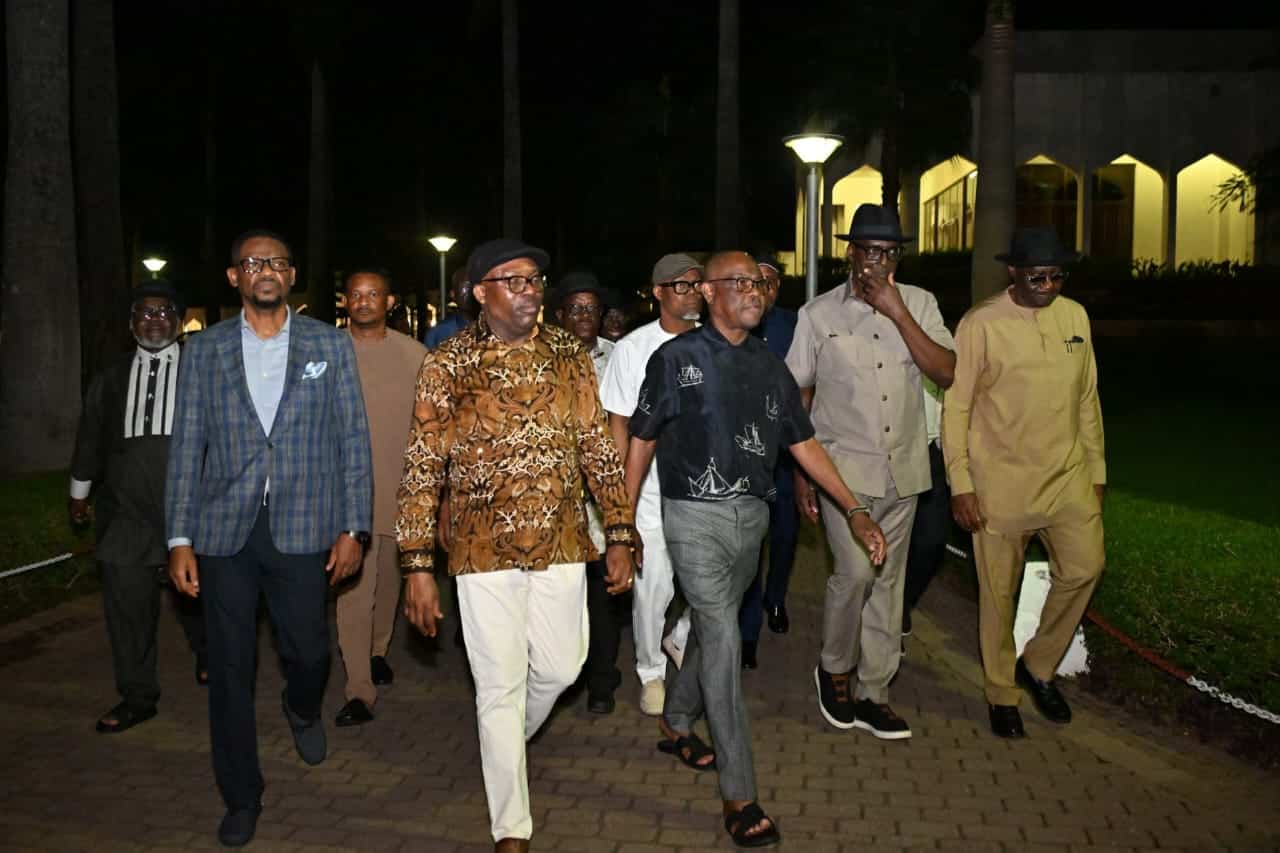
President Tinubu has convened and brokered a long-anticipated reconciliation meeting aimed at ending the prolonged political crisis in Rivers State. The high-stakes session, held on Thursday night at the Presidential Villa in Abuja, brought together major players in the standoff, including suspended Governor Siminalayi Fubara, FCT Minister Nyesom Wike, and suspended State Assembly Speaker Martins Amaewhule.
The presidency, through Bayo Onanuga, Special Adviser on Information and Strategy, confirmed the meeting via a series of posts on social media platform 𝕏. Onanuga wrote, “President Tinubu has demonstrated once again that he wants peace for Rivers State. Just like in December 2023, he has once again brought all key stakeholders together to find a common ground.”
Breaking Barriers: Grace Morenike Henry Appointed First Female Head Of Nigerian Legion
Presidential Peace Initiative: Ending a Bitter Feud
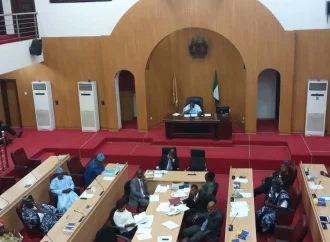
The Thursday night gathering was the first formal engagement involving Fubara, Wike, and Amaewhule since the political crisis exploded in late 2023. Tensions between Fubara and his political godfather, Wike, turned into a bitter power struggle that split the Rivers State House of Assembly into two factions, led to the demolition of the legislative complex, and culminated in the March 18, 2025 declaration of a state of emergency in the state.
The emergency, sanctioned by the National Assembly, resulted in the suspension of Governor Fubara, his deputy, and all state lawmakers. To restore order, President Tinubu appointed Vice-Admiral Ibok-Ete Ibas (retd.) as Sole Administrator of Rivers State, marking the first federal intervention of such magnitude in the state’s recent history.
Thursday’s peace meeting, according to reports, ended on an optimistic note. A source who spoke to Vanguard described the encounter as “cordial,” revealing that Fubara and Amaewhule exchanged pleasantries and even held hands, a symbolic gesture that surprised many given the depth of the political animosity between them.
A Crisis Rooted in Loyalty and Power
At the heart of the crisis lies a fractured relationship between Wike and Fubara, the former being a dominant political figure in Rivers State and the latter his handpicked successor. What began as quiet discontent evolved into open confrontation over governance control, budgetary approvals, and alleged sidelining of state legislators.
Wike has publicly stated that lawmakers loyal to him had not received their salaries and allowances for over two years, accusing Fubara of governing in defiance of democratic norms. In turn, Fubara has alleged political interference and sabotage from within his former camp.
The ensuing chaos led to a dramatic collapse in state governance, with the Rivers Assembly splintered and the state’s executive functions stalled. Security concerns in oil infrastructure regions and protests by civic groups further escalated the crisis, prompting the federal intervention in March.
Tinubu’s Strategy: Dialogue Over Decree
While the state of emergency remains technically in place, President Tinubu’s Thursday night meeting signals a shift from enforcement to reconciliation. Insiders say the President emphasized the need for compromise, mutual respect, and a return to constitutional governance.
Tinubu, who had earlier in December 2023 secured a symbolic peace accord among the stakeholders, appears determined to settle the crisis through dialogue rather than decrees. Thursday’s gathering is seen as the most tangible progress yet.
Onanuga’s confirmation that Tinubu hosted both “Governor Fubara, FCT Minister Nyesom Wike, Speaker Martins Amaewhule, and other Rivers State Assembly members” reflects the scope of the meeting’s ambition: a full-circle political reset for Rivers State.
What Happens Next?
While the tone of the reconciliation meeting was notably positive, it remains unclear if and when Governor Fubara and the suspended lawmakers will be reinstated, or whether Vice-Admiral Ibas will complete his six-month tenure.
Political analysts suggest that the success of this reconciliation will depend on follow-through actions, including:
- Restoration of legislative function in Rivers State
- Resolution of salary and allowance disputes
- Clear timelines for lifting the state of emergency
- Binding commitments from all parties to uphold democratic principles
The presidency has yet to release a formal communiqué outlining next steps, but the hopeful mood following the Thursday meeting has been hailed as a vital breakthrough for governance and stability in the volatile oil-producing state.
Fragile Peace, But a Positive Step Forward
The Abuja peace meeting brokered by President Tinubu is a watershed moment in the Rivers State political crisis. Bringing once-feuding leaders to the table—and witnessing them engage cordially—is a major diplomatic victory. However, the fragility of the peace achieved should not be underestimated.
It now falls on all stakeholders—President Tinubu, Fubara, Wike, Amaewhule, and the legislature—to turn goodwill into concrete action. For the people of Rivers State, whose lives have been disrupted by political uncertainty, the hope is clear: that this symbolic handshake transforms into lasting peace.










Leave a Comment
Your email address will not be published. Required fields are marked with *