
Osun LG Crisis: Legal Expert Faults AGF Fagbemi, Says Only Court-Recognised Chairmen Should Stay In the wake of the escalating controversy surrounding the local government crisis in Osun State, legal analyst and public interest advocate, Mr. Liborous Oshoma, has raised strong concerns about what he calls selective legal interpretation by the Federal Government, particularly
Osun LG Crisis: Legal Expert Faults AGF Fagbemi, Says Only Court-Recognised Chairmen Should Stay

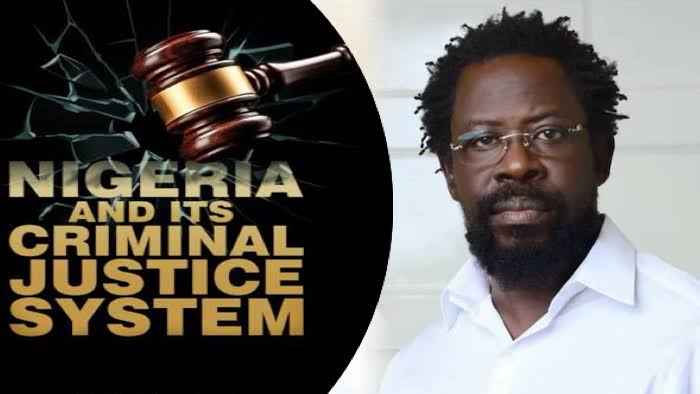
In the wake of the escalating controversy surrounding the local government crisis in Osun State, legal analyst and public interest advocate, Mr. Liborous Oshoma, has raised strong concerns about what he calls selective legal interpretation by the Federal Government, particularly the Attorney-General of the Federation (AGF), Lateef Fagbemi. Speaking in an extensive interview, Oshoma dissected the legal complexities involved in the Osun LG issue and warned that the crisis is largely politically engineered, not judicially justified.
He made clear that contrary to the narrative being pushed by certain quarters, there is no real legal ambiguity regarding the status of the council chairmen in Osun. Instead, what exists, he said, is a deliberate attempt by the All Progressives Congress (APC), with backing from the federal government, to distort settled judicial outcomes in order to reclaim power that was lawfully lost.
Jigawa State To Engage 16,000 Mothers In School Monitoring For Improved Education Outcomes
A Pattern of Public Advocacy, Not Politics
When asked about his apparent interest in Osun’s local government affairs, Oshoma clarified that his concern is rooted in his advocacy for functional governance at the grassroots.
“Local government is the government closest to the people. If it works effectively, states can become almost invisible,” he said.
He cited personal memories of local government efficiency during his childhood in Bendel State, lamenting the deterioration of local governance structures across Nigeria today.
Legal Timeline and Clear Judgements
Oshoma provided a detailed timeline of legal battles surrounding the controversial local government elections held at the end of former Governor Gboyega Oyetola’s tenure in 2022. According to him, there are three major suits and five separate judgements—but only one has been consistently highlighted by the AGF.
The crux of his argument is that while the Court of Appeal did rule in favour of the APC in Suit No. 94, another judgement in Suit No. 103, filed by the Action Peoples Party (APP) and also decided by a Federal High Court, nullified the same elections and remained uncontested after the APC abandoned its appeal. The Court of Appeal eventually struck out that appeal for lack of diligent prosecution, leaving the APP judgement valid and subsisting.
“So why is the Attorney-General citing only the Court of Appeal judgement in Suit 94 and ignoring the one in Suit 103?” Oshoma asked. “You cannot cherry-pick which judgement to obey; they are both Court of Appeal decisions.”
New Elections and “Academic” Appeals
Oshoma argued that the PDP-led Osun State government acted correctly by organizing fresh local government elections in February 2025 following the court orders. Justice Aderibigbe had earlier granted permission to conduct those elections, and they were carried out lawfully.
He further referenced the striking out of APC’s motion to relist their appeal by Justice Obiora, who observed that it was inconceivable for a party that claimed a three-year term to go silent for two years.
“The court rightly noted that relisting the appeal would be an academic exercise because new elections have already been conducted. The offices are occupied.”
In a concurring judgement, Justice Omoyele added that reactivating the case would serve no practical purpose and merely waste judicial time.
FG’s Role and the “Fubara Treatment”
There have been claims that the Osun PDP government has been cautious in confronting the federal government over fear of experiencing what Rivers State Governor Sim Fubara went through—namely, a federally backed political clampdown. Oshoma dismissed any suggestion of a physical confrontation, stressing that the Osun government has followed due legal process, including writing to the AGF and the Ministry of Finance.
“Should they fight? No. They have written several times. The AGF just refuses to acknowledge the other side of the legal equation.”
He described as troubling the recent directive by the Minister of Finance asking APC loyalists to open CBN accounts to access funds meant for local councils—despite court rulings that invalidated their authority.
A Clear Warning to the Attorney-General
Oshoma did not mince words in cautioning AGF Lateef Fagbemi against further complicating the matter by promoting a one-sided interpretation of the law.
“Equity aids the vigilant, not the indolent,” he said, referencing legal principles to argue that the APC cannot wake up after abandoning their appeal and use federal power to force their way into office.
He reiterated that the Attorney-General must respect all valid court judgements, not just those favorable to one political side.
“You cannot claim legality from one Court of Appeal judgement and reject another from the same level of court just because it doesn’t favour your party. It is cherry-picking, and it erodes judicial integrity.”
In his final words, Oshoma emphasized that the courts have spoken, and the law is clear: the APC-elected chairmen had been sacked by a valid court ruling, and the PDP-conducted elections had filled those offices lawfully.
He warned that any attempt to override these judgements through federal might would not only damage Nigeria’s democratic structure but also embolden future violations.
“There is no crisis in Osun State’s local governments—only the illusion of one, created by those unwilling to accept the rule of law.”











Leave a Comment
Your email address will not be published. Required fields are marked with *