
EBID Approves $100 Million for Lagos-Calabar Coastal Highway to Boost Connectivity Across Nine Nigerian States In a significant boost to Nigeria’s infrastructure ambitions, the ECOWAS Bank for Investment and Development (EBID) has approved a $100 million funding facility to support the construction of the Lagos-Calabar Coastal Highway. The highway project, which spans 47.7 kilometers in
EBID Approves $100 Million for Lagos-Calabar Coastal Highway to Boost Connectivity Across Nine Nigerian States
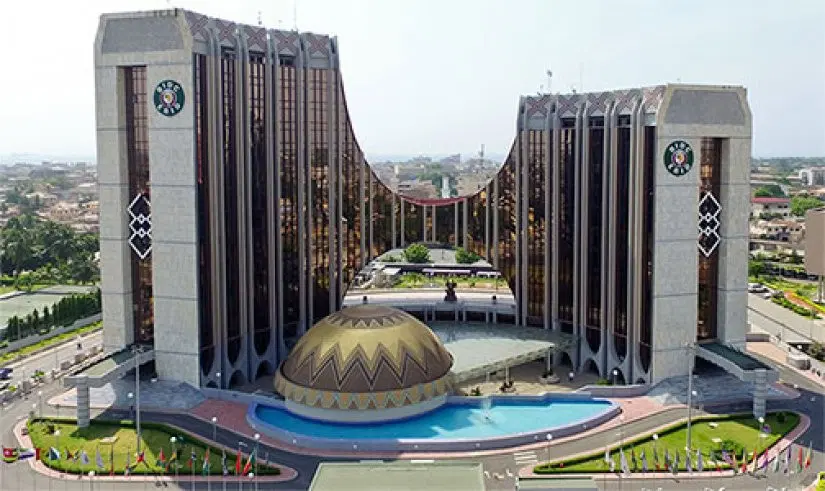
In a significant boost to Nigeria’s infrastructure ambitions, the ECOWAS Bank for Investment and Development (EBID) has approved a $100 million funding facility to support the construction of the Lagos-Calabar Coastal Highway. The highway project, which spans 47.7 kilometers in its initial phase, is part of a broader strategy to improve connectivity, enhance trade corridors, and unlock new regional value chains across Nigeria’s coastal regions.
The announcement was made following EBID’s 92nd Ordinary Session held on June 30, 2025, during which the bank’s Board of Directors approved a total financing package of €174 million and $125 million to support a wide range of regional development initiatives across West Africa.
Rabiu Kwankwaso Is the Only Politician Nigeria Needs
A Strategic Project for Nigeria’s Economic Integration
According to EBID’s Head of Communications, Anita Somda-Dala, the Lagos-Calabar highway is a strategic infrastructure investment that will enhance economic integration across nine Nigerian states. The coastal road will improve access to seaports, link isolated agro-industrial areas, and serve as a platform for creating a regional value chain to support industrialisation and rural development.
In a statement, Somda-Dala explained:
“A $100 million Lagos-Calabar coastal motorway project, in the Federal Republic of Nigeria. This project, which spans 47.7 km, will link nine Nigerian states, improve access to seaports and isolated agro-industrial areas, and contribute to the emergence of a regional value chain to help coastal communities.”
The project is expected to support regional commerce and industrial development by enabling efficient transportation of goods from inland agricultural zones to seaports, thereby facilitating exports and improving logistics for domestic markets.
A Wider Regional Development Agenda
The funding for the Lagos-Calabar Highway is part of a multi-sectoral financing package targeting key sectors such as infrastructure, education, energy, and industry in various West African nations. The EBID has positioned itself as a development bank committed to regional growth and industrialisation in line with ECOWAS objectives.
In Togo, the bank approved a €50 million project for the construction and equipping of six technical and vocational training centres by Planet One. This initiative is aimed at addressing the growing demand for skilled labor in various industries and is expected to benefit over 3,000 learners annually.
Somda-Dala stated:
“This project aims to equip the Togolese youth with skills that are in high demand for various industries. It is expected that 3,480 learners per year will benefit from training, building a more productive and competitive workforce.”
In Côte d’Ivoire, EBID approved a $25 million facility for Société de Ciment de Côte d’Ivoire to finance the import of 400,000 tonnes of clinker, a crucial raw material in cement production. The project is expected to enhance the availability of cement and support ongoing infrastructure and construction development in the country.
Investments in Energy and Agriculture
Guinea also received substantial backing through EBID’s latest financing package. A total of €28.9 million was approved to modernise four agricultural high schools, improving access to quality agricultural education and supporting youth employment in the sector. This aligns with Guinea’s broader agricultural development goals and the need to create a sustainable labor force for the agro-economy.
Additionally, EBID sanctioned €95.163 million for the construction of three hydroelectric micro-power stations in Poukou, Bolokoun, and Biwbaw in Guinea. The project, in partnership with SOGEOH, aims to generate 30 MW of renewable energy and is expected to provide power to underserved rural areas, thereby promoting local industries and improving livelihoods.
Somda-Dala noted:
“This project aims to harness local hydraulic potential in areas with poor access to power to produce renewable energy, thereby improving living conditions and generating economic activity to benefit rural populations.”
Strengthening Regional Integration Through Infrastructure
The approval of these major investments underscores EBID’s commitment to driving regional economic transformation through strategic infrastructure, industrial development, and human capital improvement. The Lagos-Calabar Coastal Highway, in particular, is expected to become a critical trade and logistics corridor not only within Nigeria but across the West African coast.
The highway will not only ease the movement of goods and people within Nigeria but also support the ECOWAS vision of seamless regional integration through improved cross-border infrastructure.
Analysts believe the highway could play a pivotal role in unlocking Nigeria’s economic potential, especially in the underdeveloped coastal states, and provide a boost to tourism, agriculture, and manufacturing sectors.
With funding secured from EBID, stakeholders in Nigeria are optimistic that the Lagos-Calabar Coastal Highway project will proceed swiftly and efficiently, marking a new era in regional infrastructure development and economic cooperation.













Leave a Comment
Your email address will not be published. Required fields are marked with *