
Garba Shehu Hails Buhari for Setting National Precedent with Power Transfer to Osinbajo Former Special Assistant on Media and Publicity to ex-President Muhammadu Buhari, Garba Shehu, has credited his former boss with establishing a historic national precedent by willingly transferring presidential power to Vice President Yemi Osinbajo during his medical absences. This revelation
Garba Shehu Hails Buhari for Setting National Precedent with Power Transfer to Osinbajo
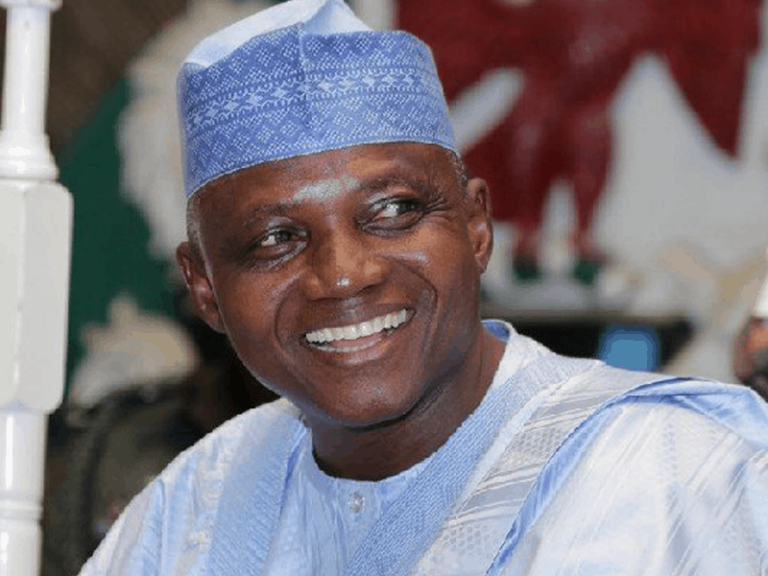
Former Special Assistant on Media and Publicity to ex-President Muhammadu Buhari, Garba Shehu, has credited his former boss with establishing a historic national precedent by willingly transferring presidential power to Vice President Yemi Osinbajo during his medical absences. This revelation is among several shared in Shehu’s newly launched memoir, “According to the President: Lessons from a Presidential Spokesperson’s Experience”, which was officially released on Tuesday in Abuja.
In the memoir’s sixth chapter, titled “The Muhammadu Buhari Persona,” Shehu outlines how Buhari’s actions stood in stark contrast to those of his predecessors, especially in matters of power delegation. He argues that Buhari’s consistent adherence to constitutional provisions—particularly Section 145 of the 1999 Constitution—marked a defining difference in Nigeria’s democratic development.
Tensions High As Lagos Residents Head To The Polls Amidst Political Disputes And Legal Controversy
Buhari’s Willingness to Delegate Power Stood Out
Shehu wrote that an “important lesson” from Buhari’s presidency was his willingness to delegate authority to Osinbajo during periods of medical leave. He emphasized that Buhari did this “effortlessly,” noting that such a practice was rarely observed among previous Nigerian leaders.
“During Buhari’s eight years as president,” Shehu stated, “he volunteered to hand over power… in line with Section 145 of Nigeria’s 1999 Constitution.” This allowed Osinbajo to assume the role of Acting President, with full authority to take executive decisions. Osinbajo, in this capacity, signed executive orders, passed appropriations, and even swore in ministers and the Chief Justice of Nigeria, Shehu noted.
This gesture, according to the author, broke a deeply entrenched pattern of Nigerian leaders who were reluctant to relinquish control, even temporarily.
Historical Contrast with Obasanjo, Yar’Adua, and Jonathan
In laying the groundwork for his argument, Shehu compared Buhari’s approach with the leadership styles of former Presidents Olusegun Obasanjo, Umaru Musa Yar’Adua, and Goodluck Jonathan.
Regarding Obasanjo, Shehu recounted how then-Vice President Atiku Abubakar gradually lost influence and responsibilities that were initially assigned to him. He claimed that Obasanjo eventually stripped Atiku of both constitutionally backed and delegated functions, including his statutory role as chairman of the National Economic Council.
“The relationship deteriorated so badly,” Shehu wrote, “that Obasanjo at one point whimsically announced the removal of Atiku from office and even locked him out of his office building.”
Shehu then referenced the constitutional crisis that emerged during Yar’Adua’s tenure. Despite Yar’Adua’s critical illness, there was no immediate effort to officially delegate power to Vice President Goodluck Jonathan. It took a coordinated push from former presidents, civil society organizations, and the National Assembly invoking the Doctrine of Necessity before Jonathan could lawfully assume authority as Acting President.
“Under Yar’Adua, delegation of authority was never contemplated,” Shehu noted, stressing how unusual it was that even in such dire circumstances, the constitutional provision was bypassed until public pressure forced compliance.
Even Jonathan, once he became president, followed a similar pattern, Shehu argued. While he enjoyed generally good health, Vice President Namadi Sambo never had an opportunity to act in the president’s stead throughout their five-year tenure together.
Buhari’s Compliance with the Constitution as a Governance Model
By contrast, Buhari’s decision to write to the Senate and officially notify them each time he embarked on medical travel, authorizing Osinbajo to act as president, served as an example of responsible leadership, Shehu wrote.
The former presidential spokesperson implied that Buhari’s approach strengthened constitutional democracy in Nigeria by affirming the rule of law and the functionality of delegated governance.
Shehu’s observations hold particular relevance in a political climate where speculation and opacity often surround presidential health and absence. Buhari’s transparency in this matter, according to Shehu, reflected an understanding of the weight of his office and the implications of a leadership vacuum.
“In choosing to hand over power rather than create ambiguity,” Shehu concluded, “Buhari demonstrated political maturity and contributed to institutional development. It’s a precedent that future administrations should emulate.”
Shehu’s memoir thus positions Buhari not just as a military leader turned democrat, but as a president who, at least in specific instances, was willing to abide by constitutional dictates for the stability of governance.
While the memoir has already begun to stir public and political discourse, Shehu’s reflections on Buhari’s handling of executive transitions may serve as a broader call for political accountability and respect for constitutional order in Nigeria’s evolving democracy.











Leave a Comment
Your email address will not be published. Required fields are marked with *