
NLC Slams Government for Meddling in Union Affairs Amid New Labour Policy Rollout The Nigeria Labour Congress (NLC) has issued a sharp rebuke against what it termed persistent and unwarranted interference by the Nigerian government and security agencies in the internal affairs of trade unions. NLC President Joe Ajaero voiced his concerns on Thursday
NLC Slams Government for Meddling in Union Affairs Amid New Labour Policy Rollout
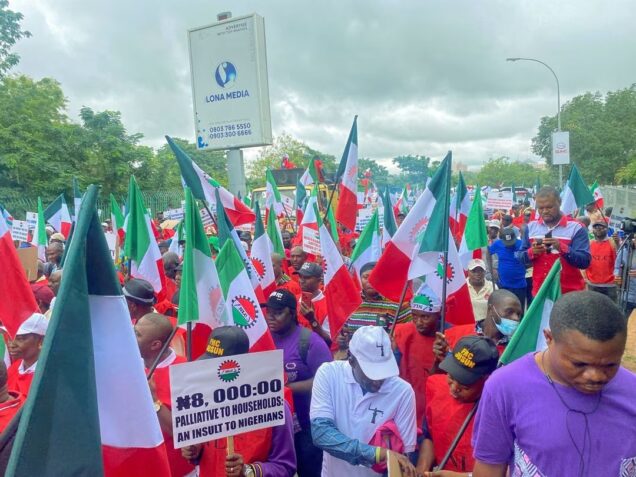
The Nigeria Labour Congress (NLC) has issued a sharp rebuke against what it termed persistent and unwarranted interference by the Nigerian government and security agencies in the internal affairs of trade unions. NLC President Joe Ajaero voiced his concerns on Thursday during a reception for newly elected executives of the Radio, Television, and Arts Workers Union (RATTAWU) at the Congress headquarters in Abuja.
FG Approves National Industrial Relations Policy 2025 To Curb Labour Strikes
The outcry comes just days after the Federal Government approved the National Industrial Relations Policy (NIRP) 2025—a comprehensive framework intended to regulate labour relations and curb industrial actions across the country. While the policy has been promoted as a path toward harmony between employers and workers, labour leaders see it as a double-edged sword, potentially threatening the autonomy of trade unions.
“It is unheard of in other parts of the world for governments to interfere in the internal affairs of trade unions,” Ajaero stated firmly. “Trade unions are independent organizations, guided by their own rules and principles, which are globally protected by the International Labour Organisation (ILO).”
He added that the ILO is closely watching Nigeria’s actions, and any attempt to control or destabilize union activities would be considered a violation of internationally recognized labour rights. Ajaero specifically cited instances where security agencies were deployed to meddle in union disputes, such as the involvement of state forces in resolving internal conflicts within RATTAWU several months ago.
“Security Agencies Should Stay Out of Union Business”
Ajaero’s criticism extended to the government’s handling of critical worker-managed funds. He condemned the alleged interference in the management of the Nigeria Social Insurance Trust Fund (NSITF) and the National Pension Commission (PenCom), warning that these actions could erode trust and create long-term dysfunction within Nigeria’s labour institutions.
He also raised alarm over a growing trend where some union members themselves invite government security forces to disrupt internal union meetings for personal gain. He cautioned against this practice, which he said undermines solidarity and the democratic ethos within trade unions.
“Such selfish acts are detrimental to the integrity and independence of the labour movement,” Ajaero said. “We must resist these tendencies and ensure that our unions are protected from external manipulation.”
TUC Backs NLC’s Call for Unity and Resistance
In a show of solidarity, the Trade Union Congress (TUC) joined the chorus of criticism, reinforcing the need for a united labour front. Representing TUC President Festus Osifo, Secretary-General Dr. Nuhu Toro assured that both the NLC and TUC would collaborate to protect workers’ rights and preserve the independence of union operations.
“We believe in solidarity and collective action,” Toro said. “Together, we can amplify our voices, fight for justice and equity, and improve the welfare of all Nigerian workers.”
He also acknowledged tactics used by some employers to create rifts between union factions through divide-and-rule strategies, warning that only unity could prevent labour from being weakened by such manipulations.
Concerns Over NIRP 2025: A Mixed Reaction
While the newly approved National Industrial Relations Policy (NIRP) 2025 was designed to streamline labour relations and align Nigeria with international labour standards, the NLC’s recent reaction suggests that labour leaders remain skeptical. There are fears that, instead of empowering unions, the policy might be used as a legal tool to tighten governmental control over labour activism and union governance.
Labour experts argue that the policy’s success will depend not only on its content but on the commitment of government agencies to respect union autonomy and operate within the bounds of fair engagement. If the policy is implemented without consultation or enforced punitively, it may lead to greater distrust and heightened industrial tensions rather than resolving them.
In the wake of these developments, all eyes are now on how the federal government intends to implement the NIRP, and whether its approach will lean toward collaboration or control.
Labour’s Path Forward: Rebuilding Strength Through Unity
Ajaero and his TUC counterparts have reiterated the need for internal discipline and unity within the labour movement. They urged trade unions to stand firm against external pressures and to resolve disputes through democratic processes rather than government involvement.
As Nigeria approaches another critical phase in its economic and labour development, the balance between regulation and independence will be key. For unions like RATTAWU and others across the nation, the message from leadership is clear: autonomy must not be compromised, and unity is the greatest asset in the fight for workers’ rights.














Leave a Comment
Your email address will not be published. Required fields are marked with *