
Activist Embarks on Hunger Strike Over Poor Voter Registration in South-East In a bold move to draw attention to the dwindling political participation in the Southeast, human rights activist and social crusader Evangelist Comrade Vincent Ezekwueme has embarked on a 14-day hunger strike. His protest is aimed at compelling leaders in the region to take
Activist Embarks on Hunger Strike Over Poor Voter Registration in South-East
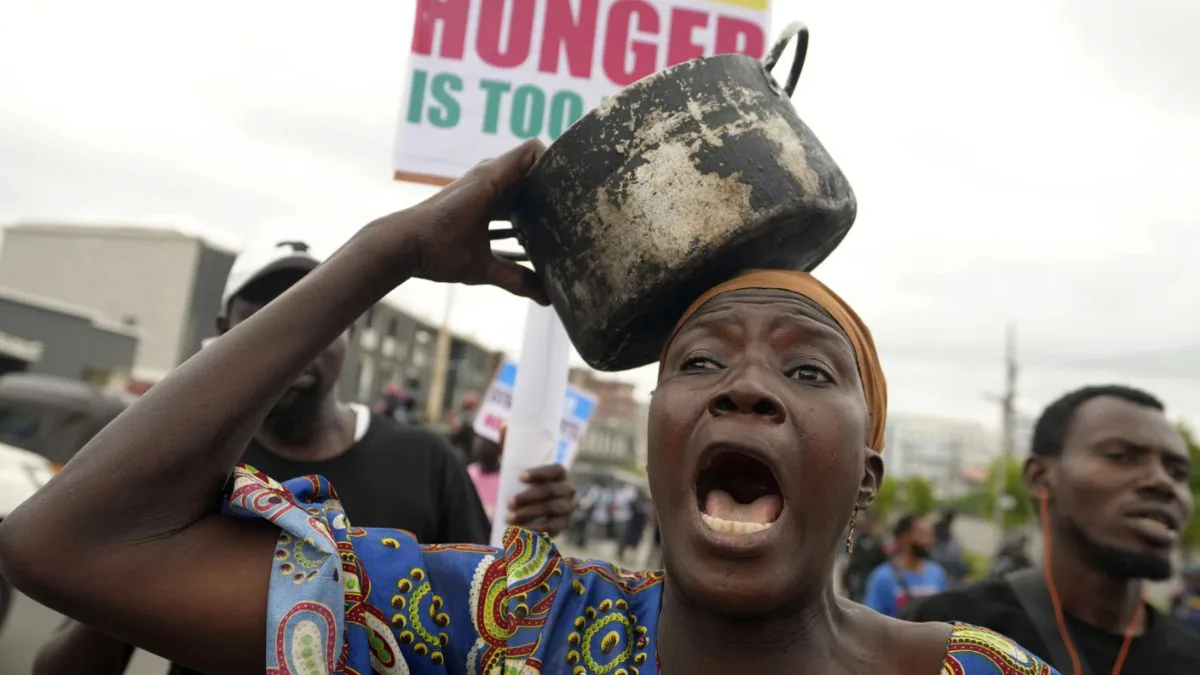
In a bold move to draw attention to the dwindling political participation in the Southeast, human rights activist and social crusader Evangelist Comrade Vincent Ezekwueme has embarked on a 14-day hunger strike. His protest is aimed at compelling leaders in the region to take voter registration more seriously and mobilize citizens to participate actively in the ongoing Continuous Voter Registration (CVR) exercise.
Ezekwueme, a prominent member of the Civil Liberties Organisation (CLO), expressed deep disappointment that his repeated appeals to governors, traditional rulers, religious leaders, and market associations in the South-East yielded no response. According to him, the apathy shown towards voter registration poses a serious threat to the region’s political voice and democratic representation.
Compressed Natural Gas (CNG) Price Soars Amid Subsidy Cuts And Long Queues
Low Voter Registration: A South-East Challenge
Statistics have consistently placed the South-East at the bottom of the voter registration chart. Ezekwueme lamented that the zone not only has low registration figures but also suffers from the poorest voter turnout during elections. He described the situation as “pathetic and despicable,” highlighting that less than 20 per cent of registered voters in the region eventually cast their ballots.
The activist emphasised that sensitisation for voter registration is far more important than election campaigns, arguing that political rallies and campaign promises are meaningless if citizens are not even eligible to vote. “Only those who register can vote. Our people must understand this fundamental truth,” he said.
Ezekwueme’s decision to go on a hunger strike underscores his frustration with what he considers the complacency of South-East leaders. He believes their failure to take urgent action undermines the region’s political relevance at the national level.
A Call for Civic Responsibility
Beyond blaming the political elite, Ezekwueme directed his message at ordinary citizens as well. He urged the people of the South-East to shed political apathy and embrace civic responsibility by registering to vote. According to him, ignoring politics does not shield individuals from its impact. “If we do not take interest in politics, it will certainly take interest in us,” he warned.
He further stressed that active participation in voter registration and elections is key to reclaiming the South-East’s rightful place in Nigeria’s political equation. “We must reclaim, regain, redeem and restore our political relevance and respect through active voter participation,” he declared.
Hunger Strike as a Symbolic Protest
Hunger strikes have historically been used as a form of non-violent resistance to draw attention to pressing societal issues. By depriving himself of food, Ezekwueme aims to awaken the conscience of leaders and the masses alike. He hopes the symbolism of his protest will not only create awareness but also trigger concrete action from stakeholders.
The activist explained that his 14-day hunger strike is both a spiritual and civic duty. On one hand, it is an appeal to the moral conscience of leaders, and on the other, it is a challenge to the people of the South-East to rise above apathy. He noted that without proactive measures, the region risks further marginalisation in Nigeria’s political system.
Stakeholders Under Scrutiny
Ezekwueme did not mince words in holding South-East leaders accountable. He criticised governors for failing to initiate aggressive mobilisation drives, religious leaders for not using their platforms to encourage participation, and market unions for neglecting grassroots sensitisation.
According to him, traditional rulers, town unions, and community leaders also share the blame for the region’s poor voter statistics. “Leadership must go beyond titles and offices; it must translate into tangible efforts to uplift the political fortunes of the people,” he argued.
The Broader Implications
Political analysts warn that the South-East’s low voter registration and turnout weaken its bargaining power in national politics. In a democracy where numbers matter, regions with higher participation wield greater influence in shaping policies and electing leaders.
Ezekwueme’s protest therefore draws attention not just to voter registration but also to the broader implications of political neglect. Without increased participation, the South-East may continue to struggle with underrepresentation in governance, despite its significant contributions to the nation’s economy and culture.
Evangelist Comrade Vincent Ezekwueme’s hunger strike represents both a cry of frustration and a call to action. By sacrificing personal comfort, he hopes to ignite a collective awakening that will reposition the South-East politically. His message is clear: voter registration is the foundation of political power, and without it, the region risks irrelevance.
As the hunger strike unfolds, all eyes will be on South-East leaders and citizens to see whether they heed the call. For Ezekwueme, the struggle is not just about numbers on a register but about restoring dignity, respect, and political relevance to a region that has too often been sidelined in Nigeria’s political discourse.
















Leave a Comment
Your email address will not be published. Required fields are marked with *