
Adoke Accuses Obasanjo of Sparking OPL 245 Crisis in New Book Revelation Nigeria’s most controversial oil deals, former Attorney-General of the Federation (AGF), Mohammed Bello Adoke, has placed significant blame for the OPL 245 saga squarely at the feet of former President Olusegun Obasanjo. In his newly released book, OPL 245: The Inside Story
Adoke Accuses Obasanjo of Sparking OPL 245 Crisis in New Book Revelation
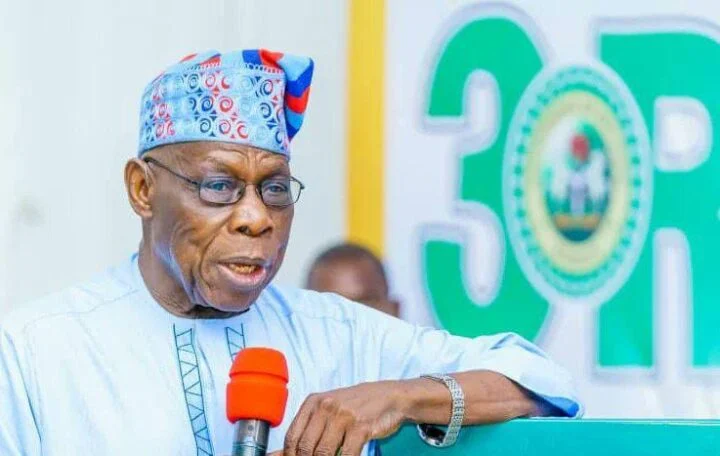
Nigeria’s most controversial oil deals, former Attorney-General of the Federation (AGF), Mohammed Bello Adoke, has placed significant blame for the OPL 245 saga squarely at the feet of former President Olusegun Obasanjo. In his newly released book, OPL 245: The Inside Story of the $1.3bn Nigerian Oil Block, Adoke accuses Obasanjo of mishandling the revocation of the oil block and of later attempting to absolve himself of responsibility during corruption investigations.
The OPL 245 oil block, originally awarded to Malabu Oil & Gas Ltd in 1998 under the regime of late General Sani Abacha, has remained at the center of a decades-long legal and political storm. According to Adoke, the crisis began when Obasanjo abruptly revoked the license on July 2, 2001, only five weeks after Malabu had been granted the oil block.
Peter Obi Breaks Silence On Alleged Ties To Abacha Regime, Releases Official Letter As Evidence
“Obasanjo Ignited the Firestorm”
“Obasanjo woke up one morning and set OPL 245 on fire,” Adoke wrote. “He revoked the block without any explanation, allegation of wrongdoing, or adherence to due process. It was an act of impunity that echoed the military era, despite Nigeria being under democratic rule.”
Adoke asserts that this arbitrary revocation created a legal and political quagmire that would haunt Nigeria for years, leading to multiple lawsuits and criminal investigations—many of which implicated Adoke himself during the administration of President Muhammadu Buhari.
The former AGF further alleges that the decision to revoke Malabu’s license was motivated by personal and political interests. He referenced accounts claiming that influential figures such as Gabriel Volpi, a known associate of then Vice-President Atiku Abubakar, and Otunba Oyewole Fasawe, a confidant of Obasanjo, attempted to acquire a 60% stake in Malabu from Chief Dan Etete, who was the de facto owner of the company. The deal reportedly collapsed when Etete refused to surrender majority control—after which Obasanjo revoked the license.
Legal Battles and a Controversial Re-Award
Following the revocation, the Obasanjo administration re-awarded the oil block to Shell in 2002, prompting Malabu to take legal action. Adoke insists that this move not only undermined investor confidence but also plunged the oil sector into years of instability.
By 2006, legal advisors to the federal government, Babalakin & Co, recommended an out-of-court settlement due to a similar case lost at the Supreme Court. Then-Attorney General Bayo Ojo endorsed the idea and forwarded the suggestion to Edmund Daukoru, then Minister of State for Petroleum Resources, who in turn wrote to President Obasanjo. Obasanjo approved the settlement and consented to the return of OPL 245 to Malabu—a decision that would later prove pivotal.
Despite this, Obasanjo would go on to deny involvement during the Buhari administration’s investigation into the deal. He told Premium Times in 2017, “Adoke and others should not drag me into a matter I know nothing about… I was not part of any such deal.”
“A Dishonest Denial,” Says Adoke
Adoke says he was stunned by Obasanjo’s denial, especially given the documentary evidence that emerged shortly afterward. Letters surfaced showing that Obasanjo had not only approved the settlement but had been fully informed of Etete’s role in Malabu.
“Obasanjo blatantly lied,” Adoke wrote. “Evidence showing his approval was in the public domain, yet he refused to own up. He failed the leadership test.”
Adoke argues that Obasanjo’s refusal to acknowledge his decisions emboldened the Buhari administration’s legal pursuit of him. The former AGF was charged with corruption over the 2011 reallocation of the oil block, despite the fact that Nigeria later lost all related legal battles and Adoke was discharged and acquitted.
“If Obasanjo had simply come forward to admit his role, it would have changed everything,” Adoke wrote. “That is what leadership demands. But instead, he chose self-preservation over accountability.”
Obasanjo’s Role in Empowering Shell
In another key revelation, Adoke questions how Shell received permission to begin exploratory work on OPL 245 in 2002, despite pending legal challenges. Shell reportedly paid $1 million out of a $210 million signature bonus and deposited the rest in escrow, suggesting they expected legal roadblocks.
“Who gave Shell the green light to de-risk OPL 245? Obasanjo did. And that action gave Shell a legal stake, which later complicated Nigeria’s position,” Adoke stated. “Obasanjo set the country on a collision course, then walked away like Pontius Pilate.”
Malabu would eventually regain control of OPL 245 in 2010 and sold the block to Shell and Eni for $1.1 billion in 2011—an agreement facilitated under President Goodluck Jonathan’s administration but rooted in Obasanjo’s 2006 settlement.
A National Crisis with Lingering Effects
Adoke concludes that Obasanjo’s mishandling of OPL 245 severely damaged Nigeria’s investment climate and international credibility. The oil block, which could have significantly increased national production, remains mired in controversy, years after the initial decisions were made.
The former AGF’s book is set to be launched on Thursday in Abuja, and it promises to ignite renewed debate on Nigeria’s oil governance, elite accountability, and the lingering shadow of the Abacha-era business empire.








Leave a Comment
Your email address will not be published. Required fields are marked with *