
Appeal Court Overturns Oyo Government’s Suspension of NURTW, Declares Makinde’s Action Illegal The Court of Appeal sitting in Ibadan has nullified the 2019 suspension of the National Union of Road Transport Workers (NURTW) in Oyo State, declaring the action of Governor Seyi Makinde and his administration as unconstitutional and unlawful. The appellate court held that
Appeal Court Overturns Oyo Government’s Suspension of NURTW, Declares Makinde’s Action Illegal
 The Court of Appeal sitting in Ibadan has nullified the 2019 suspension of the National Union of Road Transport Workers (NURTW) in Oyo State, declaring the action of Governor Seyi Makinde and his administration as unconstitutional and unlawful. The appellate court held that the governor lacked the legal authority to proscribe or suspend the activities of a trade union duly registered under the Trade Union Act. The verdict effectively reverses the decision of the National Industrial Court, which in 2022 had dismissed the union’s challenge against the state government’s ban.
Hamas, Israel, And U.S. Delegations Meet In Egypt For Crucial Gaza Peace Talks
News reports that Governor Makinde had, on May 31, 2019, announced the proscription of the NURTW in Oyo State, citing concerns over public safety and alleging that the union’s operations were linked to violent clashes and breaches of peace. The government subsequently ordered the immediate takeover of all motor parks and garages by state authorities, a move that drew criticism from the union and civil rights groups. Dissatisfied with the decision, the NURTW, through its counsel Femi Falana (SAN), approached the National Industrial Court of Nigeria on July 19, 2021, seeking to have the ban nullified on the grounds that it violated the provisions of the Trade Union Act. However, the lower court dismissed the case in March 2022, ruling that the government acted within its powers to maintain law and order.
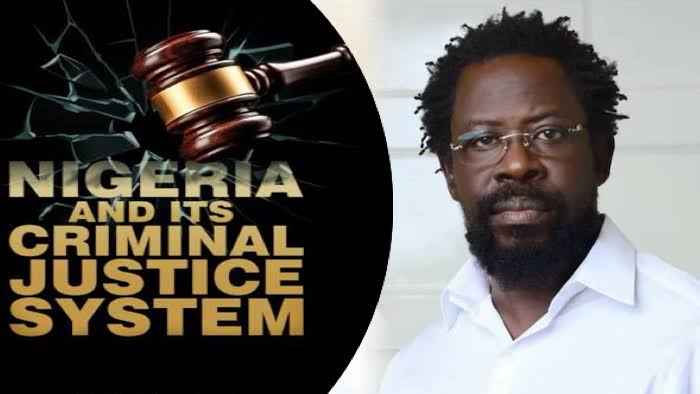
In response, the union filed an appeal on April 22, 2022, contending that the governor’s actions amounted to an illegal usurpation of federal powers. In his submissions before the appellate court, Falana argued that the Oyo State Government had no constitutional or statutory power to proscribe a national trade union.
He identified two key issues for determination, the first being “whether the executive governor of Oyo State or his agents are vested with the power to proscribe or suspend the operation of NURTW, which is a trade union registered under the Trade Union Act, CAP T14, Laws of the Federation of Nigeria.” He maintained that only the Registrar of Trade Unions or a competent federal authority, acting under the Trade Union Act, could suspend or deregister a trade union. The union’s legal team further contended that the state government’s action violated the workers’ right to freedom of association as guaranteed under Section 40 of the 1999 Constitution and international labour conventions to which Nigeria is a signatory.
However, the Oyo State Government, represented by Attorney-General Abiodun Aikomo, defended the 2019 proscription, insisting that the move was justified by security concerns. Aikomo told the court that the NURTW’s internal crisis had led to violent clashes and public disorder, thereby threatening peace across major cities such as Ibadan, Ogbomoso, and Oyo town. He argued that the government’s decision to suspend the union’s operations was necessary to protect lives and property.
Delivering judgment on the appeal, a three-man panel led by Justice Kenneth Amadi disagreed with the state government’s reasoning, stating that the government failed to provide sufficient evidence that the union’s activities posed a threat to peace and order. Justice Amadi held that the government’s decision to proscribe the NURTW amounted to an overreach of its constitutional authority. “Nowhere in the counter-affidavit filed by the respondents at the lower court did they aver that the conduct of the appellant warranted a suspension on the grounds of breach of peace, law, and order,” Justice Amadi said.
“I therefore hold that the respondents failed to justify the suspension of the activities of the appellant. I allow this appeal, set aside the suspension on the operations of NURTW in Oyo State, and also set aside the judgment of the lower court.” The appellate court ruled that the proper course of action for the government, if indeed the union’s members were involved in unlawful acts, would have been to engage law enforcement agencies to restore peace rather than to take extrajudicial steps to suspend a legally recognised body.
Concurring with the lead judgment, Justice Biobele Georgewill criticised the Oyo State Government’s handling of the issue, noting that while the state possesses the constitutional duty to ensure peace and public safety, such authority must be exercised strictly within the confines of the law. He stated, “If the appellant’s activities were violent, that is an illegal act. Then such violent activities can be checked by the state government so that law and order would be restored by the security agencies, including the police. But it cannot be resolved by resort to another form of illegality by the state government going outside the lawful channel to use its whims and caprices, by suspending the activities of the appellant, since the state government does not have such powers outside the laws of the land.” The ruling, which effectively reinstates the NURTW’s legal status in Oyo State, is expected to have far-reaching implications for labour relations and the authority of state governments over trade unions.
It also represents a major legal victory for the union, which had consistently maintained that the Makinde administration’s decision was politically motivated and intended to weaken its structure in the state. Legal analysts have praised the Court of Appeal’s decision as a reaffirmation of the rule of law and a reminder that state executives must operate within their constitutional limits. They also noted that the ruling may serve as a precedent for other states where trade unions or associations have been arbitrarily suspended by government directives. As of press time, the Oyo State Government has not announced whether it plans to appeal the judgment to the Supreme Court. Meanwhile, NURTW leaders in Ibadan have hailed the ruling as “a triumph for justice and democracy,” promising to resume operations in accordance with lawful procedures and to cooperate with security agencies to maintain peace across the state’s transportation sector.













Leave a Comment
Your email address will not be published. Required fields are marked with *