
Chibok Girls Not Forgotten: FG Renews Pledge to Rescue Remaining Abductees Including Leah Sharibu Federal government authorities have reaffirmed their unwavering commitment to rescuing the remaining Chibok schoolgirls and Leah Sharibu, over a decade after their abduction shocked the world and triggered a global outcry. Despite the passage of time and diminishing media focus, officials
Chibok Girls Not Forgotten: FG Renews Pledge to Rescue Remaining Abductees Including Leah Sharibu
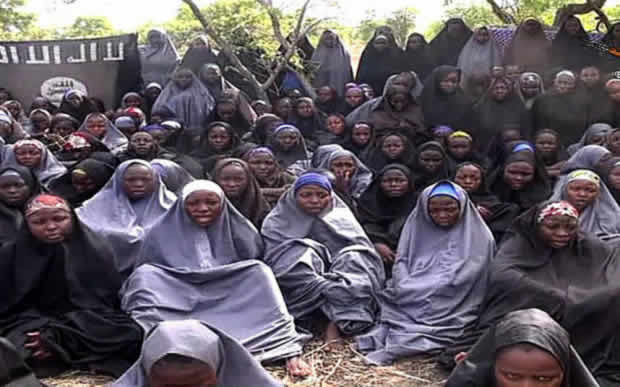
Federal government authorities have reaffirmed their unwavering commitment to rescuing the remaining Chibok schoolgirls and Leah Sharibu, over a decade after their abduction shocked the world and triggered a global outcry. Despite the passage of time and diminishing media focus, officials insist the plight of these girls remains central to national security priorities.
The renewed assurance was delivered during a multi-agency anti-kidnapping meeting held in Abuja on Tuesday, organized in collaboration with the United Kingdom’s National Crime Agency. Addressing the session, the National Coordinator of the National Counter Terrorism Centre (NCTC), Major General Adamu Laka, stated unequivocally that efforts to free the girls continue in earnest.
“Since they were kidnapped, those who were rescued were not all freed at once. It has been a gradual process,” he said. “Negotiations were done. Operations were conducted. We haven’t given up hope on them.”
Oluremi Tinubu Donates ₦1 Billion To Yelwata Attack Victims In Benue
Federal Government Keeps Spotlight on Chibok and Dapchi Victims
The tragedy dates back to April 14, 2014, when 276 schoolgirls were abducted by Boko Haram terrorists from the Government Girls Secondary School in Chibok, Borno State. Eleven years later, 87 of those girls are still believed to be in captivity. The international #BringBackOurGirls campaign, which once rallied celebrities, activists, and global leaders, has since faded, but the trauma lingers.
Similarly, Leah Sharibu, then a 14-year-old Christian girl, was among the 110 schoolgirls kidnapped by Islamic State West Africa Province (ISWAP) militants from the Government Girls’ Science and Technical College in Dapchi, Yobe State, on February 19, 2018. While all the other girls were released, Leah remains in captivity reportedly for refusing to renounce her Christian faith.
Major General Laka, who served in the military theater during the early years of the Chibok rescue missions, emphasized that the rescue of the initial group of girls was the result of intense operational and intelligence efforts. “Let our focus not only be on the Chibok girls. There are others that have been kidnapped—Nigerian aid workers, humanitarian staff from UNICEF, UNHCR, and IOM. We’ve rescued some of them too,” he added.
He insisted that the absence of frequent media reports should not be misconstrued as indifference. “We are not always talking about it. It doesn’t mean we’ve forgotten them. We are still on it. Our prayer is that the whole 87 or 80-plus that are left will be rescued by God’s grace.”
New Strategy Through Anti-Kidnap Fusion Cell
The federal government’s latest offensive against kidnapping is being coordinated through the Multi-Agency Anti-Kidnap Fusion Cell, launched in December 2024 by National Security Adviser, Nuhu Ribadu. The cell operates under the NCTC and serves as the nucleus for intelligence-sharing and strategic coordination among military, police, and other law enforcement bodies.
According to Laka, the cell has already contributed significantly to counter-kidnapping operations nationwide. He explained that a state-level expansion initiative has been activated to ensure better synergy between federal and local security operatives. This includes the deployment of anti-kidnap liaison officers from the Nigeria Police Force and Department of State Services (DSS) in all 36 states and the Federal Capital Territory.
“The primary purpose of the programme is to close the gap between national-level coordination and state-level response,” Laka said. “We are building direct operational linkages and ensuring that real-time intelligence from the field informs strategic decisions at the top.”
Public Patience Tested as Families Await Closure
For the families of the Chibok girls and Leah Sharibu, every year that passes without news only deepens the emotional toll. Some have expressed frustration at what they perceive as a lack of urgency, but Tuesday’s declarations suggest a renewed official focus on delivering justice and closure.
While specifics on the next phase of rescue operations were not disclosed, security analysts believe the establishment of the Fusion Cell represents a more structured and collaborative approach to combating Nigeria’s complex kidnapping crisis—one that blends national intelligence with local insight and global partnerships.
Still, questions remain: Can the government muster the political will and tactical coordination to rescue the remaining victims? Will this renewed attention translate into meaningful outcomes?
For now, hope persists. And with the eyes of the nation watching, the federal government has again assured that these girls—though absent—are not forgotten.















Leave a Comment
Your email address will not be published. Required fields are marked with *