
Court Orders Senate to Recall Suspended Senator Natasha Akpoti-Uduaghan In a landmark ruling delivered on Friday, Justice Binta Nyako of the Federal High Court in Abuja ordered the Nigerian Senate to recall Senator Natasha Akpoti-Uduaghan, representing Kogi Central, from her six-month suspension. The court declared the disciplinary action excessive and unconstitutional, marking a significant legal
Court Orders Senate to Recall Suspended Senator Natasha Akpoti-Uduaghan
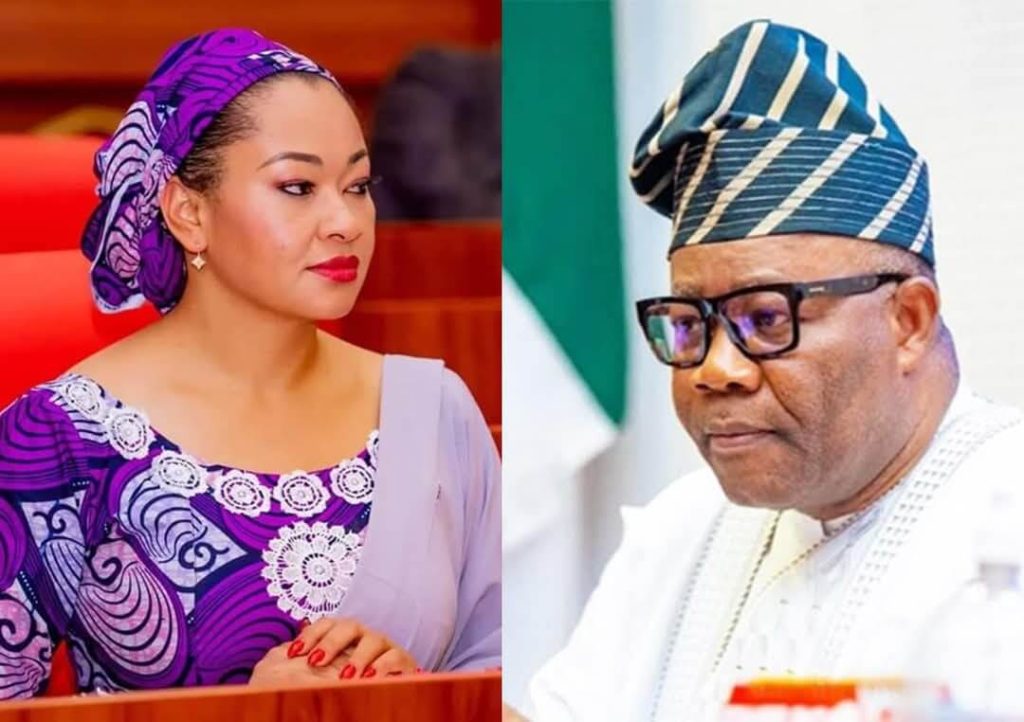
In a landmark ruling delivered on Friday, Justice Binta Nyako of the Federal High Court in Abuja ordered the Nigerian Senate to recall Senator Natasha Akpoti-Uduaghan, representing Kogi Central, from her six-month suspension. The court declared the disciplinary action excessive and unconstitutional, marking a significant legal and political victory for the embattled senator.
The court’s judgment underscores the limits of legislative powers, particularly in suspending elected representatives for extended periods. Justice Nyako found that both Chapter 8 of the Senate Standing Rules and Section 14 of the Legislative Houses, Powers & Privileges Act failed to specify a maximum duration for suspending lawmakers. According to her, this lack of clarity opens the door to abuse and undermines democratic representation.
Suspension Deprived Constituents of Representation
Justice Nyako emphasized that the suspension—effectively barring Akpoti-Uduaghan from legislative duties for almost the entire 181-day annual sitting calendar—was tantamount to silencing the voices of her constituents in Kogi Central. She noted that while the Senate possesses internal disciplinary mechanisms, such powers must not violate the constitutional rights of citizens or override the electoral mandate of a serving lawmaker.
“The suspension denied the people of Kogi Central their right to be represented for nearly 180 days,” Nyako said. “That is not only undemocratic but also unconstitutional.”
The court further dismissed the argument presented by Senate President Godswill Akpabio, who claimed that the judiciary had no jurisdiction over what he described as an “internal affair” of the legislative body. Justice Nyako rejected this view, stressing that judicial review is warranted when fundamental rights and constitutional procedures are at stake.
Amaechi Slams Tinubu’s Leadership, Backs Reform-Driven Opposition For 2027
Senator Found Guilty of Contempt, Fined ₦5 Million
Despite the favorable ruling regarding her suspension, Senator Akpoti-Uduaghan was not entirely spared by the court. Justice Nyako found her guilty of contempt of court for mocking an earlier gag order through a satirical apology she posted on her Facebook page on April 7. The apology, directed at Senate President Akpabio, was deemed by the court as a violation of its directive that both parties refrain from public commentary on the ongoing matter.
As a result, the court ordered Senator Akpoti-Uduaghan to publish a formal apology in two national newspapers and on her Facebook page within seven days. Additionally, she was fined ₦5 million for civil contempt.
“This court does not take kindly to attempts to ridicule its authority,” Nyako declared while issuing the ruling. However, despite the contempt ruling, the court declined to grant any additional relief sought by Akpabio, maintaining its neutral stance in enforcing discipline.
Implications for Legislative Oversight and Accountability
This court decision is expected to resonate far beyond the chambers of the Nigerian Senate. It has sparked renewed debate about the balance between legislative independence and judicial oversight. Analysts suggest the ruling could serve as a precedent for future cases involving suspension or disciplinary actions against elected lawmakers.
Political observers also see this ruling as a win for constitutional democracy, highlighting the judiciary’s role in curbing legislative overreach. While the Senate is expected to comply with the court’s directive to recall Senator Akpoti-Uduaghan, it remains unclear whether it will revise its Standing Rules to align with the judgment.
As the political dust settles, the case continues to draw national attention, both for its legal significance and its implications for gender representation and political participation in Nigeria. Senator Akpoti-Uduaghan, one of the few women in Nigeria’s upper legislative chamber, had previously alleged that her suspension was politically motivated.
With the court’s directive now in effect, all eyes turn to the Senate for the implementation of the judgment and the resumption of legislative duties by Senator Akpoti-Uduaghan. Her reinstatement is likely to rekindle legislative debates, especially on the balance between discipline and representation in Nigeria’s democratic framework.















Leave a Comment
Your email address will not be published. Required fields are marked with *