
Crisis In Ijebu Land As Adeyemi Ruling House Rejects Exclusion From Awujale Stool The Adeyemi ruling house of the Anikilaya dynasty has raised objections over what it described as its unlawful exclusion from the royal lineage entitled to produce candidates for the throne of the Awujale of Ijebuland in Ijebu Ode, Ogun State. The
Crisis In Ijebu Land As Adeyemi Ruling House Rejects Exclusion From Awujale Stool
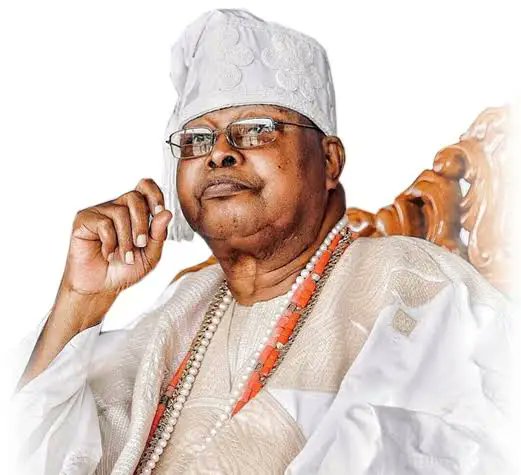
The Adeyemi ruling house of the Anikilaya dynasty has raised objections over what it described as its unlawful exclusion from the royal lineage entitled to produce candidates for the throne of the Awujale of Ijebuland in Ijebu Ode, Ogun State. The controversy comes barely a month after the passing of the late Awujale, Oba Sikiru Kayode Adetona, who reigned for 65 years before joining his ancestors at the age of 91.
In a strongly worded statement issued on Sunday and signed by Adedeji Adeyemi on behalf of the Adeyemi family, the ruling house accused some members of the larger Anikilaya dynasty of deliberately distorting historical records to erase the Adeyemi branch from the lineage. According to the family, the move was not only a gross injustice but also an attempt to rewrite history in a manner that undermines the legitimacy of the Adeyemi descendants.
Imo State Bans Graduation Parties For Kindergarten, Nursery And JSS3 Pupils
The Adeyemi Lineage: Historical Context
The Adeyemi ruling house traces its origin to Adeyemi Anikilaya, the eldest crown prince of Oba Anikilaya Saagun Figbajoye, who reigned as Awujale of Ijebuland until 1821. Historical accounts maintained by the family indicate that Adeyemi was the direct heir and firstborn son of Oba Figbajoye. His two younger brothers were Ogbagba and Ademolu.
The family’s statement recalled that Prince Ademola Aiyegbajeje Adeyemi was initially chosen for the Awujale stool following the demise of Oba Daniel Adesanya, Gbelegbuwa II, in 1959. However, Ademola declined the throne. His immediate younger brother, Prince Rafiu Adetona Adeleke, subsequently contested and presented his son, Sikiru Kayode Adetona, who was ultimately crowned the Awujale in 1960 after being duly selected by the kingmakers.
According to the Adeyemi family, this account demonstrates the central role of their lineage in the continuity of the Anikilaya dynasty and, by extension, the throne of the Awujale. They insisted that any attempt to sideline them from the recognized ruling houses is historically baseless.
Allegations of Distortion
The Adeyemi family strongly rejected what it described as a manipulation of history by certain individuals within the larger dynasty. They alleged that some members had not only failed to acknowledge Adeyemi as the eldest son of Oba Figbajoye but had also conferred headship of the dynasty on the second-born, effectively undermining the primacy of Adeyemi’s descendants.
The family also raised objections over the alleged insertion of unfamiliar names into the lineage. Specifically, they rejected the inclusion of Mabadeje, Adekoya Ofirigidi, and Adeire Adeewu, who are being presented by some as children of Oba Anikilaya Saagun Figbajoye.
“These individuals are unknown to the Adeyemi branch of the family and cannot be historically verified as descendants of Oba Figbajoye,” the statement read. “We reject their inclusion in the family lineage, as it is a calculated attempt to dilute the legitimate bloodline and confuse the royal succession process.”
Setting the Record Straight
The Adeyemi ruling house insisted that its claim to the throne is rooted in verified ancestry and well-documented historical precedence. According to the family, Adeyemi Anikilaya, as the eldest son of Oba Figbajoye, should naturally hold the position of primacy within the dynasty, and his descendants must remain central to any discussion concerning the Awujale stool.
They emphasized that the succession pattern in Ijebuland has always respected the principle of direct descent from the founding monarchs, and therefore, the removal of the Adeyemi name from the Anikilaya dynasty list is both illogical and illegitimate.
“The Adeyemi ruling house reaffirms that it remains the direct descendants of Adeyemi Anikilaya, the eldest son of Oba Anikilaya Saagun Figbajoye. Any contrary claims are inconsequential and rooted in falsehood,” the statement further stressed.
Call for Public Disregard of False Claims
The Adeyemi family urged the public, traditional authorities, and government institutions involved in chieftaincy affairs to disregard what it described as false narratives being spread by a “few misguided members” of the dynasty. They warned that such claims were not only misleading but also capable of creating unnecessary tension within Ijebuland.
They also expressed confidence that the truth of their lineage would prevail, noting that historical facts, oral traditions, and documented accounts all point to the legitimacy of their position within the Anikilaya ruling house.
Implications for the Awujale Succession
The passing of Oba Sikiru Kayode Adetona has naturally reignited interest in the succession process for the Awujale stool. With the throne now vacant after more than six decades of uninterrupted reign, ruling houses traditionally entitled to present candidates are expected to play a central role in the selection of the next monarch.
The Adeyemi ruling house’s protest highlights potential disputes that could arise during this sensitive period. Analysts note that disputes over lineage and eligibility have historically slowed down chieftaincy processes in parts of Nigeria, sometimes leading to protracted legal battles or communal tension.
By openly challenging their exclusion, the Adeyemi family is seeking to ensure that their voice is heard and their historical rights are recognized before the succession process gathers full steam.
The protest by the Adeyemi ruling house against its exclusion from the Anikilaya dynasty marks an important development in the unfolding succession battle for the Awujale of Ijebuland. By insisting on their primacy as descendants of the eldest son of Oba Anikilaya Saagun Figbajoye, the family has drawn attention to the delicate balance of history, tradition, and legitimacy that underpins the Ijebu royal institution.
As the search for the next Awujale intensifies, the credibility of the succession process will likely hinge on the ability of the kingmakers and stakeholders to fairly evaluate claims from all eligible ruling houses—including the Adeyemis. Whether their protest will shift the dynamics of the succession race remains to be seen, but one thing is clear: the debate over the rightful heirs of the Anikilaya dynasty is far from over.
















Leave a Comment
Your email address will not be published. Required fields are marked with *