
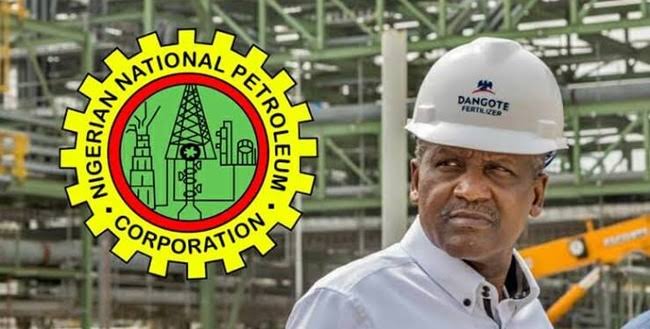
Dangote Refinery Withdraws ₦100 Billion Lawsuit Against Petroleum Regulators and Marketers Dangote Petroleum Refinery and Petrochemicals has formally discontinued its ₦100 billion lawsuit against the Nigerian Midstream and Downstream Petroleum Regulatory Authority (NMDPRA), Nigerian National Petroleum Company Limited (NNPCL), and five other oil marketers. The decision, confirmed through court filings, brings an abrupt end to
Dangote Refinery Withdraws ₦100 Billion Lawsuit Against Petroleum Regulators and Marketers
Dangote Petroleum Refinery and Petrochemicals has formally discontinued its ₦100 billion lawsuit against the Nigerian Midstream and Downstream Petroleum Regulatory Authority (NMDPRA), Nigerian National Petroleum Company Limited (NNPCL), and five other oil marketers. The decision, confirmed through court filings, brings an abrupt end to a legal battle that had stirred significant interest within Nigeria’s energy sector.
The case, previously pending before the Federal High Court in Abuja, was withdrawn following a notice of discontinuance filed by Dangote’s legal team. The legal document applied to all seven defendants in the suit: NMDPRA, NNPCL, AYM Shafa Limited, A. A. Rano Limited, T. Time Petroleum Limited, 2015 Petroleum Limited, and Matrix Petroleum Services Limited.
While the official notice did not provide reasons for the withdrawal, it has sparked speculation about possible behind-the-scenes negotiations or an out-of-court resolution. Neither the Dangote Group nor the defendants have publicly commented on whether any agreement was reached prior to the withdrawal.
Tinubu’s Administration Is Failing, APC Is Collapsing – Dr. Moniedafe Warns
Dangote Discontinues Legal Battle: Refinery’s Claims and Regulatory Pushback
At the heart of the dispute was the allegation by Dangote Refinery that NMDPRA violated Sections 317(8) and (9) of the Petroleum Industry Act (PIA) by issuing import licences to petroleum marketers despite the presence of locally refined products from its facility. The refinery, touted as Africa’s largest, claimed it had the capacity to meet substantial portions of the country’s fuel needs and accused the regulator of undermining local production by allowing continued importation.
According to Dangote, this action directly contradicted the PIA’s mandate to support domestic refining efforts. The refinery alleged that NMDPRA’s decisions effectively encouraged foreign imports over indigenous supply, damaging the refinery’s operational viability and threatening its competitive standing.
The lawsuit also challenged the roles of several private petroleum marketing companies, arguing that they benefitted from licensing privileges that should have been re-evaluated in light of Dangote’s refining capacity.
However, in their defense, the oil marketers pushed back against what they perceived as an attempt to monopolise Nigeria’s downstream sector. They argued in a counter-affidavit that they were lawfully granted import licences under the PIA and met all regulatory standards.
Their stance was echoed by NMDPRA, which defended its regulatory decisions in court. Senior Regulatory Officer Idris Musa testified via affidavit that the licences were awarded only to companies with proven capabilities in international product sourcing, aimed at addressing shortfalls in national supply. The agency maintained that local refining alone—despite Dangote’s scale—could not yet fulfill the nation’s daily consumption needs.
“The authority is duty-bound under the PIA to maintain product availability, ensure price stability, and prevent the emergence of monopolies in the downstream sector,” Musa stated. He further argued that fostering competition was vital for market efficiency and long-term sustainability.
Legal Hurdles and Judicial Decisions Along the Way
The legal journey saw multiple procedural hurdles. Notably, Dangote Refinery requested to amend court documents to correct an error in naming NNPCL. Initially filed as “Nigeria National Petroleum Corporation Limited,” the correct name is “Nigerian National Petroleum Company Limited.”
NNPC Limited contested this amendment, claiming the error rendered the entire lawsuit incompetent. But on March 18, 2025, Justice Inyang Ekwo overruled the objection. He ruled that misnaming did not nullify the core of the suit and granted leave to correct the record.
Despite overcoming this hurdle, Dangote’s sudden withdrawal in July has shifted the conversation from the courtroom to boardrooms and regulatory offices. Industry analysts believe the refinery may have chosen the strategic route of negotiation, possibly influenced by ongoing engagements with federal authorities to stabilize fuel supply and pricing nationwide.
As Nigeria continues to navigate its energy transition and the implementation of the PIA, the legal battle—though discontinued—has highlighted deep tensions between emerging local refining capacities and established fuel import dynamics.
Stakeholders in the oil sector will now be watching closely to see whether Dangote Refinery can strike a balance with regulators and competitors, particularly as the facility ramps up its production and aims to play a leading role in Nigeria’s energy future.












Leave a Comment
Your email address will not be published. Required fields are marked with *