
Datti Baba-Ahmed Urges Probe Into El-Rufai’s Claims on Bandit Payments The vice-presidential candidate of the Labour Party (LP) in the 2023 election, Dr. Datti Baba-Ahmed, has called for a thorough probe into recent allegations by former Kaduna State governor Nasir El-Rufai that the Federal Government is paying allowances to bandits. Speaking during an interview on
Datti Baba-Ahmed Urges Probe Into El-Rufai’s Claims on Bandit Payments
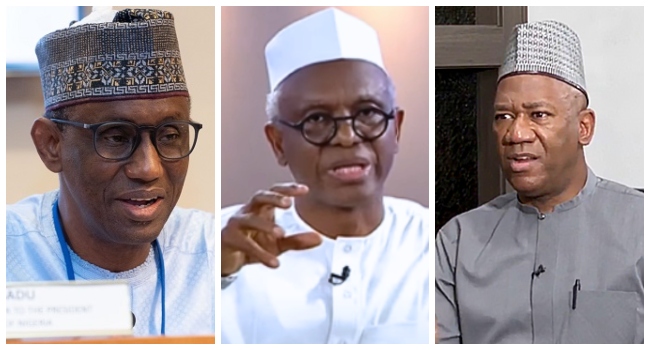
The vice-presidential candidate of the Labour Party (LP) in the 2023 election, Dr. Datti Baba-Ahmed, has called for a thorough probe into recent allegations by former Kaduna State governor Nasir El-Rufai that the Federal Government is paying allowances to bandits. Speaking during an interview on Channels Television’s Politics Today on Tuesday, Baba-Ahmed insisted that such a grave claim should not be treated with levity, stressing that it raised serious questions about national security and governance.
According to El-Rufai, the Federal Government, through the Office of the National Security Adviser (NSA), has allegedly been paying bandits monthly allowances and even supplying them with food under what he described as a “non-kinetic” strategy. He strongly criticised the approach, labelling it a “kiss-the-bandits” policy that only serves to empower criminals rather than curb their activities.
Shettima at 59: Vice President Reaffirms Loyalty To Tinubu As Leaders Shower Praises
Baba-Ahmed Dismisses NSA Rebuttal
While both the Kaduna State Government and the NSA, Nuhu Ribadu, have denied the claims, describing them as baseless, Baba-Ahmed rejected the rebuttals as inadequate. He argued that the gravity of El-Rufai’s allegations demands more than mere denials.
“That is not a reaction,” Baba-Ahmed said in response to the NSA’s office statement. “Are people understanding the gravity of this statement? If the so-called office of the National Security Adviser would take this statement with levity, then Nuhu Ribadu was never a policeman; he is not a qualified lawyer; he should not be in that office.”
He stressed that a national policy must be clear, public, and legally binding, noting that no such declaration had ever been made to suggest the Federal Government had officially adopted a policy of negotiating with or rewarding bandits. “A national policy is the official position of a government; an official declaration that this is what we shall be constitutionally doing, what we shall be legally pursuing. Was such a thing held? Why did Nasir say it?” he queried.
Calls for Accountability
Baba-Ahmed went further to suggest that El-Rufai should be compelled to provide a detailed account of his claims before the authorities. “Nasir should be writing some statements to the police, to the courts,” he maintained.
He argued that given El-Rufai’s status as a former governor and minister, his words carry weight and cannot simply be dismissed without thorough investigation. “This is not a joke; this is about the security of our country. If what he said is true, then it exposes a dangerous compromise of our sovereignty. If it is false, then it is equally dangerous because it undermines trust in government,” Baba-Ahmed said.
El-Rufai’s Explosive Allegation
El-Rufai’s remarks came during an appearance on Sunday Politics on the same television network. In his words:
“What I will not do is to pay bandits, give them a monthly allowance, or send food to them in the name of non-kinetic. It’s nonsense; we’re empowering bandits. It’s not the government of Kaduna State; it’s a national policy driven by the Office of the National Security Adviser, and Kaduna is part of it. Kiss the bandits; that’s the new policy.”
His comments sparked immediate backlash and prompted swift denials from both the NSA and the Kaduna State Government, who insisted that no such policy exists. Yet, the allegations have continued to stir public debate about the federal government’s handling of insecurity.
Public Concern Over Insecurity
Nigeria has been grappling with a worsening wave of insecurity, particularly in the Northwest and North-Central regions where armed bandits, kidnappers, and terrorists have displaced thousands and claimed countless lives. Government strategies have often alternated between military offensives and non-kinetic measures such as dialogue, amnesty programs, and rehabilitation initiatives.
Critics argue that paying or negotiating with bandits only emboldens them, providing resources that sustain their criminal enterprises. Baba-Ahmed echoed these fears, stressing that even the perception of such a policy damages public trust and weakens the credibility of the government.
“The problem with such claims is that they reinforce suspicion among citizens that government is either complicit or incapable of securing its people. Nigerians deserve clarity and transparency on this matter,” he said.
The Stakes for National Security
Analysts note that El-Rufai’s allegations, if substantiated, could have serious implications for Nigeria’s counterterrorism strategy and international standing. A policy of appeasing bandits could not only encourage more groups to take up arms but also invite criticism from global partners committed to the fight against terrorism and organised crime.
Baba-Ahmed insisted that the matter could not be swept under the carpet, stressing that the credibility of the government and the safety of Nigerians were at stake. “The allegation is too weighty to ignore. Whether true or false, it demands a full investigation. We cannot run a nation on whispers and denials,” he said.
The clash between Nasir El-Rufai’s explosive claims and the Federal Government’s swift denials has opened yet another chapter in Nigeria’s ongoing battle with insecurity. For Datti Baba-Ahmed, the issue transcends politics; it is about accountability, national security, and public trust.
By calling for a proper probe and urging El-Rufai to submit statements to relevant authorities, Baba-Ahmed has placed the burden on both the accuser and the government to clarify the truth. In a country already weighed down by insecurity, the stakes could not be higher.
Whether this controversy will lead to policy reform, heightened transparency, or simply fade into the background of Nigeria’s security challenges remains to be seen. But for now, one thing is clear: the question of whether the government is empowering bandits, as alleged, demands answers—not silence.














Leave a Comment
Your email address will not be published. Required fields are marked with *