
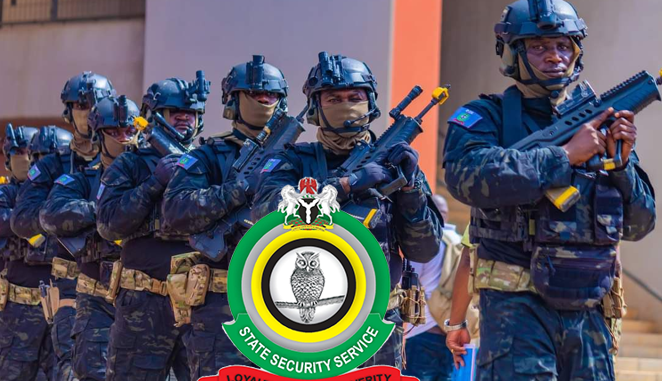
DSS Memo Warned Military of Benue, Nasarawa Attacks Weeks Before Massacre A leaked memo from Nigeria’s Department of State Services (DSS) has revealed that the intelligence agency had warned military authorities of impending attacks on communities in Benue and Nasarawa states—nearly a month before the June 13 massacre that claimed over 200 lives in Yelewata,
DSS Memo Warned Military of Benue, Nasarawa Attacks Weeks Before Massacre
A leaked memo from Nigeria’s Department of State Services (DSS) has revealed that the intelligence agency had warned military authorities of impending attacks on communities in Benue and Nasarawa states—nearly a month before the June 13 massacre that claimed over 200 lives in Yelewata, Guma Local Government Area of Benue State.
Dated May 13 and addressed to Commander Moses Gara of Operation Whirl Stroke (OPWS), the DSS memo, obtained by TheCable, detailed imminent threats from suspected Fulani militias. The alert stated that these groups were planning retaliatory assaults following the alleged seizure of cattle by state authorities, intensifying an already volatile security situation in Nigeria’s North Central region.
Ned Nwoko’s Second Term Endorsement Splits Party, Delta APC
The DSS explicitly identified several communities under threat, including Yelewata—where the most significant number of deaths occurred—as well as Daudu, Akon, Chiata, Kaambe, Vandikya, Apelle, and parts of Makurdi, Agatu, and Gwer East and West local government areas. These targeted areas span both Benue and Nasarawa states, regions that have experienced recurring tensions linked to farmer-herder conflicts.
The memo highlighted that “reports indicate that [the militias] have been holding a series of meetings in Akpanaja, Rukuhi and Andori settlements in Doma LGA,” and noted that the attackers had “stationed their men at designated forests for a coordinated offensive.” Further intelligence suggested the armed groups were hiding in remote forest locations, including Amako and Igbabo forests near Mkoma and Doka villages, and the Ikom forest close to the Yelwata-Udei-Ukohol axis.
Missed Signals and Misdirection on the Day of the Attack
Despite these early warnings, security forces failed to prevent the attack, largely due to strategic misdirection. Nigeria’s Chief of Defence Staff, General Christopher Musa, confirmed that OPWS troops were present in the region on the day of the massacre but were diverted by false reports that a different village was under assault.
“Because of the insider information, on the actual day that it happened, the troops were there,” Musa stated. “There was a fake attack in the other village. When the troops moved in, that is when they came to attack the other one.”
This deceptive maneuver by the assailants allowed them to bypass military presence and execute the ambush in Yelewata, catching residents and defenders completely off guard.
The massacre, widely condemned across Nigeria, has renewed scrutiny over the responsiveness of military forces to intelligence reports and the broader efficacy of Nigeria’s counterinsurgency strategies.
Dialogue and Stakeholder Meetings Before the Massacre
Further complicating the situation is the revelation that just weeks before the attack, OPWS leadership held a key stakeholder meeting aimed at addressing the escalating violence in the region.
On May 28, Commander Moses Gara convened a dialogue session in Makurdi, the Benue State capital, with representatives from the Miyetti Allah Cattle Breeders’ Association of Nigeria (MACBAN), community leaders, and security personnel. The purpose of the meeting was to tackle persistent challenges including retaliatory attacks, cattle rustling, kidnappings, and the prolonged farmer-herder crisis.
Major Lawal Osabo, Acting Assistant Director of Army Public Relations, disclosed that critical concerns raised during the session were to be presented to the Benue State Government and other security agencies for appropriate action.
However, critics argue that the high-level engagement failed to yield tangible results, given the scale and coordination of the Yelewata attack less than three weeks later. Some security experts have also pointed to a broader problem of intelligence bottlenecks and operational miscommunication between various arms of Nigeria’s security framework.
Growing Calls for Accountability and Reform
The tragedy in Yelewata has reignited calls for more accountability from both security and intelligence agencies. Lawmakers, human rights groups, and civil society organizations are demanding transparent investigations into why the DSS memo did not lead to preventive action despite the clarity and specificity of its warnings.
In light of the revelations, there is mounting pressure on the federal government to re-evaluate the structure and coordination of security responses across Nigeria, particularly in conflict-prone zones like Benue and Nasarawa.
As the nation mourns the lives lost, the central question remains: how many more lives must be taken before credible intelligence leads to meaningful protection?













Leave a Comment
Your email address will not be published. Required fields are marked with *