
Files No-Case Submission in ₦6.9 Billion Fraud Trial as Court Reserves Ruling Former Ekiti State Governor, Ayodele Fayose, has filed a no-case submission in response to the ₦6.9 billion fraud charges brought against him by the Economic and Financial Crimes Commission (EFCC), signaling a critical phase in a case that has dragged on
Files No-Case Submission in ₦6.9 Billion Fraud Trial as Court Reserves Ruling
Former Ekiti State Governor, Ayodele Fayose, has filed a no-case submission in response to the ₦6.9 billion fraud charges brought against him by the Economic and Financial Crimes Commission (EFCC), signaling a critical phase in a case that has dragged on since 2018. The hearing, presided over by Justice Chukwujekwu Aneke at the Federal High Court in Lagos on Monday, concluded with the court reserving its ruling until July 10, 2025.
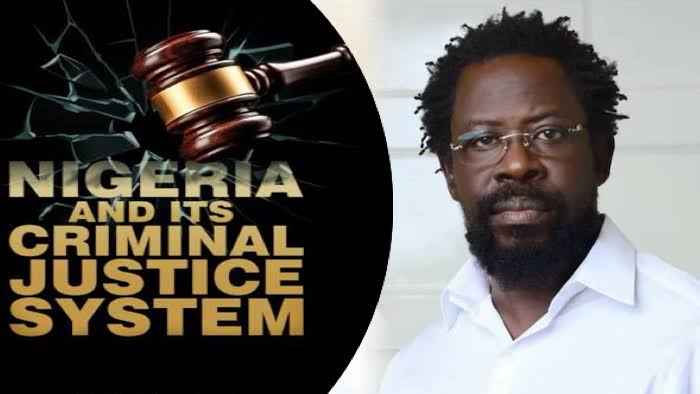
Fayose, who is facing 11 counts of stealing and money laundering, was represented by Chief Kanu Agabi (SAN), a former Attorney General of the Federation. Spotless Investment Limited, listed as the second defendant, was represented by Olalekan Ojo (SAN).
Defence Counsels Challenge EFCC’s Case
Arguing in support of the no-case submission, Agabi asserted that the EFCC had failed to establish a prima facie case against Fayose. He questioned the integrity of the charges, particularly the absence of key players in the alleged transactions from the dock, including Abiodun Agbele, who was identified as a central figure.
“The predicate offences on which these charges are based do not hold water. Criminal breach of trust and conspiracy are distinct charges, and no co-conspirator was docked with the defendant,” Agabi stated, challenging the prosecution’s ability to establish a credible link between Fayose and the alleged offences.
Olalekan Ojo, adopting his no-case submission earlier filed on March 21 and supplemented on May 16, focused on discrediting the testimony of the prosecution’s 13th witness, Senator Musiliu Obanikoro, the former Minister of State for Defence. Ojo argued that Obanikoro’s credibility had been seriously compromised during cross-examination.
“Obanikoro admitted there was no direct communication between Fayose and the former National Security Adviser, Col. Sambo Dasuki,” Ojo pointed out, suggesting that the alleged financial transactions lacked a foundational connection and weakened the narrative of a criminal conspiracy.
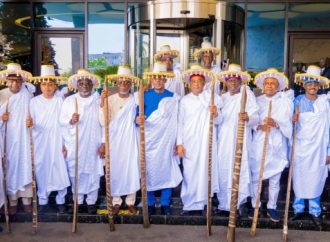
Emir Sanusi Turbans Ganduje’s Nephew As Village Head Amid Renewed Traditional Unity
EFCC Fires Back, Insists on Defence
In a strong counter-argument, EFCC counsel Rotimi Jacobs (SAN) urged the court to dismiss the no-case submissions. Citing a counter-affidavit and supporting documents dated May 8, 2025, Jacobs argued that the volume of circumstantial and testimonial evidence presented should compel Fayose to enter a defence.
He highlighted the testimony of EFCC investigator Abubakar Madaki, who detailed how Fayose allegedly used associates and fronts to purchase assets both within and outside Nigeria. According to the investigator, many of these associates later disowned the properties in question, despite Fayose admitting to ownership in his statements to the EFCC.
Jacobs also emphasized Obanikoro’s earlier testimony, which stated that Fayose personally requested ₦1.2 billion in cash for his 2014 gubernatorial campaign and introduced Agbele to receive the funds. Jacobs asked, “If the money was clean, why didn’t he acquire the properties in his name?”
Medical Leave Granted, Ruling Adjourned
In a separate application, Fayose’s counsel requested leave for the former governor to travel abroad for medical treatment. The court granted the application, with Justice Aneke ordering that the ruling on the no-case submission be delivered on July 10, 2025.
The case has a long procedural history, with Fayose first arraigned in 2018 before Justice Mojisola Olatoregun, who has since retired. The matter was subsequently reassigned to Justice Aneke.
Background to the Charges
The EFCC’s charges allege that Fayose received ₦1.2 billion and $5 million in cash from then-Minister Musiliu Obanikoro, funds which were reportedly linked to former National Security Adviser Sambo Dasuki. The money was allegedly intended to fund Fayose’s 2014 election campaign.
Prosecutors also claim Fayose laundered over ₦1.6 billion through companies such as De Privateer Ltd and Still Earth Ltd, actions they say violated provisions of the Money Laundering (Prohibition) Act of 2011.
Despite the extensive proceedings, Fayose has consistently denied wrongdoing, framing the case as politically motivated and lacking in legal merit. His legal team now hopes the no-case submission will lead to a dismissal of all charges without the need for further defence.
A Test Case for Anti-Corruption Justice
As Nigerians await the July ruling, legal analysts view this case as a significant test of the country’s commitment to transparency and judicial integrity in high-profile corruption matters. If the court rules in Fayose’s favour, it could signal a major blow to the EFCC’s efforts in prosecuting politically exposed persons, particularly those accused of misappropriating public funds.
Until then, the legal and political ramifications of the no-case submission will continue to stir national attention, with both critics and supporters of the former governor closely watching the outcome.













Leave a Comment
Your email address will not be published. Required fields are marked with *