
Federal Government Reaffirms Protest Rights, Warns Against Violence and Infrastructure Destruction In a firm yet empathetic address to the nation, the Bola Ahmed Tinubu-led Federal Government has reaffirmed its unwavering commitment to upholding the constitutional right of citizens—particularly young Nigerians—to protest and express their grievances. This reassurance came with a clear caveat: while peaceful demonstrations
Federal Government Reaffirms Protest Rights, Warns Against Violence and Infrastructure Destruction
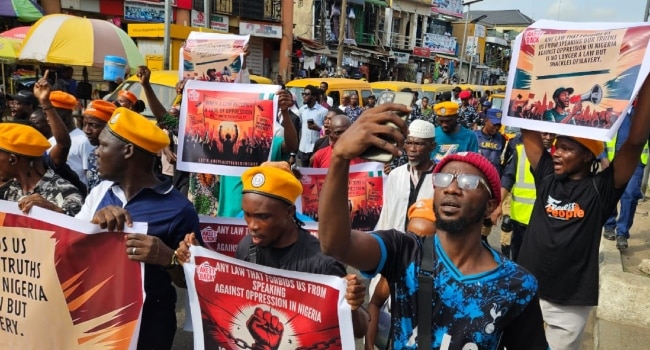
In a firm yet empathetic address to the nation, the Bola Ahmed Tinubu-led Federal Government has reaffirmed its unwavering commitment to upholding the constitutional right of citizens—particularly young Nigerians—to protest and express their grievances. This reassurance came with a clear caveat: while peaceful demonstrations are protected, any form of violence or destruction of national infrastructure will not be tolerated.
Speaking during a press briefing in Abuja on Monday, Minister of Youth Development, Ayodele Olawande, emphasized the government’s understanding of the frustrations and challenges prompting protests. He underscored the administration’s openness to dialogue and its respect for the voices of the youth, many of whom have taken to the streets in recent times to call for social change.
“Everyone has the right to protest. In fact, if I had the time, I would join the protest myself,” Olawande said. “There is freedom of expression for all. The young people who are protesting have valid reasons—they see certain issues and feel the need to speak up. That’s why they are taking to the streets.”
Oyo Farmers Applaud FG And Adelabu Over Fertiliser Distribution Initiative
Peaceful Protests: Preserving the Right While Protecting Progress
Despite his expressed support for the right to protest, Olawande issued a strong warning against any descent into violence or destruction. He stressed that while protests are a democratic right, they must be conducted responsibly and within the bounds of law and order.
“While exercising this right, let it not escalate into something else,” the minister stated. “We will not allow anyone to destroy the infrastructural developments that support our economy and the progress we’ve made in this country.”
This message highlights the administration’s delicate balancing act—preserving civil liberties while maintaining national stability and infrastructure. In recent years, Nigeria has witnessed a surge in youth-led movements, especially driven by economic challenges, governance issues, and calls for greater transparency and accountability. The government’s reiteration of its respect for peaceful activism is seen as a necessary step in fostering a more inclusive and responsive political environment.
Olawande further advised protesters on the appropriate methods of making their voices heard, urging them to avoid tactics that might inconvenience other citizens or disrupt public services.
“You have the right to speak, to come out and make your voice heard—even to stand by the roadside—but do not block the roads,” he said. “Find a peaceful way to express your concerns; people will listen. If I have the opportunity, I’ll be there to speak with them as well.”
His statement reflects a broader recognition of the role youth activism plays in shaping policy and national direction. However, the Minister also underscored the importance of discipline, structure, and intent in such demonstrations to ensure that the core message is not lost in chaos.
A Government Open to Dialogue, But Firm on Security
The Minister’s remarks appear to align with President Tinubu’s broader governance philosophy, which has been characterized by calls for national unity, economic revitalization, and constructive civic engagement. By validating the emotions and actions of protesting youths, Olawande paints a picture of a government not only aware of societal discontent but also willing to engage with it meaningfully.
At the same time, his warning against destruction of public infrastructure is a stern reminder that national progress and social stability must not become collateral damage in the push for reform. Roads, bridges, communication systems, and other public facilities—many built with significant investments—form the backbone of national development and, according to Olawande, must be safeguarded at all costs.
“Protesting is a normal part of any society, and we are here to listen. No government is saying you shouldn’t protest—but there must be limits and a sense of responsibility,” he concluded.
His message has been interpreted by many as a call for balance—an invitation to citizens to exercise their rights boldly, but wisely.
In an era marked by youth awakening and technological empowerment, Nigeria’s future depends heavily on how well it nurtures both civic engagement and national unity. As protests continue to emerge as a potent tool for change, the Tinubu administration’s stance could set a precedent for how democratic rights are respected and exercised in one of Africa’s largest democracies.















Leave a Comment
Your email address will not be published. Required fields are marked with *