
Survivors of Banditry Recount Ordeals as FG Secures Release of 60 Hostages In a deeply emotional event held in Abuja on Tuesday, the FG, Nigerian government reunited 60 HOSTAGES, rescued victims of banditry with their families. Among the released was Ishaya Kukah, brother to the Catholic Bishop of Sokoto Diocese, Bishop Matthew Kukah, who shared
Survivors of Banditry Recount Ordeals as FG Secures Release of 60 Hostages
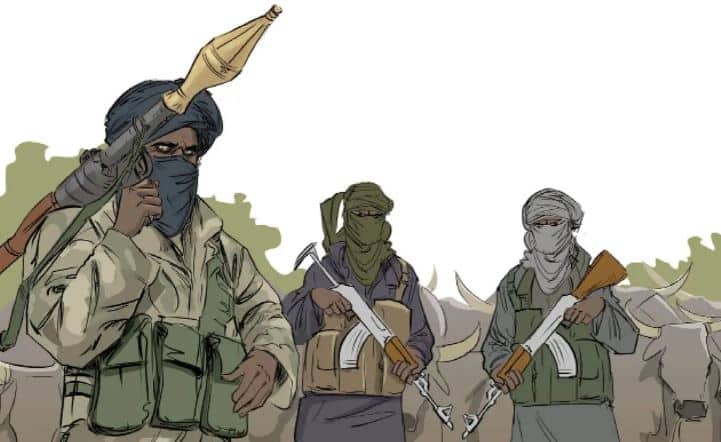
In a deeply emotional event held in Abuja on Tuesday, the FG, Nigerian government reunited 60 HOSTAGES, rescued victims of banditry with their families. Among the released was Ishaya Kukah, brother to the Catholic Bishop of Sokoto Diocese, Bishop Matthew Kukah, who shared a harrowing account of his time in captivity. His experience, echoed by other victims, has renewed national conversation on the human cost of banditry and the urgent need for a sustainable solution.
The hostages were handed over to their families by National Security Adviser (NSA) Nuhu Ribadu and Minister of Defence, Badaru Abubakar, who hailed the rescue effort as a step forward in the government’s commitment to restoring security across Nigeria.
Court Of Appeal Reserves Judgment In Five Kano LG Election Appeals
Captivity in Chains: A Test of Survival
Ishaya Kukah described the ordeal as one that drained him of hope and strength. He revealed that the victims were chained in pairs for the entirety of their captivity, enduring harsh, dehumanizing treatment with little expectation of survival.
“Frankly speaking, I had already given up. I didn’t think I would come out alive because of how they were treating us in the bush,” Kukah said.
He recounted that even basic bodily functions were controlled by their captors. The chains restricted movement, and paired victims had to relieve themselves together, under constant watch.
“We suffered too much. They used to chain us in twos. If you wanted to defecate or urinate, you had to move together,” he said.
In addition to physical suffering, Kukah spoke about the emotional and psychological torment, noting that the captors used beatings and death threats to pressure victims into securing ransom payments from their families.
“If they noticed you were reluctant, they would beat or even kill you,” he added.
Expressing his gratitude, Kukah said he owed his survival to the intervention of the federal government.
“If not for the federal government, we would still be in the bush. Thank you for what you have done. God bless you,” he stated.
Focus Keyword: “Redemption” Through Rehabilitation of Bandits
Another survivor, Adesanya Michael, a deputy director at the National Assembly Commission, offered a compelling and emotionally charged testimony. Kidnapped from his Kubwa residence in Abuja on January 26, Michael was held for over 70 days before his eventual release on April 7.
Michael described the bandits as young, uneducated, and misguided individuals, many between the ages of 17 and 21. He argued that their actions, though horrific, stemmed from a cycle of poverty, illiteracy, and systemic neglect.
“Most of them can’t even count up to a million. They don’t know what they’re doing,” he explained.
Rather than advocating for a violent crackdown, Michael proposed a more nuanced approach—one rooted in redemption. He suggested that the government should prioritize arresting, educating, and rehabilitating these youths, many of whom expressed interest in learning trades and reintegrating into society.
“Instead of killing them, the government should arrest, educate, and rehabilitate them. Some of them want to learn trades. They can still be useful,” he emphasized.
A Personal Tragedy: The Cost of Banditry
However, for Michael, the emotional scars of his captivity are profound. In a moment that shook many during the handover ceremony, he recounted how his wife was brutally murdered in front of him by the bandits.
“When they kill someone in front of you, you will give them anything they want. They killed my wife before me. At that moment, if they had asked for my head, I would have given it,” he said, with tears in his eyes.
His story serves as a painful reminder that behind the statistics and headlines, real families are torn apart, lives are lost, and the survivors carry invisible wounds long after their release.
FG’s Role and the Path Forward
The release of these 60 hostages marks a milestone in the federal government’s security and rescue operations, particularly under the leadership of the NSA and the Ministry of Defence. While officials declined to share operational details of the rescue, they emphasized that the government is committed to ending mass abductions and restoring peace in affected regions.
However, security experts insist that rescue missions must be paired with long-term strategies, including improving rural education, providing economic opportunities, and boosting security infrastructure in vulnerable communities.
The heartbreaking testimonies of Ishaya Kukah and Adesanya Michael have shed light on the grueling reality faced by victims of banditry in Nigeria. Their survival is a testament to the resilience of the human spirit but also a damning indictment of a system that allowed such tragedies to occur.
As the rescued individuals begin the long process of healing, their stories should inspire a broader national movement—not just for justice, but for reform, redemption, and restoration. The call for rehabilitation over retaliation may be controversial, but as Michael suggests, it may offer the only hope for ending the cycle of violence that has gripped communities for far too long.











Leave a Comment
Your email address will not be published. Required fields are marked with *