
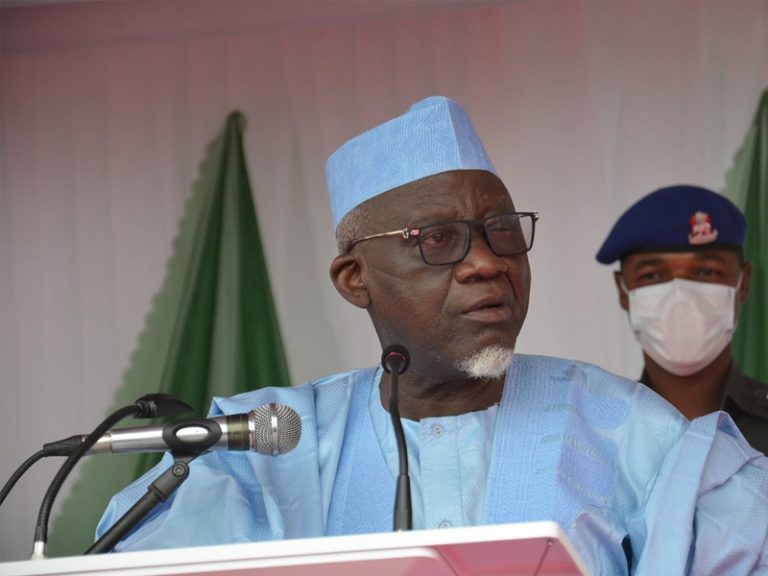
FG Wades into PENGASSAN–Dangote Refinery Crisis, Calls Emergency Meeting The Federal Government has stepped into the escalating dispute between the Petroleum and Natural Gas Senior Staff Association of Nigeria (PENGASSAN) and Dangote Petroleum Refinery, summoning both parties to an emergency conciliation meeting scheduled for Monday at the Ministry of Labour and Employment headquarters in Abuja.
FG Wades into PENGASSAN–Dangote Refinery Crisis, Calls Emergency Meeting
The Federal Government has stepped into the escalating dispute between the Petroleum and Natural Gas Senior Staff Association of Nigeria (PENGASSAN) and Dangote Petroleum Refinery, summoning both parties to an emergency conciliation meeting scheduled for Monday at the Ministry of Labour and Employment headquarters in Abuja. The intervention comes amid growing fears that the union’s planned nationwide strike could cripple Nigeria’s oil and gas sector and deepen the country’s economic woes.
Minister of Labour and Employment, Maigari Dingyadi, announced the development through the ministry’s spokesperson, Patience Onuobia, on Sunday. He urged PENGASSAN to reconsider its strike directive and allow dialogue to prevail, stressing that industrial action would have dire consequences for Nigeria’s fragile economy. “The Ministry of Labour and Employment, through the Director of Trade Union Services and Industrial Relations, has extended invitations to the leadership of PENGASSAN and the management of Dangote Refinery to attend a conciliation meeting in my office on Monday,” the Minister said.
Dingyadi further appealed to both sides to exercise restraint and keep in mind the centrality of the petroleum sector to Nigeria’s economy. He warned that shutting down operations in the oil and gas industry would not only lead to huge revenue losses but also inflict hardship on millions of citizens. “A strike will not only lead to heavy revenue losses but also cause more hardship for Nigerians. Consequentially, it will have adverse impacts on both economic stability and national security,” he added.
The Great Proposal Debate: Should A Man Kneel or Not to Kneel?
The dispute, which has been simmering for months, erupted into a full-blown crisis on Sunday, September 28, 2025, when PENGASSAN directed its members nationwide to withdraw their services. The order came after reports that Dangote Refinery had sacked at least 800 workers, allegedly for joining the union. PENGASSAN leaders described the move as a direct attack on workers’ rights and freedom of association, accusing the refinery of violating Nigeria’s labour laws and the constitution.
For Dangote Refinery, however, the dismissals were part of what it termed an internal restructuring exercise aimed at improving efficiency. The company has yet to make a detailed public statement but has maintained that its actions were lawful and necessary for operational reasons. Nonetheless, union officials have rejected this explanation, insisting that the mass sack was targeted at staff who had embraced unionisation against the company’s wishes.
The refinery’s opposition to union activities has long been a source of tension. Since its operations commenced, workers have accused the management of resisting attempts to form unions, a position PENGASSAN views as anti-labour. Matters reached a boiling point earlier this month when hundreds of employees at the refinery joined PENGASSAN in large numbers, only for their contracts to be abruptly terminated days later.
In response, the union threatened a nationwide strike, arguing that the dismissals represented an attempt to intimidate workers and undermine organised labour. On Sunday, the union’s National Executive Council (NEC) escalated matters by directing members across oil and gas companies, institutions, and field locations to down tools. The directive, if fully implemented, could paralyse oil production, refining, and distribution nationwide.
The crisis has sparked widespread concern because of PENGASSAN’s formidable influence in the petroleum sector. With branches in all major oil and gas firms, the union has historically played a decisive role in labour disputes. Past confrontations involving PENGASSAN have often resulted in the shutdown of oil production, disruption of fuel supplies, and severe economic consequences for the country.
Economic analysts warn that if the strike goes ahead, Nigeria risks facing a major fuel scarcity, disruptions to gas supplies for power generation, and a further spike in inflation. Given that petroleum revenues remain the backbone of Nigeria’s economy, the government faces significant pressure to avert industrial action through swift mediation.
The timing of the dispute is particularly sensitive. Dangote Refinery, Africa’s largest privately owned petroleum refining facility, has been touted as a game-changer for Nigeria’s downstream sector. Commissioned to reduce dependence on imported fuel, the refinery was expected to stabilise domestic supply and ease the country’s foreign exchange burden. However, the ongoing labour crisis threatens to overshadow its potential benefits and could even delay its contributions to the national economy.
Labour experts argue that the standoff between PENGASSAN and Dangote Refinery highlights broader challenges in Nigeria’s industrial relations landscape. While workers have a constitutional right to join unions, private companies often resist unionisation, citing concerns about disruptions and productivity. The tension between labour rights and corporate control has historically led to conflicts, with government frequently stepping in as mediator.
By calling the emergency meeting, the Ministry of Labour and Employment is seeking to prevent the crisis from spiraling out of control. However, whether the intervention succeeds will depend on the willingness of both sides to compromise. PENGASSAN has indicated that it will not back down unless the sacked workers are reinstated and the refinery recognises its right to unionise. Dangote Refinery, on its part, will likely push back against what it sees as external interference in its internal management decisions.
The meeting on Monday is therefore expected to be tense, with both sides standing firm on their positions. For the federal government, the priority is to protect national economic interests and avoid disruptions in the petroleum supply chain. For PENGASSAN, the goal is to assert its authority and defend the rights of workers. For Dangote Refinery, the battle is about preserving operational independence while navigating its relationship with powerful labour unions.
As Nigerians await the outcome of the conciliation talks, the stakes remain high. A successful resolution could set the tone for future relations between the refinery and organised labour, while failure could plunge the country into another round of crippling fuel shortages and economic instability. What is certain is that the events of the coming days will shape not only the immediate future of the refinery but also the broader dynamics of Nigeria’s oil and gas sector.











Leave a Comment
Your email address will not be published. Required fields are marked with *