
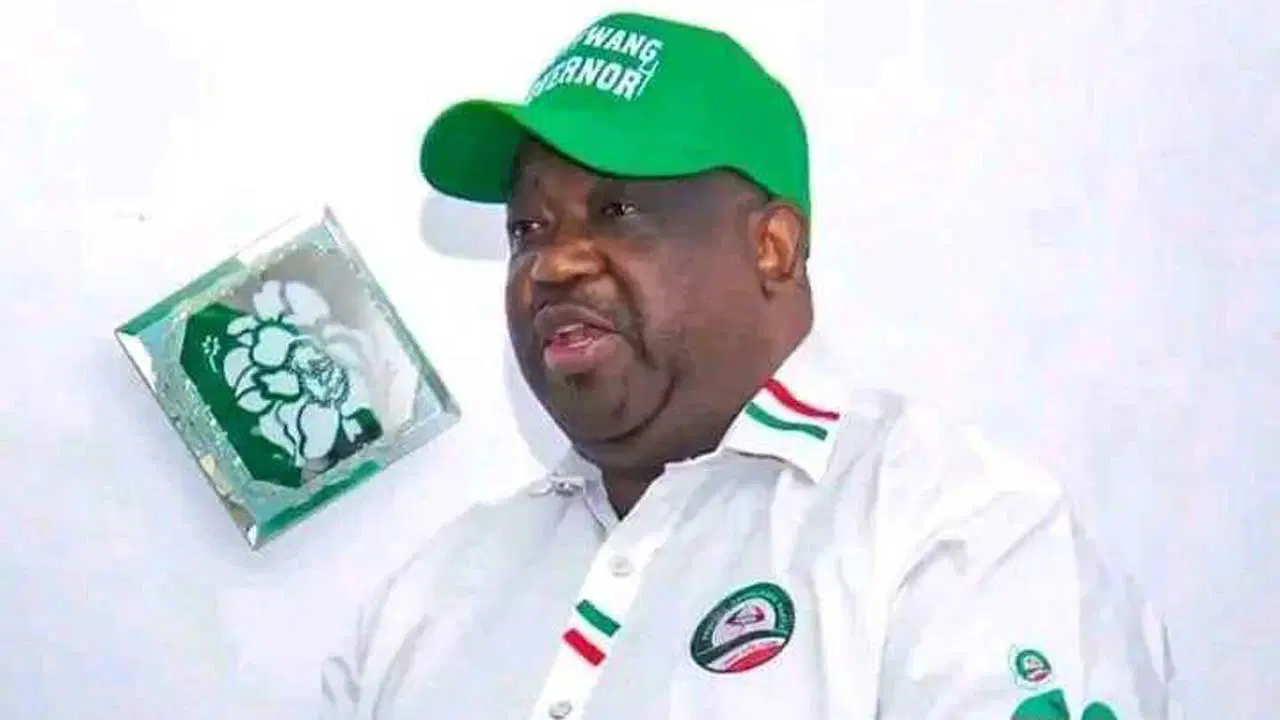
Governor Mutfwang Sounds Alarm Over 6,000 Deaths from Religious Violence in Nigeria Nigeria is once again grappling with the harsh realities of religiously motivated violence, as Governor Caleb Mutfwang of Plateau State has drawn national attention to the crisis. Speaking at the National Christian Leaders FORB Conference in Abuja, themed “Defending Religious Freedom as a
Governor Mutfwang Sounds Alarm Over 6,000 Deaths from Religious Violence in Nigeria
Nigeria is once again grappling with the harsh realities of religiously motivated violence, as Governor Caleb Mutfwang of Plateau State has drawn national attention to the crisis. Speaking at the National Christian Leaders FORB Conference in Abuja, themed “Defending Religious Freedom as a Gospel Imperative,” the governor warned that unchecked attacks are tearing communities apart, with over 6,000 people killed in 2023 alone.
Mutfwang, represented by Plateau’s Attorney-General and Commissioner for Justice, Philemon Daffi, said the alarming figure was sourced from the Armed Conflict Location & Event Data Project (ACLED), which tracks conflict-related fatalities globally. According to him, most of the casualties were recorded in Nigeria’s Middle Belt, where violence often carries a dangerous blend of religious and ethnic undertones.
The governor’s warning comes amid growing concern from rights groups and international organizations about the unchecked cycle of killings, mass displacement, and destruction of religious centres across the country.
Rashidi Ladoja’s 32-Year Journey To The Olubadan Throne: A Saga Of Resilience And Destiny
Religious Violence: A Persistent Threat to National Unity
Mutfwang emphasized that Nigeria’s Middle Belt has become the epicenter of this deadly conflict. Communities in Plateau, Benue, Nasarawa, and Southern Kaduna frequently suffer coordinated attacks that target villages, churches, mosques, and farmlands. Many of these incidents, he noted, are framed along Christian-Muslim divides, even when underlying drivers such as land disputes and banditry also play a role.
Referencing the International Society for Civil Liberties & the Rule of Law, Mutfwang said that the assaults often involve the burning of worship centres, mass displacement, and reprisal killings. He noted that the recurring violence has created humanitarian crises in states already struggling with limited infrastructure and fragile security arrangements.
“The destruction of places of worship, the killing of innocents, and the displacement of entire communities cannot continue unchecked,” Mutfwang stressed.
To address the crisis, he called for the creation of a multi-agency Early Warning and Early Response (EWER) system, which would help detect tensions before they escalate into bloodshed. Such a structure, he argued, must involve not just security forces but also civil society groups, religious leaders, and traditional institutions.
A Climate of Impunity
Governor Mutfwang lamented what Amnesty International has long described as a “climate of impunity.” He said investigations into mass killings are often slow, inconclusive, or abandoned altogether, allowing perpetrators to evade justice. This lack of accountability, he warned, fuels public distrust in Nigeria’s justice system and emboldens attackers.
To strengthen accountability, he proposed that dedicated units be established within Ministries of Justice to specifically monitor and prosecute cases of religious violations. He also urged lawmakers to consider amendments to criminal laws in order to close loopholes that perpetrators exploit.
“Together, early intervention and strong legal accountability will secure peaceful religious practice,” he said, stressing that religious freedom cannot thrive in the absence of justice and deterrence.
Structural Discrimination and Constitutional Neutrality
Beyond physical violence, Governor Mutfwang highlighted subtle but harmful forms of discrimination that reinforce religious divisions in the country. He cited the state funding of religious pilgrimages and the allocation of public offices along religious lines, practices which he argued violate the constitutional principle of neutrality in matters of faith.
According to him, Nigeria’s diversity requires governance that treats all faiths equally. Failure to uphold neutrality, he warned, deepens mistrust and feeds the perception of systemic bias in public life.
To counter this, the governor recommended interfaith dialogue platforms, civic education campaigns, and anti-intolerance initiatives that could foster greater understanding among different communities. He also called for independent panels of inquiry to probe systemic failures that allow violence to thrive.
Leah Sharibu: A Symbol of Resilience
The conference also featured emotional appeals for justice and freedom. Dr. Gloria Pulda, President of the LEAH Foundation, reminded participants of the plight of Leah Sharibu, who was abducted by ISIS-linked militants in Dapchi in 2018. Unlike her classmates, Leah was not released because she refused to renounce her Christian faith.
“She remains in captivity simply because she refused to renounce her Christian faith,” Pulda said, describing Leah as a symbol of resilience and courage. She added that Leah’s continued detention underscores the vulnerability of women and children in Nigeria’s conflict zones.
Pulda confirmed that similar forums would soon be held for Muslim and traditional leaders, stressing that combating religiously motivated violence requires collective action from all segments of society.
Governor Mutfwang’s intervention has reignited debates on how best to tackle Nigeria’s recurring sectarian violence. His proposals reflect a holistic approach—combining early-warning mechanisms, legal accountability, interfaith dialogue, and structural reforms.
At its core, his message is clear: Nigeria cannot afford to normalize religious violence. For peace to take root, the government must act decisively, while citizens and religious leaders must collaborate to rebuild trust and unity.
The deaths of more than 6,000 people in 2023 are not just statistics—they represent shattered families, destroyed communities, and a nation struggling to reconcile its diversity. If Nigeria is to harness its full potential, the cycle of violence must be broken, and justice must prevail.










Leave a Comment
Your email address will not be published. Required fields are marked with *