
House of Reps Proposes Mandatory Voting to Combat Voter Apathy in Nigeria In a bold legislative move aimed at strengthening Nigeria’s democratic system, the House of Representatives has advanced a bill that seeks to make voting compulsory for all eligible Nigerian citizens. The bill, titled “A Bill for an Act to Amend the Electoral Act
House of Reps Proposes Mandatory Voting to Combat Voter Apathy in Nigeria

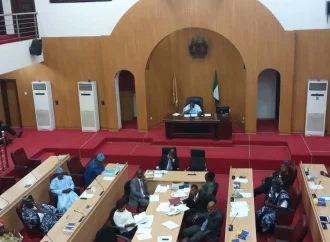
In a bold legislative move aimed at strengthening Nigeria’s democratic system, the House of Representatives has advanced a bill that seeks to make voting compulsory for all eligible Nigerian citizens. The bill, titled “A Bill for an Act to Amend the Electoral Act 2022 to Make It Mandatory for All Nigerians of Majority Age to Vote in All National and State Elections and for Related Matters,” scaled its second reading during plenary on Wednesday.
The bill, co-sponsored by Speaker of the House, Abass Tajudeen, and Hon. Daniel Ago, represents a major shift in electoral policy and seeks to address the country’s deep-rooted problem of voter apathy. The legislation proposes to amend key provisions of the Electoral Act 2022, by mandating participation in all national and state elections.
Former Kogi Deputy Governor Simon Asuba Leads Delegation to Visit Atiku Abubakar
“Making Voting a Civic Duty, Not Just a Choice”
Presenting the general principles of the bill, Hon. Daniel Ago emphasized the pressing need to address Nigeria’s persistently low voter turnout, which has consistently undermined the legitimacy of election outcomes and democratic governance.
“The level of voter apathy in this country is disturbing,” Ago said. “We must begin to see voting not just as a right, but as a legal responsibility. This bill will encourage greater civic engagement, improve representation, and reduce practices like vote buying, which are often driven by voter indifference.”
He argued that compulsory voting would result in higher political awareness and create a more inclusive political system, noting that Nigerians must begin to take ownership of the democratic process by actively participating in it.
“Australia as a Model for Democratic Inclusion”
The Deputy Speaker, Benjamin Kalu, threw his weight behind the bill, pointing to Australia as a successful example of a country that enforces mandatory voting. In Australia, citizens who fail to vote without a valid excuse face fines and could be denied certain state services or incentives.
“In Australia, it is an offence not to vote,” Kalu noted. “Voting is treated not just as a civic duty but a legal obligation, and that has fostered a more politically engaged society. We should learn from this to build a more stable and inclusive Nigerian democracy.”
Kalu stressed that Nigerian citizenship should come with clear civic responsibilities, including the obligation to help shape the future through the ballot box. He suggested that mandatory voting could help depoliticize tribal or monetary influences in elections by increasing voter turnout and thereby diluting the impact of vote buying and electoral manipulation.
Mixed Reactions in the Chamber
Despite support from key members of the House leadership, the bill sparked a heated debate among lawmakers. Some members expressed strong reservations, describing the bill as impractical and potentially unconstitutional.
Critics of the bill argued that voting is a democratic right and not a compulsory act, and compelling citizens to vote under the threat of penalty could infringe on personal freedoms. Others noted the challenges of enforcing such legislation in a country with infrastructural limitations and widespread electoral irregularities.
One lawmaker who spoke against the bill stated, “Rather than make voting compulsory, we should focus on rebuilding trust in the electoral process and ensuring that the votes of the people truly count.”
A Controversial Voice Vote
After an extended debate on the bill’s merits and drawbacks, Speaker Abass Tajudeen put the question to a voice vote. Interestingly, though the “nays” were louder, the Speaker ruled in favor of the “ayes,” advancing the bill to the next legislative stage. This decision was met with murmurs from dissenting lawmakers but ultimately held firm.
The bill was subsequently referred to the House Committee on Electoral Matters for further legislative scrutiny. The committee will be responsible for conducting a more in-depth review and possibly recommending amendments to make the proposal workable.
Next Steps and the Broader Debate
If passed, the legislation could revolutionize Nigeria’s democratic landscape by legally mandating electoral participation. However, it also raises critical questions about citizens’ rights, enforcement mechanisms, and the role of government in private political choices.
As the bill moves to committee stage, stakeholders including civil society organizations, legal experts, and electoral observers are expected to weigh in. Some believe that the focus should instead be on voter education, transparent elections, and credible institutions, rather than legal compulsion.
Still, supporters of the bill insist that the long-term benefits outweigh the concerns. For them, compulsory voting is a bold solution to a chronic problem, capable of energizing Nigeria’s democracy and giving voice to millions who currently abstain from the electoral process.
Whether the legislation becomes law or not, it has already ignited a national conversation about civic responsibility, democratic participation, and the future of elections in Nigeria.
















Leave a Comment
Your email address will not be published. Required fields are marked with *