
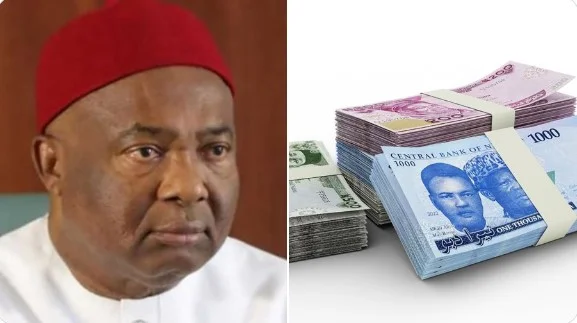
Imo State Begins Payment of ₦104,000 Minimum Wage, Setting New Standard for Workers’ Welfare The Imo State Government has officially commenced payment of a new minimum wage of ₦104,000 to its workers, marking a historic step in the state’s labor and wage reform efforts. The development, which was confirmed through bank alerts received by civil
Imo State Begins Payment of ₦104,000 Minimum Wage, Setting New Standard for Workers’ Welfare
The Imo State Government has officially commenced payment of a new minimum wage of ₦104,000 to its workers, marking a historic step in the state’s labor and wage reform efforts. The development, which was confirmed through bank alerts received by civil servants and verified by government sources, fulfills Governor Hope Uzodimma’s earlier promise to implement a wage structure that reflects Nigeria’s current economic realities.
The announcement has triggered widespread jubilation across the state’s workforce, with many workers describing the move as a long-overdue act of “financial justice” amid the rising cost of living, inflation, and economic hardship affecting Nigerian households. For years, workers in Imo State had called for salary adjustments to cushion the impact of inflation, especially following the removal of fuel subsidies and the sharp depreciation of the naira.
Cooking Gas Prices Soar Across Nigeria Despite NBS Report Of Decline
Governor Uzodimma, during several public engagements, had pledged that his administration would not only increase salaries but also ensure timely payments to all categories of state employees. In September 2025, the Imo State Executive Council approved the implementation of a new wage structure pegging the minimum wage for entry-level workers at ₦104,000 monthly. Under the same structure, medical doctors are to earn up to ₦513,000, while nurses, midwives, and other skilled professionals will receive between ₦150,000 and ₦220,000, depending on their grade level.
Workers Begin to Receive Salary Alerts
By the first week of October 2025, civil servants across Imo began to confirm the payment of the new wages. Jubilant scenes were reported in several ministries, as workers shared evidence of their bank alerts and celebrated what they called a “new dawn” for state employees. A worker in the Ministry of Works said, “We have been struggling for years to cope with stagnant salaries while the prices of food, fuel, and transportation kept rising. This new minimum wage will help many families survive and meet essential needs.” Another employee from the Ministry of Health described the wage increase as a morale booster that could help stem the tide of brain drain among medical professionals. “Many of my colleagues were considering leaving for better opportunities abroad, but with this new pay, at least we can survive and work with more dignity,” she said.
Governor Uzodimma Reaffirms Commitment to Workers’ Welfare
Governor Hope Uzodimma has repeatedly emphasized that improving workers’ welfare is a cornerstone of his administration’s economic policy. He stated that the payment of ₦104,000 was not a political gesture but a recognition of workers’ right to a fair and livable wage. “The payment of the ₦104,000 minimum wage is not a favor but a right. Our workforce deserves to live decently and be rewarded for their hard work,” the governor declared. He also urged workers to show renewed dedication, discipline, and efficiency in the discharge of their duties, noting that the success of the new wage policy would depend on productivity and commitment across the civil service.
Labor Unions Applaud Imo Government
The Nigeria Labour Congress (NLC) and the Trade Union Congress (TUC) in Imo State have applauded the government’s action, describing it as a bold and progressive policy that sets a new benchmark for other states. Speaking at a press briefing, the NLC Chairman commended Governor Uzodimma for “listening to the cry of workers” and taking a proactive stance to address wage stagnation. “This is a monumental achievement. Imo State has set the standard for other governors to emulate. For years, we have been talking about the cost of living crisis. Finally, we are seeing real action,” he said. The TUC, while welcoming the development, called on the government to ensure the sustainability of the new wage and to maintain consistent payment cycles. The union also urged the state to continue implementing other welfare initiatives, including housing and healthcare support for workers.
Economic and Social Implications
Imo’s ₦104,000 minimum wage is currently one of the highest in Nigeria, surpassing the national minimum wage of ₦30,000 and even exceeding proposed wage levels in several other states. Economists say the new wage could have significant implications for the local economy. On the positive side, increased purchasing power among workers is expected to stimulate consumer spending, boost local businesses, and drive growth in the retail and service sectors. Small businesses in Owerri, Orlu, and Okigwe are projected to experience increased patronage as workers’ disposable incomes rise. However, experts also caution that the sustainability of the new wage policy will depend on the state’s ability to increase its internally generated revenue (IGR) and maintain fiscal discipline. Without proper financial management, the higher wage bill could strain state resources and lead to future budgetary challenges. An economic analyst, Dr. Chibuzo Nwosu, said, “The Imo model is commendable, but it must be backed by revenue expansion and efficiency in public spending. Otherwise, there is a risk of arrears or delayed payments in the long run.” Reactions from Residents and Traders
Across Owerri and other major towns, reactions have been mixed. Many residents welcomed the new wage, saying it would ease hardship for families. A food trader at Eke-Ukwu market expressed optimism that higher salaries would translate into more spending by workers. “If people have more money, they will buy more goods. Business will improve for everyone,” she said. However, some business owners warned that prices might rise as a ripple effect of the wage increase. “Landlords, transporters, and shop owners might hike prices because they assume workers now have more money. That could reduce the real value of the new wage,” said an electronics dealer in Douglas Road.
Comparisons with Other States
The development in Imo contrasts sharply with the situation in several Nigerian states still struggling to implement the ₦30,000 federal minimum wage introduced in 2019. Many states cite dwindling federal allocations and limited IGR as reasons for their inability to pay higher salaries. Labor analysts believe Imo’s success could inspire a new round of wage negotiations nationwide, especially as workers across the country continue to face the harsh realities of inflation and economic reform.
Conclusion
The implementation of the ₦104,000 minimum wage in Imo State marks a landmark moment in Nigeria’s labor history. It demonstrates that with political will and sound fiscal planning, states can take independent steps to improve workers’ welfare even amid national economic challenges. For Imo workers, this policy is more than just a financial adjustment—it symbolizes dignity, fairness, and renewed hope. As other states watch closely, the Imo example may serve as a blueprint for bridging the gap between wages and living costs in Nigeria’s evolving economy.













Leave a Comment
Your email address will not be published. Required fields are marked with *