
Indiana Woman Arrested Over Plot to Assassinate Former President Trump In a shocking development, U.S. federal authorities have announced the arrest of 50-year-old Nathalie Rose Jones, a resident of Lafayette, Indiana, who allegedly plotted to kidnap and assassinate former United States President Donald Trump. The arrest was confirmed in a statement released by the
Indiana Woman Arrested Over Plot to Assassinate Former President Trump
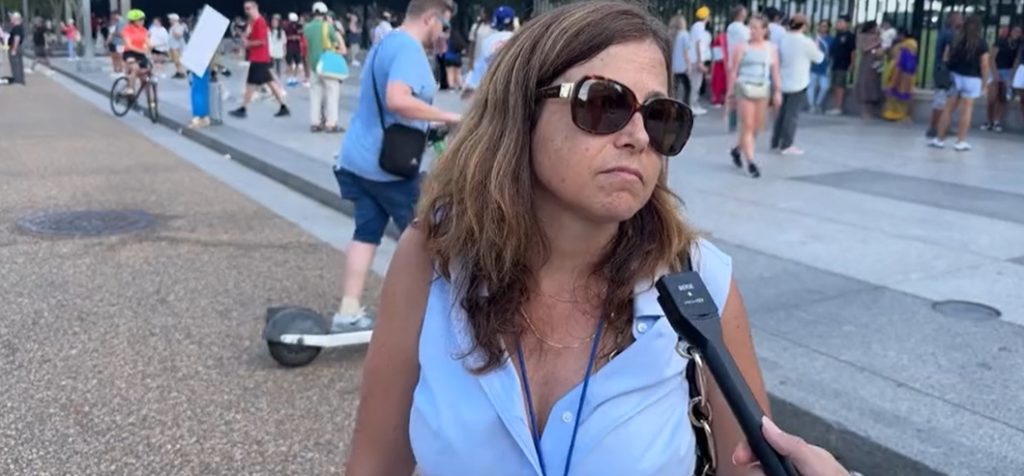
In a shocking development, U.S. federal authorities have announced the arrest of 50-year-old Nathalie Rose Jones, a resident of Lafayette, Indiana, who allegedly plotted to kidnap and assassinate former United States President Donald Trump. The arrest was confirmed in a statement released by the U.S. Attorney’s Office for the District of Columbia on August 18, 2025.
According to the report, Jones was apprehended on August 16 after she traveled to Washington, D.C., with what investigators described as a “clear and dangerous intent” to carry out her plan. The arrest followed an extensive investigation by the U.S. Secret Service after Jones posted a series of disturbing threats on social media platforms, including Facebook and Instagram.
Tinubu Ends 5% Telecom Excise Duty To Ease Burden On Nigerians
Details of the Alleged Threats
Investigators revealed that Jones made multiple explicit and violent threats targeting Trump. In one particularly alarming post, she wrote, “I am willing to sacrificially kill this POTUS by disembowelling him and cutting out his trachea with Liz Cheney and all The Affirmation present.” Authorities also discovered messages referencing an “arrest and removal ceremony” for the former president, which investigators interpreted as a symbolic reference to her assassination plan.
The U.S. Secret Service quickly traced the posts back to Jones and initiated questioning on August 15. During the interrogation, Jones reportedly admitted to authoring the threats and even confessed that she would attempt to assassinate Trump if an opportunity arose. However, she later retracted this statement, claiming she no longer intended to cause harm.
Motives Behind the Plot
During the investigation, Jones claimed her threats were fueled by anger and grief over the COVID-19 pandemic, saying she wanted to “avenge the lives lost” during the crisis. However, her online behavior suggested deeper psychological struggles. Authorities noted that Jones frequently posted about her mental health battles on social media, hinting at a history of instability that may have contributed to her violent rhetoric.
Although she later recanted her threats, prosecutors emphasized that her words and actions had already crossed the threshold of a serious federal offense.
Charges and Legal Consequences
Jones now faces two federal charges:
- Threatening the life of the President – a grave federal offense that underscores the seriousness of targeting the head of state or any former officeholder.
- Transmitting interstate communications containing threats to kidnap or injure another person – a crime that criminalizes the use of digital or communication platforms to issue threats across state lines.
Each charge carries a potential penalty of up to five years in federal prison, meaning Jones could face a total of 10 years imprisonment if convicted on both counts.
Federal Response and Prosecution
U.S. Attorney Jeanine Pirro addressed the case in strong terms, underscoring the government’s zero-tolerance policy toward threats against national leaders. “Threatening the life of the President is one of the most serious crimes and one that will be met with swift and unwavering prosecution,” Pirro stated.
Federal prosecutors highlighted the need for deterrence, warning that even online threats can carry severe legal consequences when directed at the president or other government officials. The Secret Service, which is tasked with protecting current and former presidents, reaffirmed its commitment to aggressively pursuing anyone who makes such threats.
Mental Health Concerns
While the case has generated widespread concern, reports indicate that Jones has a history of mental illness. Her acknowledgment of her struggles in public posts suggests that her state of mind may be a factor in the legal proceedings. Mental health evaluations are expected to play a role in determining her fitness to stand trial and may also influence sentencing if she is convicted.
Legal experts note that while mental illness can mitigate responsibility in some cases, it does not excuse violent threats against national leaders. The government is likely to pursue prosecution vigorously while ensuring she receives any necessary psychiatric evaluation.
Security Implications
This case underscores the continuing challenges facing U.S. security agencies in monitoring digital platforms for violent threats. With social media serving as a megaphone for extremist rhetoric, law enforcement has increasingly relied on advanced tracking systems to detect potential threats before they escalate into physical action.
The Secret Service has warned repeatedly that even seemingly idle threats online are treated as serious risks, given the history of political violence in the United States. The Jones case adds to the growing number of prosecutions involving social media threats directed at political leaders.
What Comes Next
Jones is currently in federal custody and is expected to make her first court appearance in Washington, D.C., later this week. Prosecutors will argue that her actions posed a clear danger, while her defense is likely to emphasize her mental health struggles and her subsequent retraction of the threats.
If convicted, Jones faces the possibility of years behind bars, though her sentence could be influenced by her mental health history and the court’s assessment of her intent.
For now, the arrest sends a strong signal that the U.S. government remains vigilant against any threats targeting its leaders, regardless of whether they are active or former officeholders.
The case also highlights the broader debate over the intersection of free speech, social media, and security—raising questions about how far online expressions can go before they cross into criminal territory.
In conclusion, the arrest of Nathalie Rose Jones marks a sobering reminder of the persistent risks faced by political leaders in the United States. While her alleged threats may have stemmed from personal struggles and anger over the pandemic, federal authorities are treating the matter with utmost seriousness. As the case proceeds, it will test the balance between justice, public safety, and compassion for mental health concerns.
















Leave a Comment
Your email address will not be published. Required fields are marked with *